
 |


| Quantity: | |
|---|---|
Metal Storage Cabinet with Code Lock and Adjustable Shelves, Lockable Steel Storage Cabinet for Hospital Clinic Office
Product Details
A lockable metal storage cabinet with code lock doors and adjustable shelves, made for hospital storage rooms, clinic records areas and medical offices where access must be controlled without carrying keys.
The cabinet is built as a run rather than a one-off box: units connect side to side on a shared plinth, so a storage wall reads as fitted furniture instead of cabinets standing apart. Shelves adjust on pins, and the internal split is set at order stage, so one cabinet can hold A4 records, boxed supplies or staff belongings.
Body and doors:steel, powder-coated finish
Lock:code lock per door(digital);key lock or mixed configuration on request
Shelves:adjustable steel shelves, per compartment
Base:plinth base or levelling feet
Colour:project colour matching available
Edge treatment:folded door edges, exposed edges closed
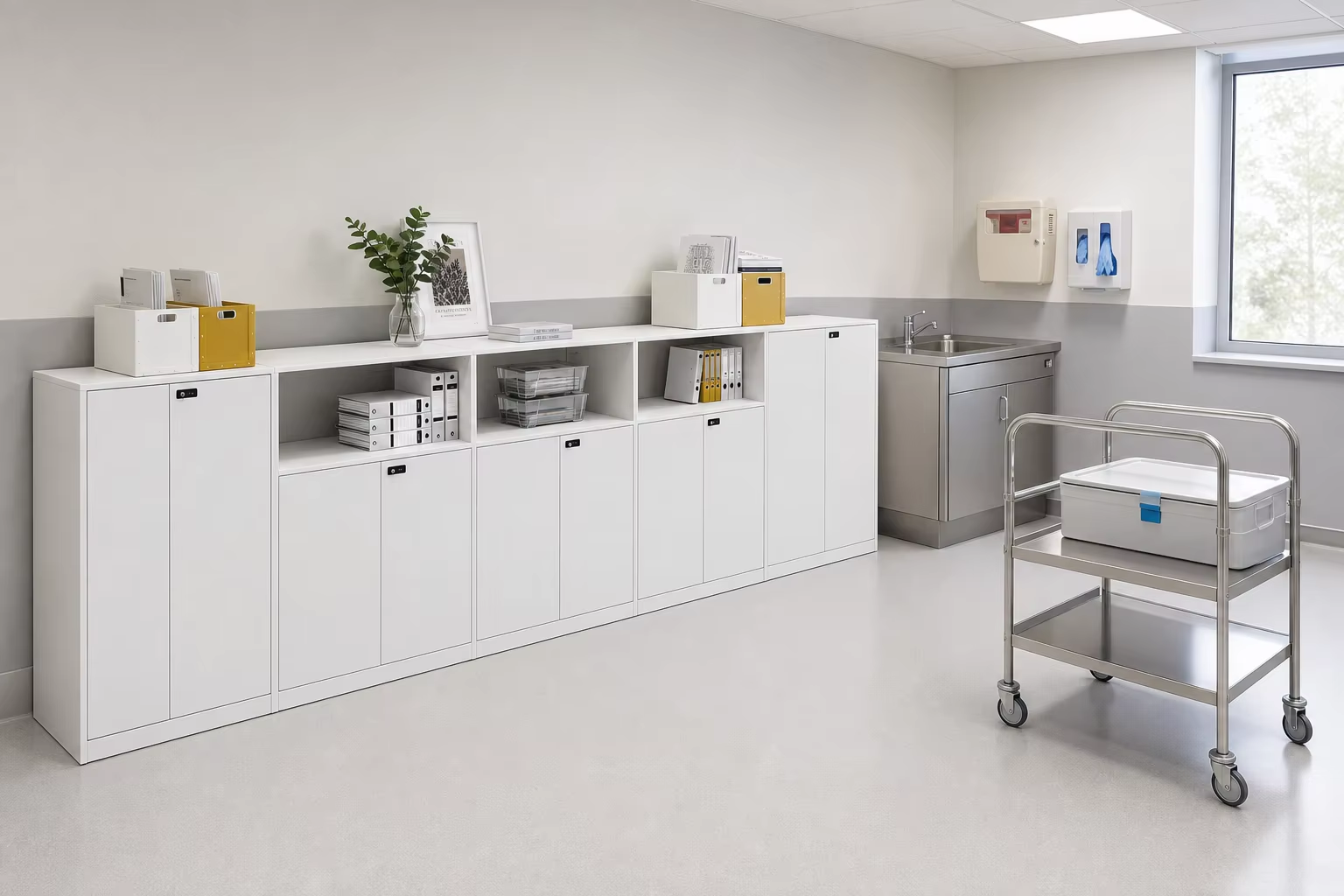
Code lock access control on each door, no key handover required
Adjustable shelves, compartment split set at order stage
Open cubby section available alongside lockable doors [TBD]
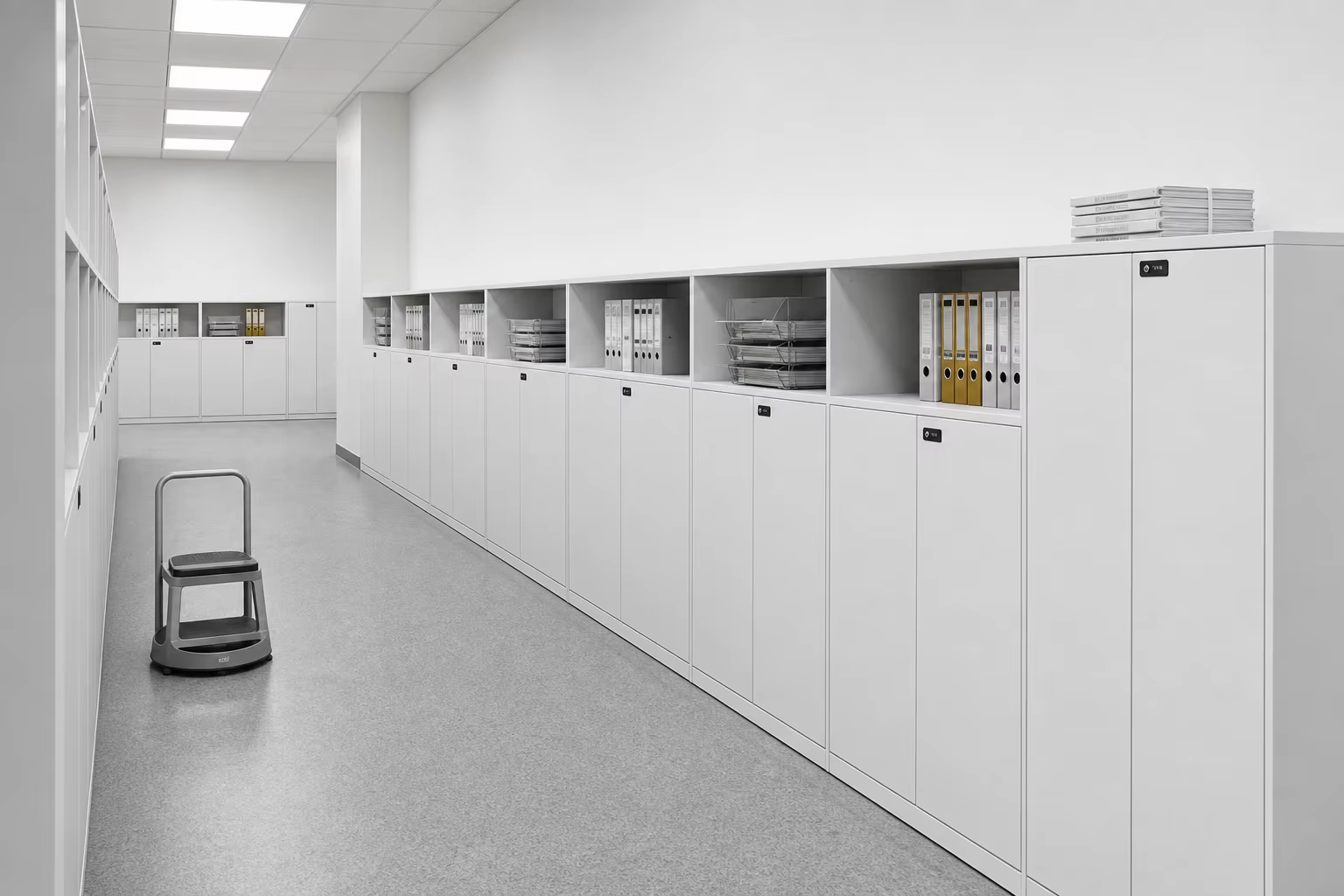
Continuous runs with a shared plinth and matching end panels
Folded door edges and a closed, wipe-clean surface
Runs in the same cabinet family as the rest of the storage series, so a room can be fitted as one set
No keys to track. Access is issued per door, so a lost key never turns into a re-keyed cabinet.
Change access, not the lock. When staff rotate, the code is reissued and the cabinet stays in service.
One cabinet, several jobs. Adjustable shelves take A4 records, boxed supplies or personal belongings without adding another product to the room.
Reads as fitted furniture. Continuous runs on a shared plinth avoid the "several cabinets pushed together" look in a corridor or storage wall.
Cleaning-friendly surface. Closed powder-coated panels wipe down with the room's existing daily routine.
| Pain point in hospital storage | How this cabinet answers it |
|---|---|
| Keys are lost, handed over informally, or duplicated | Code lock per door;access is issued, not passed on |
| Staff turnover forces re-keying or replacing locks | Change the code, keep the cabinet |
| One cabinet cannot hold records, supplies and personal items | Adjustable shelves + compartment split set at order stage |
| A wall of mixed cabinets looks temporary | Continuous run with shared plinth and end panels |
| Dust and dust-trapping joints in storage rooms | Closed, powder-coated surfaces with folded edges |
Controlled storage should not depend on keeping track of a key. The design keeps the decision on the door itself: one compartment, one access code, and an internal layout that is set once for the room rather than adjusted by whoever opens it. Everything visible stays plain — a straight door grid, one plinth line, no hardware that catches dust
Production:each unit is built to the confirmed layout; the run is produced as one order
Shipping terms:FOB / CIF / DDP quoted on request
Packing:corner protection + export carton, loading plan provided
Documents:packing list and commercial invoice issued with the shipment
Returns:damaged-in-transit units are replaced against carrier evidence ;custom-built sizes are non-returnable
Can the code lock be replaced with a key lock?
Yes. The door preparation can be ordered for code lock, key lock, or a mix of both in one run .
Can we order different compartment layouts in one cabinet?
Yes. The compartment split and shelf count are set at order stage, so one cabinet can carry mixed compartment heights.
Will the code lock work for a whole department?
Access is issued per door. If you need shared department access, tell us at order stage so the lock type matches .
Do you supply cabinets for a hospital project with layout drawings?
Yes. Send the room drawing or the storage schedule; we return a cabinet layout with unit sizes and quantities.


