
 |


| Quantity: | |
|---|---|
Our senior living dining chairs incorporate innovative sled-base mechanics specifically tailored for elderly care centers, memory care facilities, and rehab clinic waiting spaces. The slatted backrest promotes air circulation while providing stable spinal support, and the bright moss-green cushioning adds a therapeutic touch of nature to clinical settings. Designed with both standard dual-arm and modular single-arm variations, these chairs allow seamless side-by-side positioning and facilitate safe lateral transfers from wheelchairs.
Dual-Arm Chair (Style A): 580mm W x 560mm D x 810mm H (Seat Height: 450mm)
Single-Arm Modular Chair (Style B): 540mm W x 560mm D x 810mm H (Seat Height: 450mm)
(Seat height engineered to optimal orthopedic standards for effortless standing)
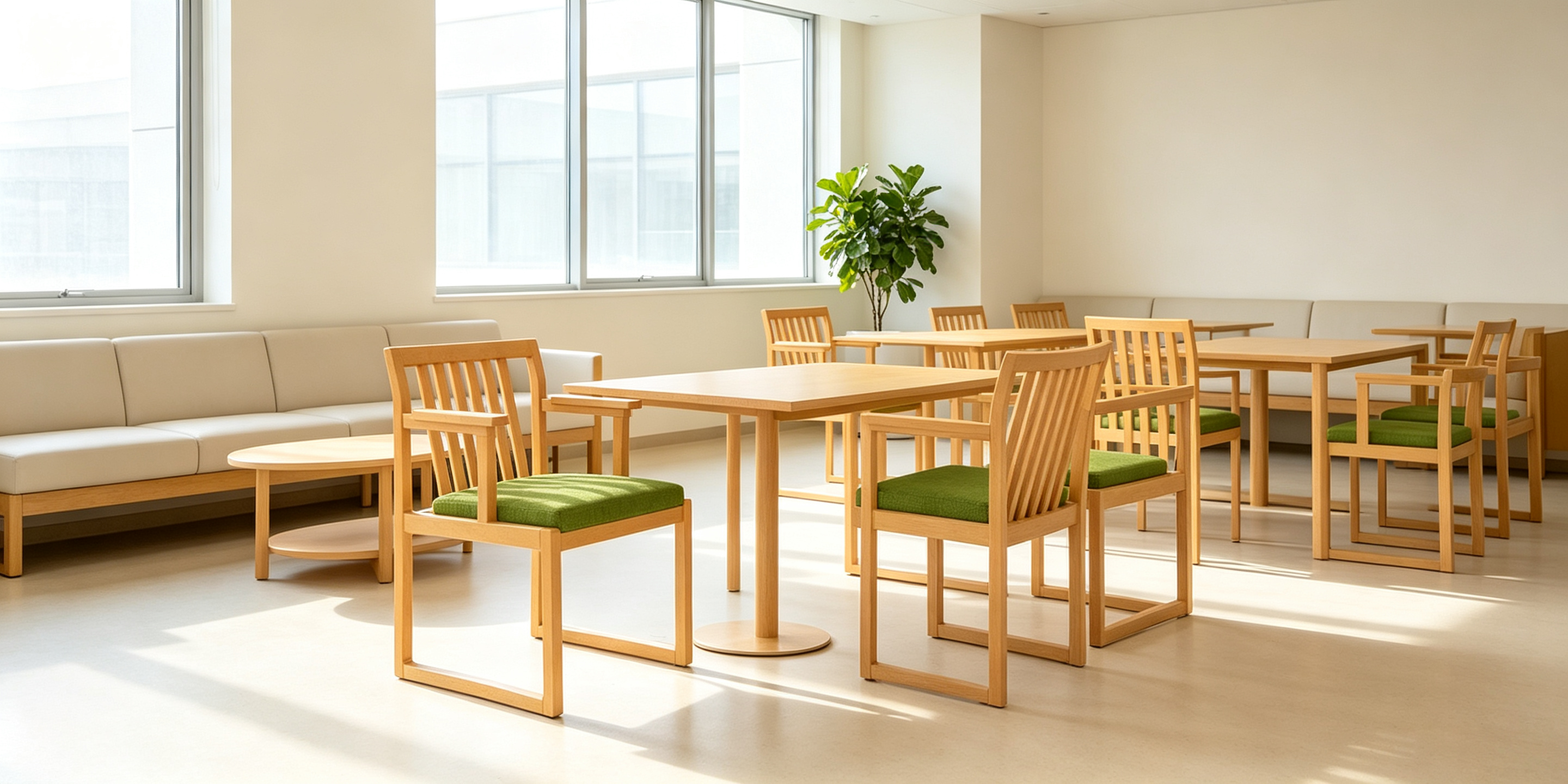
These two product images showcase a range of age-friendly seating designed in a Japanese natural style or Scandinavian minimalist style, specifically for care homes, medical facilities, rehabilitation centres and day care centres.
Its key features are as follows:
Structural innovation (Sled Base): Moving away from the traditional four-legged design, this chair features an integrated sliding frame at the base, which significantly increases the contact area with the floor. This effectively prevents the chair from tipping over or tipping backwards when elderly users sit down or stand up, whilst also making it easier to push and pull on carpeted or vinyl flooring.
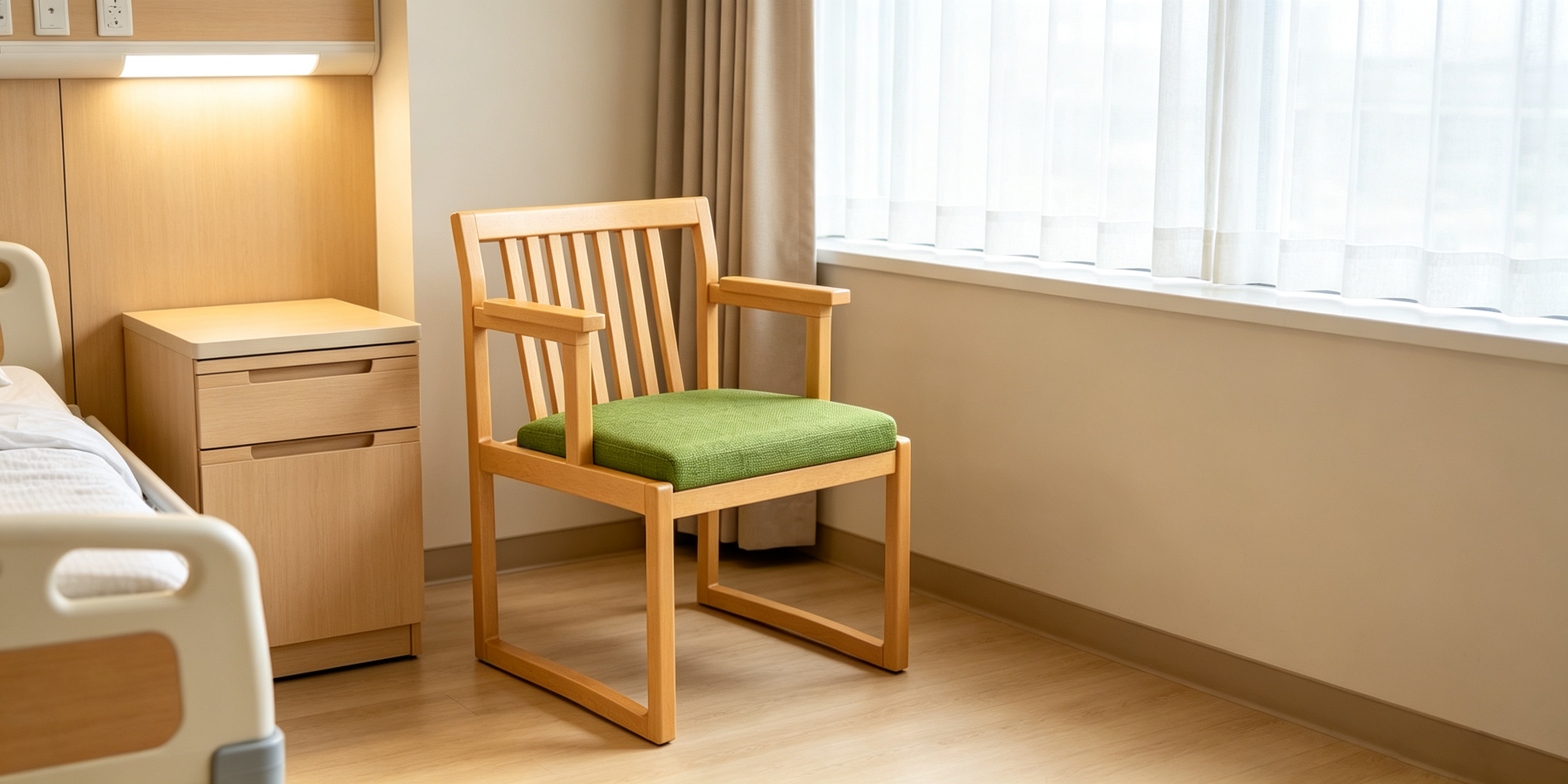
Flexibility (combination design featuring dual armrests, single armrest or no armrests): Figure 1 shows the dual-armrest model, whilst Figure 2 depicts the single-armrest variant (which can be joined to form a bench or facilitate lateral transfers from a wheelchair).
Colours and materials: A natural wood-coloured frame (available in solid wood or high-strength wood-grain metal) paired with vibrant moss green (Moss/Avocado Green) antibacterial fabric or leather upholstery, perfectly aligning with the principles of ‘biophilic design’.
| Technical Parameter | Specification Details (B2B Senior Care Grade) | Customization Options (OEM/ODM) |
| Frame Type | Heavy-duty solid beech/ash wood or high-strength wood-grain metal chassis | Sled base frame / Traditional 4-leg frame |
| Base Geometry | Continuous anti-tip floor runner (Sled Base) with non-marking felt pads | Integrated heavy-duty front casters |
| Upholstery Material | Healthcare-grade, liquid-proof green vinyl or bleach-cleanable textured fabric | 80+ Color swatches (Anti-microbial, stain-resistant) |
| Cushion Foam | High-resilience, high-density molded polyurethane ($48\text{kg/m}^3$) | BS5852 / CAL 117 fire-retardant foam standards |
| Armrest Configurations | Double armrests / Left or Right single armrest (Modular) / Armless | Flat wide wooden grips with smooth rounded edges |
| Weight Capacity | $180\text{kg}$ ($400\text{ lbs}$) static load testing certified | Heavy-duty bariatric framework options |
Materials
Frame Structure: Commercial-grade solid hard maple/beech or heavy-gauge steel tube with thermal wood-grain finish.
Seating Cushion: Anti-bacterial high-density foam bonded to a water-impermeable sub-layer.
Upholstery: Heavy-duty contract fabric with dirt-resistant and fluid-proof barrier coatings.
Non-Tip Continuous Sled Runner: The bottom sled frame creates a continuous footprint, preventing the chair from tipping backward when a resident leans forcefully against the backrest or sits down heavily.
Adaptive Modular Single-Arm Design: Single-arm models allow two chairs to be pushed together to form a bench, or allow caregivers to slide residents sideways into the seat directly from a wheelchair.
Wide Flat Ergonomic Arm Grips: The extended top surfaces on the armrests give elderly residents a secure, slip-free platform to push off from when standing up.
Slatted Breathable Backrest: Vertical wood slats provide ergonomic thoracic support while maintaining ventilation, preventing heat and humidity buildup during long activity sessions.
Zero Tip Hazard for High-Risk Seniors: The continuous sled runner physics eliminate the tip-over dangers inherent in standard 4-legged chairs during sudden resident movements.
Biophilic Color Psychology: The combination of natural light-wood tones and fresh leaf-green upholstery creates a calming, natural ambiance that lowers resident stress and confusion.
Infection Control & Easy Floor Maintenance: Liquid-proof upholstery allows quick wipe-downs between meals, while the smooth sled base glides easily over vinyl floors without scuffing or snagging.
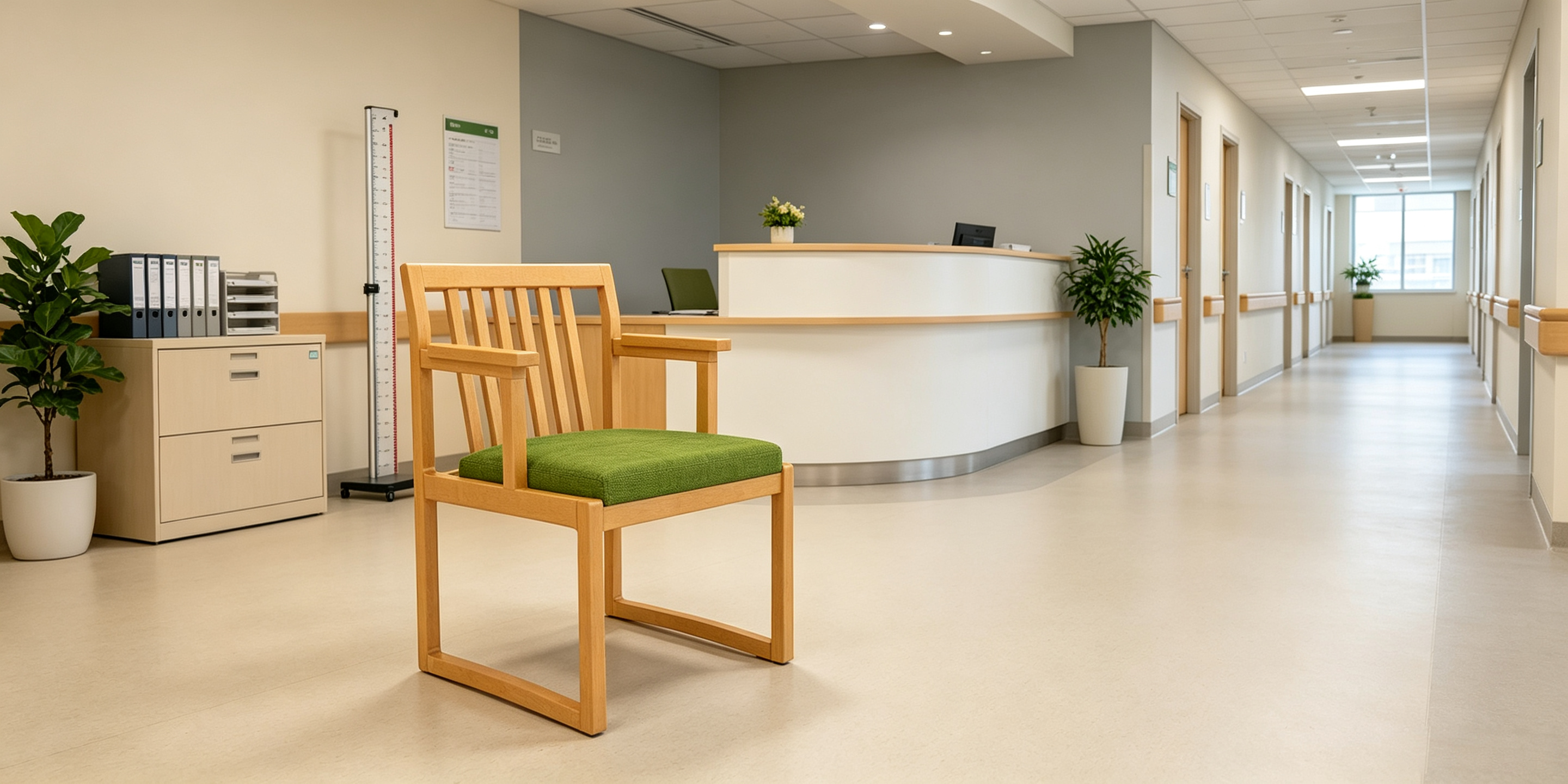
The Pain Point: In nursing home dining rooms, standard 4-leg chairs frequently snag on carpets, tip backward when seniors push off the armrests, and lack options for residents who require lateral wheelchair transfers.
Our Solution: This sled-base series glides smoothly over both carpet and vinyl without catching edges, stabilizes the center of gravity to prevent tipping, and offers single-arm variations that simplify resident transfers for nursing staff.
Inspired by "Biophilic Human-Centered Design", this series combines the soothing warmth of natural timber with functional care features. By replacing cold, sterile clinical lines with gentle curves and vibrant organic greens, we create an inviting, dignified environment that feels like home rather than an institution.
Smooth Radiused Cornering: All wooden corners and edges are fully deburred and rounded to protect delicate skin from bruises and abrasion.
Recessed Mechanical Fasteners: All joint hardware is countersunk and concealed beneath smooth wood plugs, eliminating catch points for clothing.
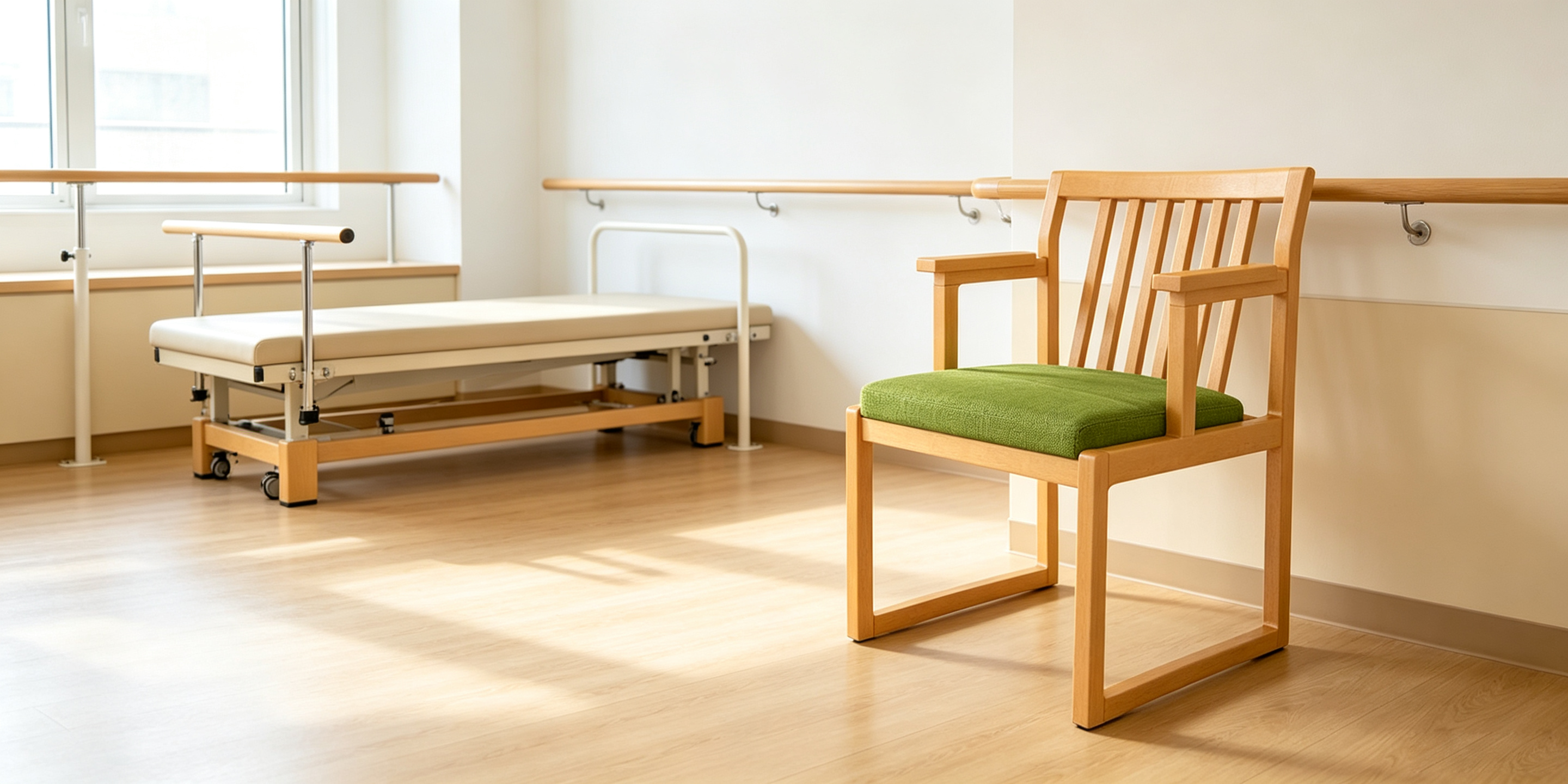
Packaging: Shipped fully assembled (Assembled packing) for instant facility deployment, protected with multi-layer EPE foam and heavy 5-ply corrugated master cartons.
Lead Time: 25-35 days for bulk B2B project orders.
Port of Loading: Worldwide freight fulfillment through major international commercial shipping hubs.
Structural Frame: 10-Year commercial structural warranty for heavy-use healthcare environments.
Upholstery & Foam: 3-Year warranty covering surface wear, seam integrity, and foam elasticity.
Q1: What is the main advantage of a sled base chair over a standard 4-leg chair in senior living?
A: Sled bases distribute weight over a much larger surface area, dramatically reducing tipping risks when seniors push up from the arms. They also slide much more smoothly over carpets and vinyl flooring without catching or catching floor trims.
Q2: Why do you offer a single-armrest version?
A: Single-armrest chairs are ideal for modular configurations (creating custom benches in lounges) and allow seamless lateral transfers for residents moving from wheelchairs or walkers into dining seats.
Q3: Is the green upholstery fluid-proof and easy to clean after incontinence accidents?
A: Yes. The fabric features an integrated moisture barrier that prevents liquids from reaching the internal foam. Spills can be wiped clean on the surface with standard hospital-grade sanitizer wipes without fading the color.


