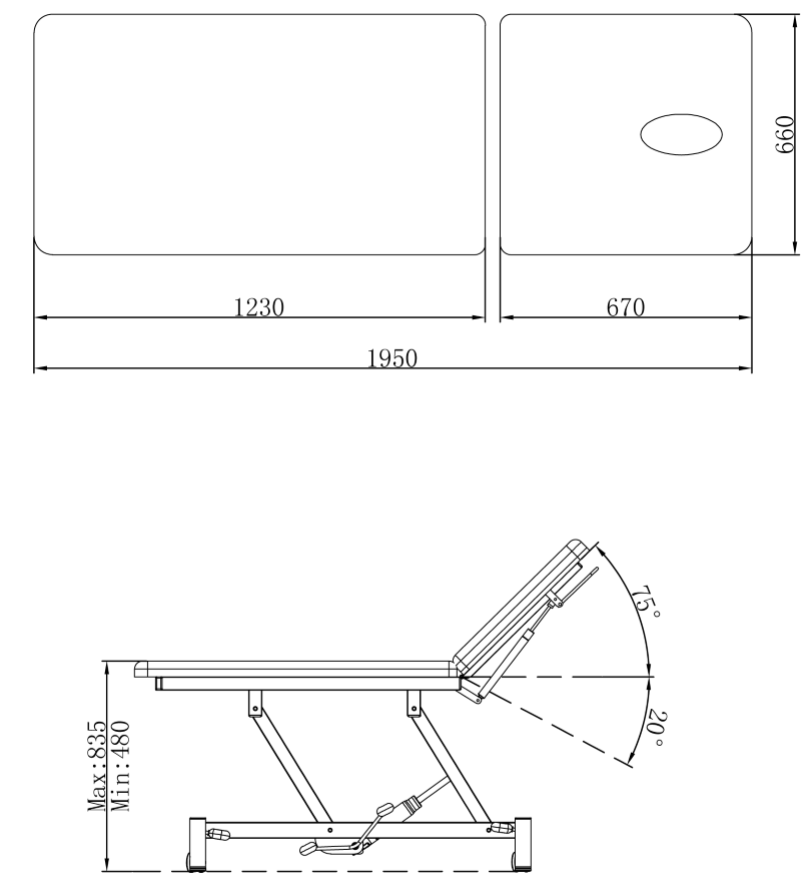
| Overall Size: | |
|---|---|
| Load Capacity: | |
| Castor Diameter: | |
| OEM: | |
| Foam Thickness: | |
| Adjustable Height: | |
| Adjustable Angle: | |
| Availability: | |
| Quantity: | |

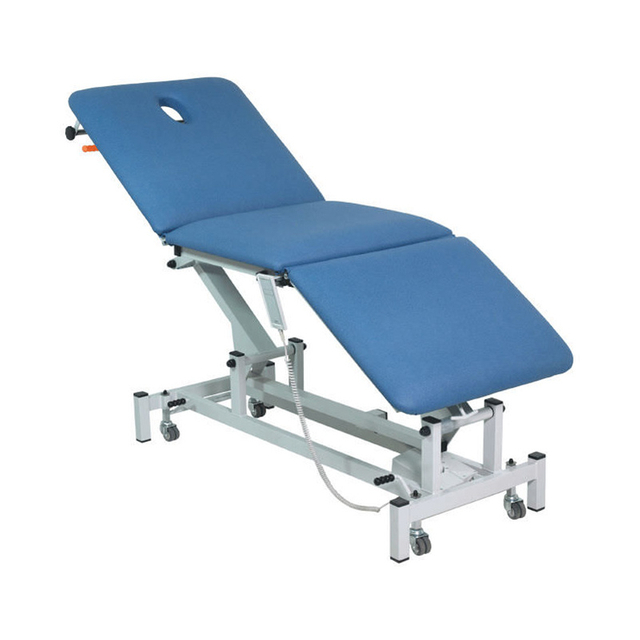
With the hydraulic system, the table's height can be easily adjusted from both sides, providing convenience and flexibility for healthcare professionals.
Additionally, the adjustable headrest, operated by a gas spring, offers a wide range of motion up to 75°, allowing for personalized positioning during treatments.
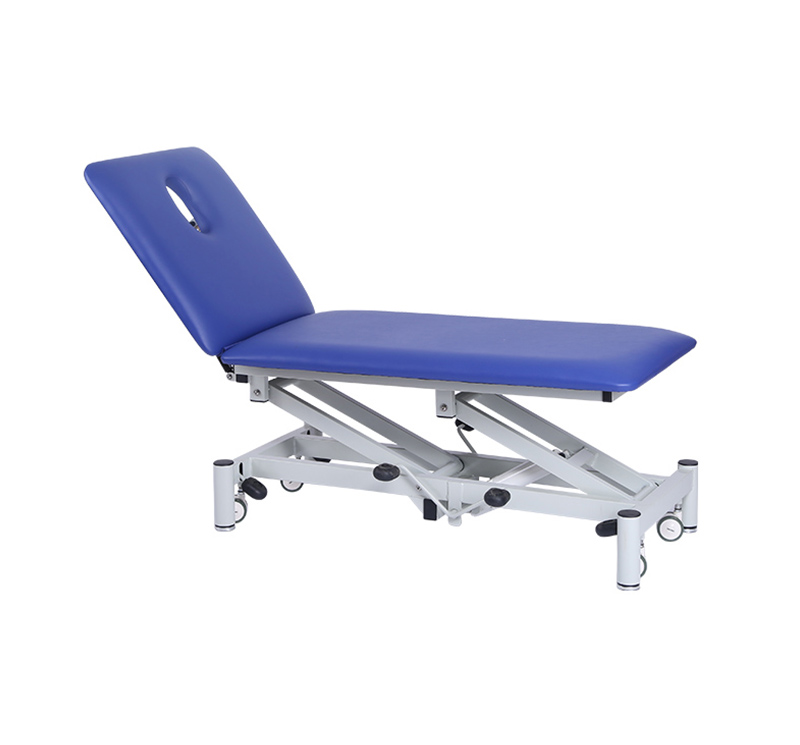
The seamless and rounded corner top ensures a smooth and soft surface for patients during examinations, promoting a comfortable experience.
To further enhance patient comfort, the table features a breathing hole and upholstery breathing plug, allowing for proper airflow and reducing any potential discomfort.
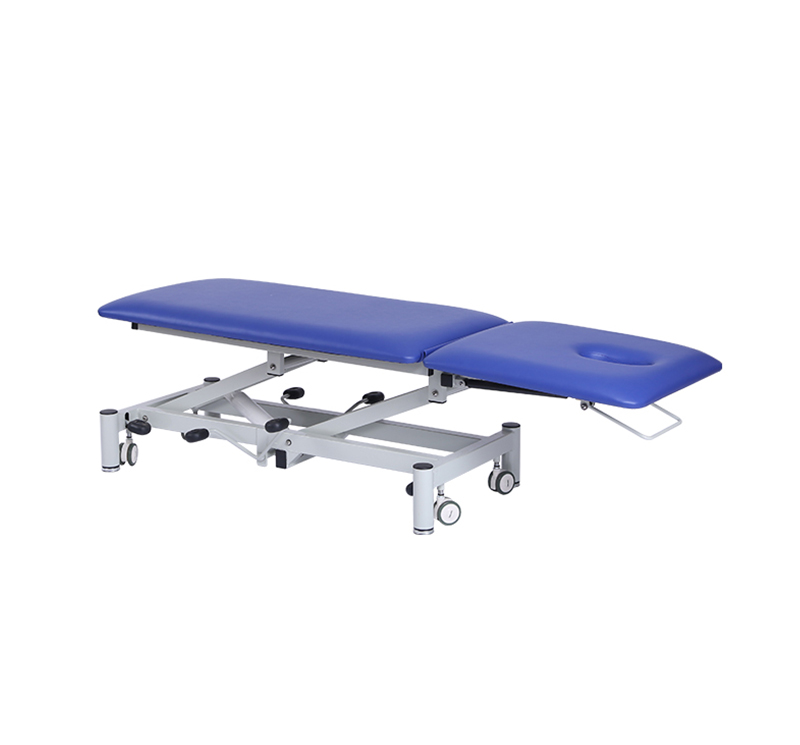
The system of retractable castors, which can be conveniently activated through a pedal, allows for easy mobility and positioning of the table.
Additionally, the ending feet, one of which has leveling capability, ensure stability on uneven surfaces.
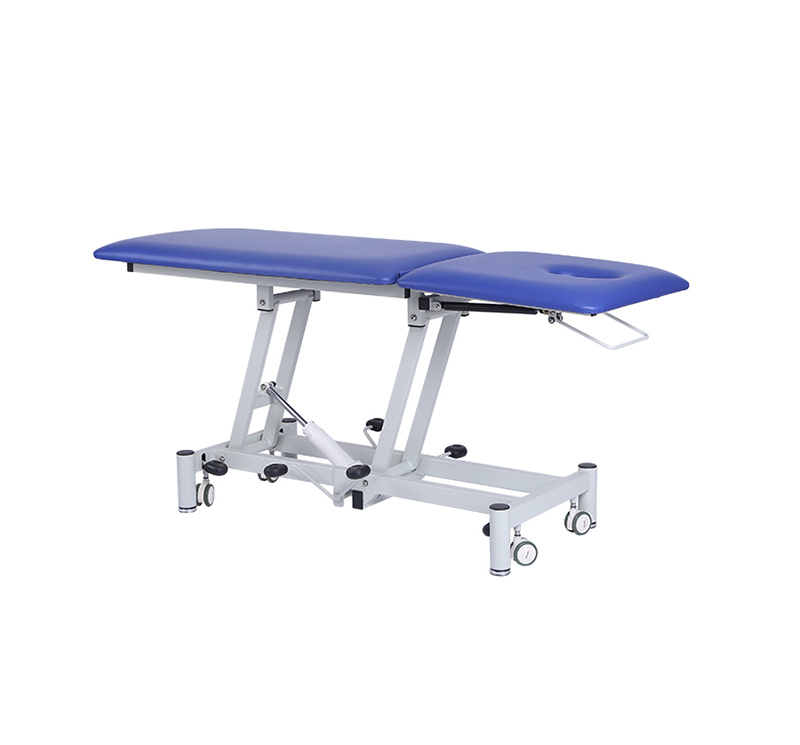
Designed to cater to both treatment and examination needs, making it suitable for a variety of medical settings.
With its adjustable features, it offers flexibility for different procedures and patient requirements.
This multi-functional table can be used in hospitals, clinics, spas, and other healthcare facilities
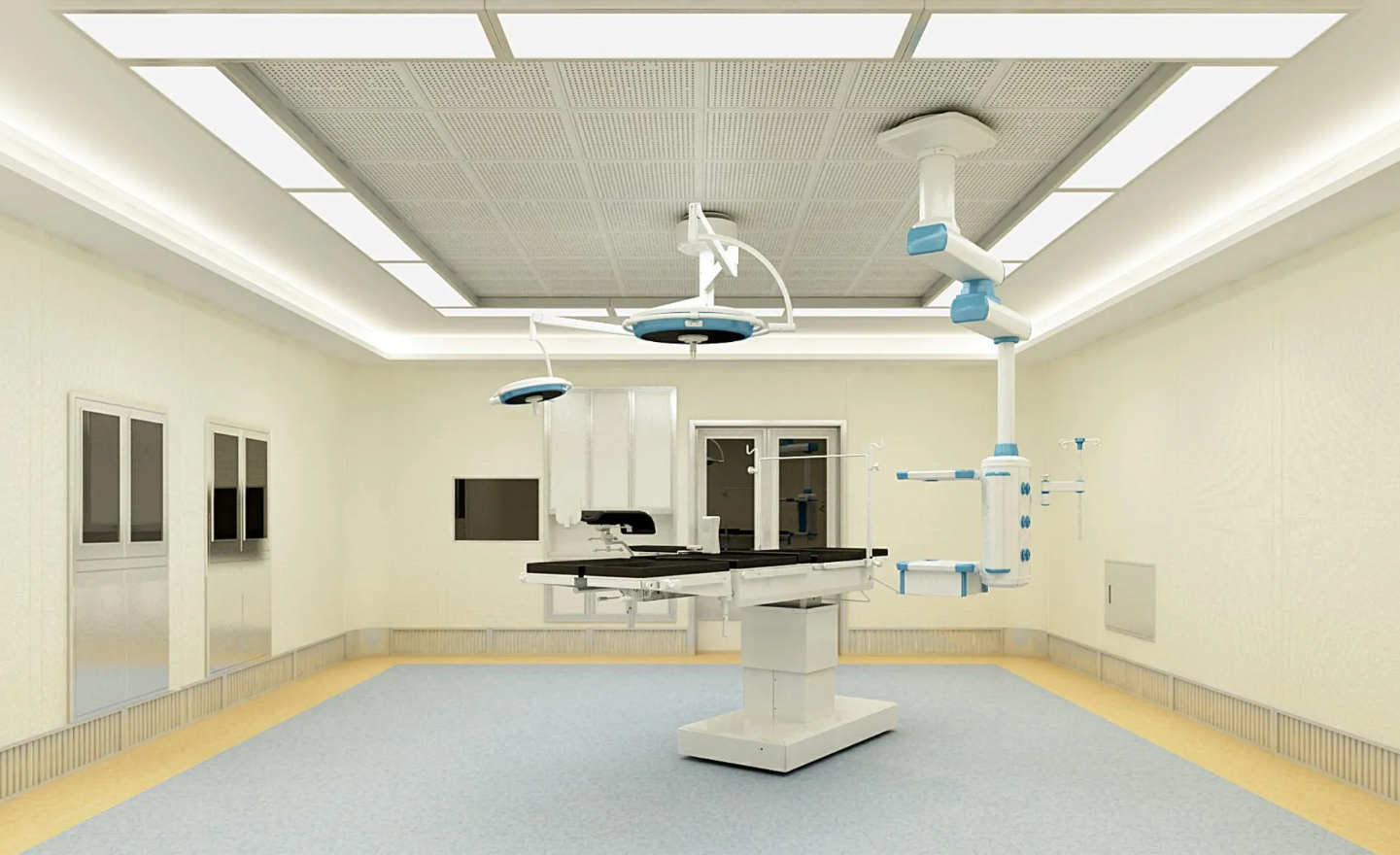
Cuboc offers OEM options, allowing the hospital to customize the Medical hydraulic treatment tables according to their specific requirements and preferences.

Designing furniture for healthcare environments is fundamentally different from designing for hospitality or residential use. The users are more vulnerable, the operational demands are more intense, and the consequences of poor design choices extend far beyond aesthetics. A chair that looks appropri
A patient's experience of anxiety begins before anyone takes their vitals; the furniture in a hospital room—chairs, side tables, visitor seating—sets an emotional baseline that shapes everything that follows. Evidence from healthcare design research shows that early anxiety scores measured within mi
The 2026 FIFA World Cup will host 48 matches across 16 stadiums in the United States, Mexico, and Canada, with cumulative attendance projected at around 5.4 million spectators. Behind every match, each stadium must operate a fully equipped medical infrastructure capable of handling everything from m
Strange medical furniture innovations follow a completely different rulebook than any other furniture category. A chair in a hospital is not just a place to sit—it might need to resist bacteria colonization, support 200–500 kg patients, prevent self‑harm, or integrate with dialysis machines and ceil
Rehabilitation center furniture design requires a fundamentally different approach than general medical office or acute care hospital furniture. Rehabilitation center furniture must serve patients across the full mobility continuum—from bed rest and maximum‑assistance transfers to independent commun
Dialysis center furniture design presents unique challenges that standard healthcare furniture cannot fully address. Patients typically spend three to five hours per session, three times per week, so dialysis center specialized seating and treatment room layout directly affect treatment compliance,