| Base dimensions: | |
|---|---|
| Seat: | |
| Material: | |
| Standard electrical: : | |
| Availability: | |
| Quantity: | |
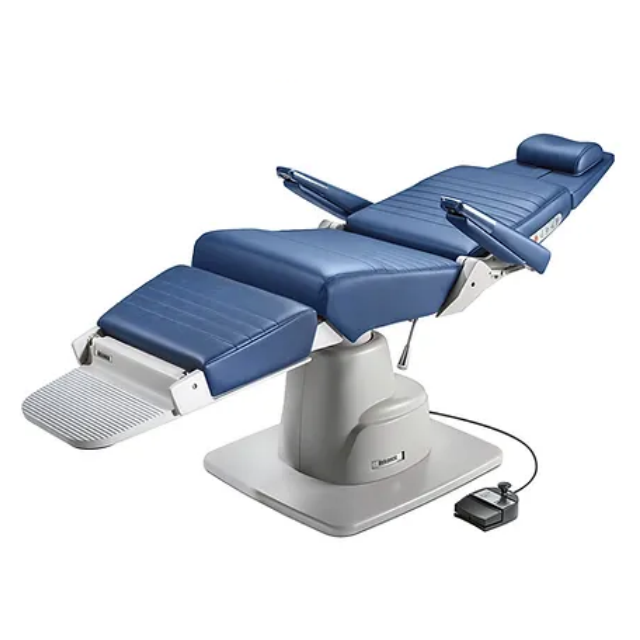
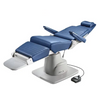
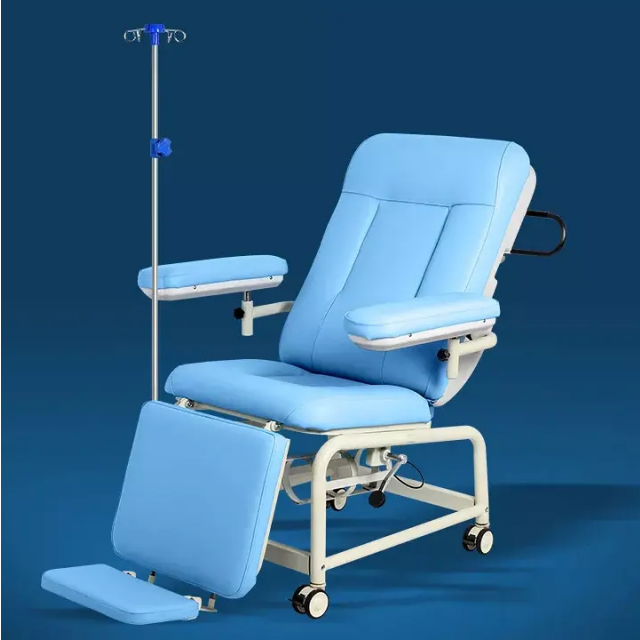
Dual-side operation allows easy control from both sides while maintaining patient contact.
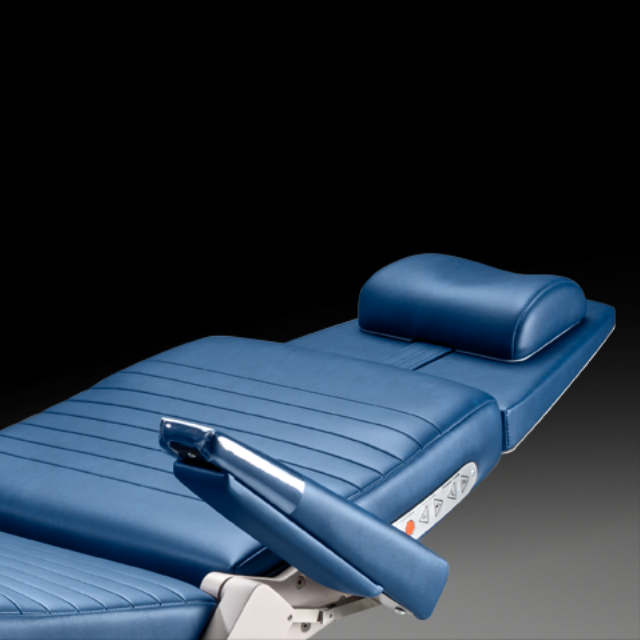
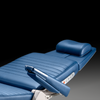
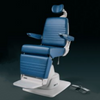
The adjustable concave headrest offers superior head and neck support, locking with a single hand.
Upholstered armrests provide security and comfort, locking in place and releasing on both sides.
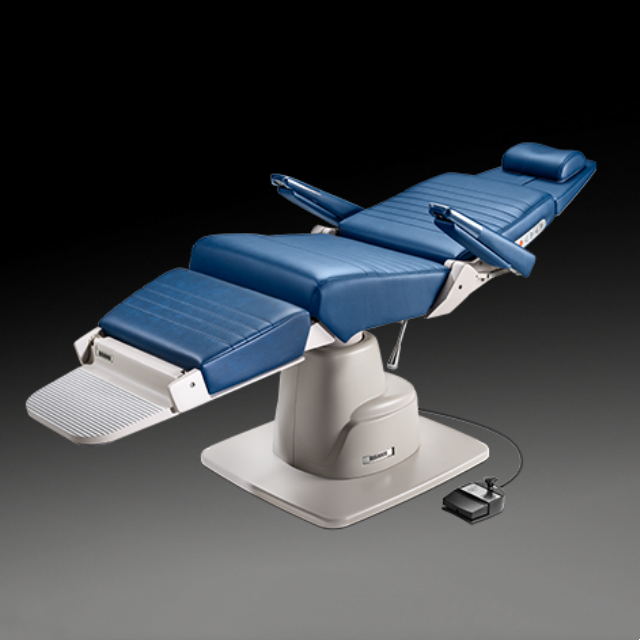
The large hinged footrest supports the patient's weight and conveniently tilts out of the way to save space. The corded footswitch enables hands-free operation of the chair base and top, while dual rotation locks allow a 330° swivel for optimal positioning.
Cuboc's medical procedure chair is designed to accommodate minor procedures.
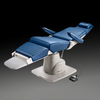
It reclines nearly flat, ensuring patient comfort during medical treatments.
Additionally, we offer optional non-articulating pillow headrest and articulating surgical headrest features, providing customizable support for specific procedures

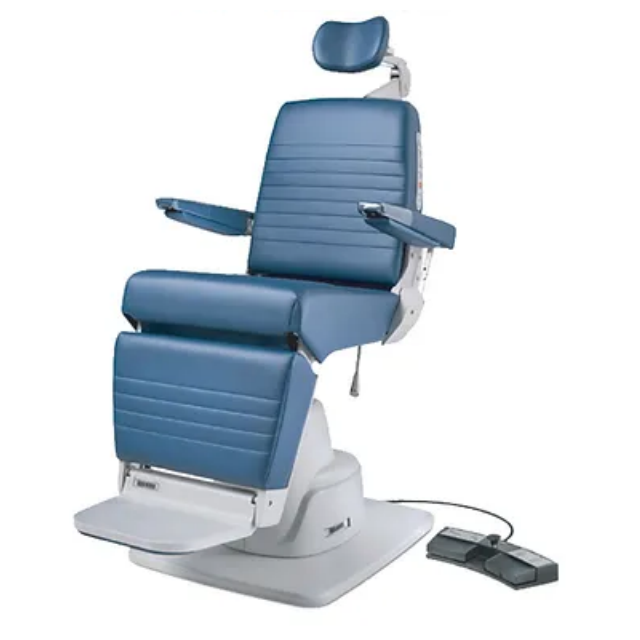
The square pedestal base of our Metal Reclining Sleeper Chair ensures crucial patient stability and superior accessibility.
With finger switches and a corded footswitch, you can effortlessly raise, lower, or recline the chair into any desired position without interrupting patient contact.
We offer both high and low base models to suit your specific needs.
Cuboc's medical examination chairis built to last.
The programmable backlit membrane switches not only last 10 times longer than mechanical counterparts but also operate at low voltages, ensuring increased safety.
The hand-sewn upholstery covers high-density foam, providing long-lasting durability.
For easy maintenance, the removable cushions can be cleaned or replaced as needed.
Designing furniture for healthcare environments is fundamentally different from designing for hospitality or residential use. The users are more vulnerable, the operational demands are more intense, and the consequences of poor design choices extend far beyond aesthetics. A chair that looks appropri
A patient's experience of anxiety begins before anyone takes their vitals; the furniture in a hospital room—chairs, side tables, visitor seating—sets an emotional baseline that shapes everything that follows. Evidence from healthcare design research shows that early anxiety scores measured within mi
The 2026 FIFA World Cup will host 48 matches across 16 stadiums in the United States, Mexico, and Canada, with cumulative attendance projected at around 5.4 million spectators. Behind every match, each stadium must operate a fully equipped medical infrastructure capable of handling everything from m
Strange medical furniture innovations follow a completely different rulebook than any other furniture category. A chair in a hospital is not just a place to sit—it might need to resist bacteria colonization, support 200–500 kg patients, prevent self‑harm, or integrate with dialysis machines and ceil
Rehabilitation center furniture design requires a fundamentally different approach than general medical office or acute care hospital furniture. Rehabilitation center furniture must serve patients across the full mobility continuum—from bed rest and maximum‑assistance transfers to independent commun
Dialysis center furniture design presents unique challenges that standard healthcare furniture cannot fully address. Patients typically spend three to five hours per session, three times per week, so dialysis center specialized seating and treatment room layout directly affect treatment compliance,