
Views: 0 Author: Site Editor Publish Time: 2026-07-22 Origin: Site


A patient's experience of anxiety begins before anyone takes their vitals; the furniture in a hospital room—chairs, side tables, visitor seating—sets an emotional baseline that shapes everything that follows. Evidence from healthcare design research shows that early anxiety scores measured within minutes of room entry correlate strongly with perceived furniture comfort and layout quality, often more than with lighting or wall color. When patients describe their room furniture as “comfortable and modern,” average anxiety scores drop significantly compared with rooms described as “institutional and worn.”

Drawing on recent research and Hongye Furniture Group's collaborations with administrators, designers, and clinical staff, the following eight hospital furniture innovations consistently reduce patient anxiety while improving satisfaction and clinical metrics.
Standard mechanical hospital recliners rely on levers and fixed positions, offering basic function but limited psychological comfort, while weight‑activated zero‑gravity recliners use the patient's own body mass to adjust recline continuously. As the patient leans back, a gas‑spring mechanism tilts the seat and backrest together into a zero‑gravity position—hips slightly above the heart, knees gently elevated—reducing spinal compression and stimulating parasympathetic relaxation.
Clinical evidence from pre‑operative waiting areas indicates that patients seated in zero‑gravity recliners for extended pre‑op periods show markedly lower stress biomarkers, including cortisol reductions compared with patients using standard recliners. Hospitals find that weight‑activated recliners hit a practical sweet spot: they require no power cords or controls and patients instinctively learn the mechanism within seconds, making them an ideal drop‑in replacement for conventional chairs.
Hospital‑acquired infections affect a significant proportion of inpatients on any given day, and high‑touch furniture surfaces—side tables, overbed tables, armrests—are known reservoirs. Traditional antimicrobial coatings applied to furniture surfaces degrade under frequent cleaning; after roughly a year of daily disinfectant use, many coated surfaces lose most of their antimicrobial benefit.
New hospital furniture innovations embed copper or silver‑ion compounds directly into polymers or laminates during manufacturing, creating surfaces that retain antimicrobial performance for years rather than months. Copper‑infused materials, for example, can reduce common pathogens such as MRSA and E. coli by well over 90% on contact while remaining compatible with standard hospital disinfectants throughout their 8–10‑year service life. Hongye's healthcare line uses copper‑infused HPL on armrests, tabletops, and drawer pulls to eliminate the coating‑maintenance cycle and support ongoing infection control.


Medical Recliner Chair with Manual Lever & Charging Port for Hospital
Delivering diagnoses or discussing serious treatment plans in corridors or behind thin curtains undermines privacy and heightens anxiety, whereas acoustically treated spaces significantly improve information retention and emotional stability. Acoustic privacy pods are self‑contained, sound‑dampened units that function as “rooms within rooms,” deployable in waiting areas, ICU corridors, or unused alcoves without permanent construction.
Design features typically include 25–35 dB sound attenuation, silent ventilation with 8–12 air changes per hour, seating for 4–6 people in medical‑grade upholstery, dimmable warm‑white lighting, and seamless infection‑control surfaces. Pods can often be installed in a few hours and cost far less than building new consultation rooms, letting hospitals create dignified, low‑anxiety spaces for difficult conversations even in facilities constrained by existing layouts.
Traditional bariatric chairs make their purpose visually obvious—wide exposed steel frames, oversized vinyl seats, and heavy reinforcing elements signal that “this chair is for large patients,” which can be stigmatizing. Staff report that some higher‑BMI patients choose to stand rather than sit in visibly labeled bariatric seating, even when standard chairs are uncomfortable.
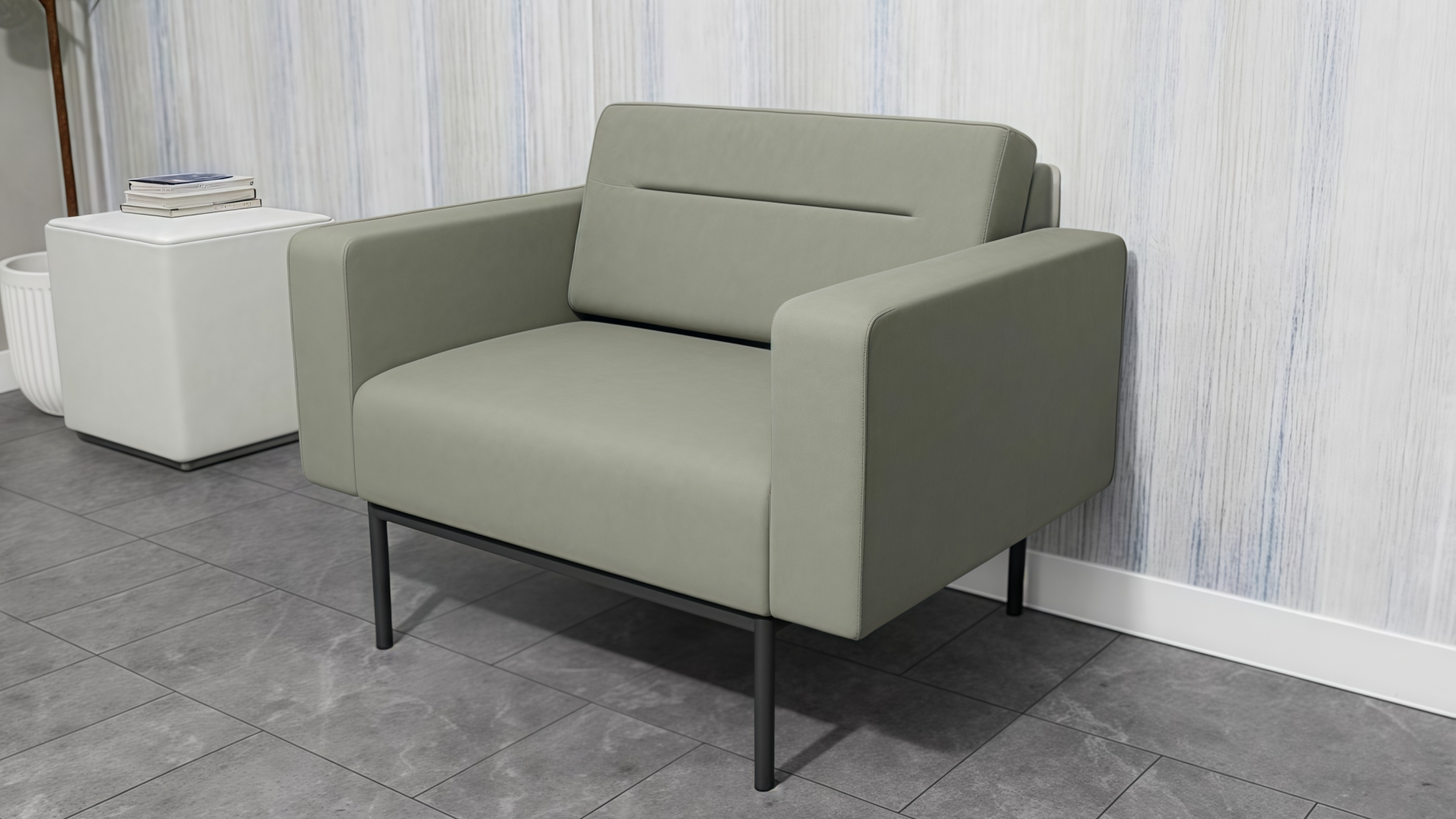
Modern bariatric hospital furniture innovations focus on aesthetics as well as engineering. Frames still meet 500–750 lb load ratings, but structures are concealed within upholstered shells, arm widths fall closer to standard lobby dimensions, and medical‑grade fabrics are available in broad color palettes that match general seating. Functionally the chairs are bariatric; visually they simply read as normal, comfortable lobby furniture, reducing anxiety and self‑consciousness for patients who need higher‑capacity seating.
Hospitals frequently convert med‑surg units to step‑down or ICU overflow areas during peak demand, and fixed‑layout furniture often fails when patient acuity changes rapidly. Modular patient room furniture systems address this challenge with interchangeable components mounted on common rails or connection points so rooms can be reconfigured without tools in under 60–90 minutes.
Different configurations support standard med‑surg, high‑acuity monitoring, family‑centered care, or isolation‑ready setups, using shared elements such as bedside cabinets, overbed tables, recliners, sleeper sofas, and equipment bridges. Although modular systems increase upfront room furniture budgets, longer‑term analyses show they reduce anxiety by maintaining appropriate layouts for changing clinical needs and cut lifecycle costs by avoiding full refurnishing whenever service lines or acuity profiles shift.


Hospital Ward & Clinic Furniture Set
Children experience hospital environments differently than adults, often perceiving “clean and professional” spaces as cold or frightening, and age‑appropriate environments can reduce sedation and reported pain scores for pediatric procedures. Co‑created pediatric hospital furniture involves child‑life specialists, pediatric nurses, and children themselves in early concept design rather than after products are finished.
Design responses vary by age group: toddlers benefit from parent‑proximate rocking chairs with soft edges and integrated toy rails; preschoolers respond well to colorful, animal‑themed seating at child‑height tables; school‑age children prefer privacy pods with integrated tablet arms; adolescents want lounge‑style seating with device charging and more neutral, non‑“babyish” aesthetics. Hongye’s pediatric portfolio developed with multiple children's hospitals uses sophisticated colors and forms that older children do not find embarrassing while still projecting warmth and non‑clinical comfort.

Constant exposure to uniform overhead lighting in hospitals disrupts natural cortisol–melatonin cycles, worsening sleep quality and anxiety for inpatients. Furniture‑integrated circadian lighting—headboard reading lights, under‑bed pathway illumination, and overbed task lights—gives patients localized control over light intensity and color temperature without altering the entire room's lighting.
Warm 2700–3000K reading lights near the headboard support pre‑sleep relaxation, amber 2200K pathway lights let patients navigate at night without waking roommates, and neutral 3500–4000K task lights on overbed tables support daytime activities and eating. Studies of dynamic lighting systems show improved sleep quality, reduced delirium in intensive care, and shorter stays, and low‑voltage integrated furniture lighting offers a more targeted, retrofit‑friendly way to deliver similar circadian benefits at the patient‑zone level.
Hospitals are notoriously confusing, and wayfinding challenges add cognitive load to already anxious patients and families. Wayfinding hospital furniture uses seating clusters, planters, and kiosk desks as consistent visual landmarks to help people navigate intuitively rather than relying solely on signage.
Examples include color‑coded seating clusters at key corridor intersections, distinct planter groupings at department entrances, and digital directory kiosks in lobbies and near elevators. Studies of evidence‑based wayfinding show that when furniture and visual cues create clear landmarks, late arrivals decline and patient‑reported stress about “finding the right place” drops substantially. Because furniture can be relocated or recolored without structural changes, wayfinding furniture becomes a flexible, high‑impact tool for reducing navigational anxiety.

Hospitals that invest in anxiety‑reducing hospital furniture report measurable improvements across clinical and experiential metrics:
Patient satisfaction scores (e.g., HCAHPS) in environment‑related domains improve by double‑digit percentile points when furniture comfort, privacy, and wayfinding are addressed.
Requests for sedative medication before procedures decrease as patients feel more comfortable in pre‑op recliners and consultation spaces.
Elective surgical length of stay can drop by nearly a day on average in healing environments that combine supportive furniture, lighting, and layout changes.
Staff report fewer agitation incidents and smoother family interactions when furniture supports privacy, comfort, and clear navigation.
These are not soft benefits; reductions in average length of stay and infection rates, combined with higher satisfaction scores and better reimbursement tiers, often pay back furniture investments within 1–2 years.
Hongye Furniture Group's healthcare division designs hospital furniture innovations—zero‑gravity recliners, copper‑infused tables, acoustic privacy pods, modular patient‑room systems, pediatric seating, and circadian‑lighting‑ready casegoods—specifically to reduce patient anxiety and improve experience metrics. If you share your current patient room layouts, target satisfaction and length‑of‑stay goals, and budget constraints, Hongye can propose an anxiety‑reducing hospital furniture package that prioritizes high‑impact upgrades like recliners and wayfinding seating, then scales toward full room solutions as your renovation or patient‑experience program evolves.


