Views: 0 Author: Site Editor Publish Time: 2026-07-14 Origin: Site


Strange medical furniture innovations follow a completely different rulebook than any other furniture category. A chair in a hospital is not just a place to sit—it might need to resist bacteria colonization, support 200–500 kg patients, prevent self‑harm, or integrate with dialysis machines and ceiling lifts. These medical furniture design requirements produce healthcare furniture that looks bizarre, behaves unlike any ordinary chair or table, and solves clinical problems most people never realize exist.

This 2026 guide to strange medical furniture innovations showcases 10 unusual healthcare furniture designs that look weird precisely because the medical problems they solve are unusual. From anti‑ligature behavioral health sets and bariatric hospital beds to infection‑control medical seating, sensory‑calming chairs, and ceiling‑mounted patient lift chairs, each innovation shows how medical furniture quietly shapes safety, dignity, and clinical outcomes in modern healthcare environments.
Anti‑ligature healthcare furniture is designed so no part can be used to attach a cord, rope, or ligature. Every edge is rounded, gaps are eliminated, and protrusions are removed. The furniture looks almost abstract—smooth, featureless, like objects from a minimalist art installation—but it is one of the most life‑saving medical furniture innovations in behavioral health.
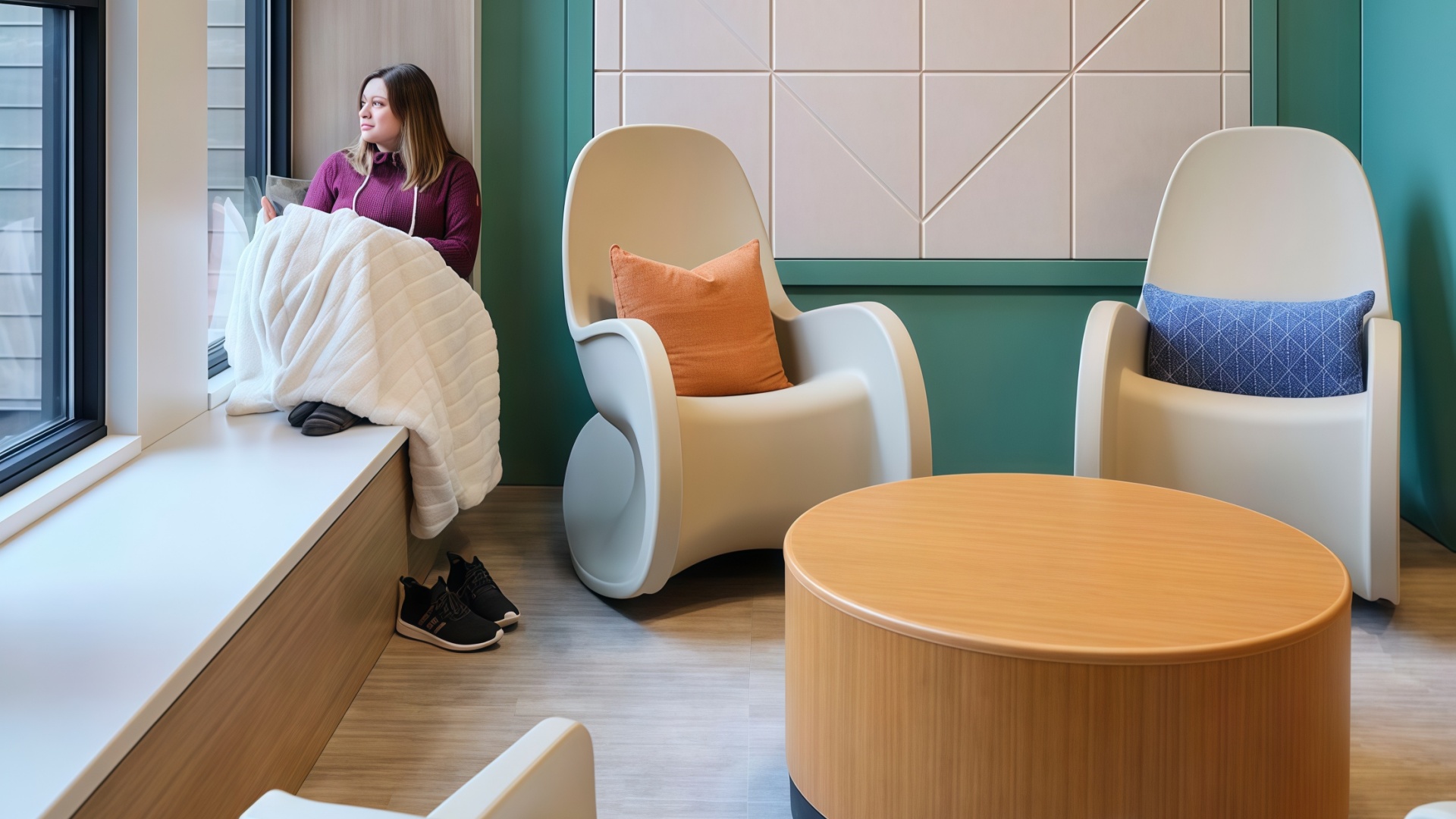
In behavioral health units, psychiatric wards, and correctional medical facilities, patients may attempt self‑harm using furniture components as anchor points. A chair‑leg gap, bed‑frame hook, or shelf bracket can become a ligature point within seconds. Anti‑ligature healthcare furniture removes these points without making rooms feel punitive or institutional.
Design Comparison: Standard vs Anti-Ligature Furniture
| Design Element | Standard Furniture | Anti-Ligature Healthcare Furniture |
Chair leg gap | 3–5 cm (ligature risk) | Continuous, solid base |
Bed frame edge | Exposed metal rail | Fully enclosed, smooth shell |
Shelf bracket | Visible metal hook | Flush, recessed mount |
Door hinge | Pin accessible | Concealed hinge mechanism |
Overall aesthetic | Functional with visible hardware | Smooth, minimal, hardware‑free |
Manufacturers like Britive (UK) and Pineapple (US) offer complete anti‑ligature room sets—beds, chairs, desks, shelving, mirrors—engineered to meet behavioral health ligature‑risk standards (no anchor points above roughly 3 mm diameter). The design challenge is creating humane, welcoming spaces while making self‑harm functionally impossible.
Anti‑ligature healthcare furniture is not just for psychiatric units; standards increasingly recommend anti‑ligature assessment for emergency departments and general waiting areas, because self‑harm risk exists in every medical environment, not just in designated behavioral health wards.
Bariatric hospital beds are medical furniture innovations built for patient weights up to around 500 kg. They feature motorized positioning, widened frames that expand from about 90 cm to 140 cm, integrated patient lifts, and high‑density mattresses up to 20–25 cm thick. These beds look more like small rooms than traditional hospital beds.
Standard hospital beds typically support 150–200 kg. Bariatric patients (250–500+ kg) overload these frames: structures bend or fail, mattresses bottom out, and staff cannot safely turn or transfer patients. Bariatric hospital beds solve structural integrity, pressure redistribution, and staff safety simultaneously.
Standard vs Bariatric Bed Specifications
| Specification | Standard Hospital Bed | Bariatric Bed Innovation |
Weight capacity | ~180–220 kg | ~450–500 kg |
Width range | 90–100 cm fixed | 90–140 cm expandable |
Mattress depth | ~12–15 cm | ~20–25 cm high‑density foam |
Patient lift | Manual/external | Integrated ceiling lift rail (some models) |
Motor count | 2 (head/foot tilt) | 4 (head/foot/side/lift modules) |
Turn assist | Manual staff effort | Auto‑turn cycle (e.g., every 2 hours) |
Floor footprint | ~2.1 m × 1.0 m | ~2.4 m × 1.4 m (expanded) |
The auto‑turn feature is the most medically significant bariatric bed innovation. Immobilized bariatric patients risk pressure ulcers within hours; auto‑turn cycles gently rotate the patient about 30 degrees every 2 hours, redistributing pressure without needing 4–6 staff members to perform manual turns. Facilities using auto‑turn bariatric beds report large reductions in pressure ulcer incidence and staff back injuries.


Bariatric Electric Hospital Bed for Sale
Infection‑control medical seating uses antimicrobial upholstery embedded with silver‑ion technology. The seat fabric kills up to 99.9% of bacteria within a few hours of contact, including high‑risk hospital‑acquired infection (HAI) pathogens like MRSA, E. coli, and C. difficile. From the outside, these strange medical furniture innovations often look completely normal.
Standard upholstery in waiting rooms and patient seating acts as a bacterial reservoir; pathogens can survive on fabric for days or even months. Environmental services staff disinfect surfaces between patients, but they cannot deep‑clean inside fabric fibers after each use. Infection‑control medical seating turns every chair into a passive disinfection system that works continuously between cleaning cycles.
Pathogen Survival: Standard vs Antimicrobial Medical Upholstery
| Pathogen | Survival on Standard Fabric | Survival on Antimicrobial Fabric | Approx. Kill Rate |
MRSA | 7–14 days | < 2 hours | ~99.9% |
E. coli | 3–7 days | < 1 hour | ~99.99% |
C. difficile | 5+ months (spores) | < 4 hours | ~99.9% |
Staphylococcus | 7–21 days | < 2 hours | ~99.9% |
Pseudomonas | 2–5 days | < 1 hour | ~99.99% |
Silver ion technology disrupts bacterial cell membranes on contact; ions embedded in the upholstery coating continue working for years, typically matching the 5‑ to 7‑year lifecycle of healthcare furniture. Infection‑control seating does not replace regular cleaning but significantly reduces microbial survival between disinfection cycles.

Hospitals that retrofit high‑traffic waiting areas with infection‑control medical seating report notable reductions in HAIs traced to communal seating, making antimicrobial chairs one of the highest‑ROI medical furniture innovations.
Dialysis recliner chairs are specialized medical furniture designed for 4–6 hour dialysis sessions. They feature deep recline ranges, swing‑away arm panels for blood‑line access, integrated line channels, heated seat surfaces, and alternating pressure matrices that support long‑duration comfort.
Dialysis patients sit for 4–6 hours per session, three times per week. Standard recliners cause pressure buildup, complicate arm access for technicians, and offer no thermal control for patients who often feel cold due to extracorporeal blood circulation. Dialysis recliners solve all three issues: comfort, vascular access, and thermal regulation.

Standard Recliner vs Dialysis Recliner Features
| Feature | Standard Recliner | Dialysis Recliner Innovation |
Recline range | ~90°–135° | ~90°–170° (near‑horizontal) |
Arm access | Fixed arms | Swing‑away panels with integrated line routing |
Seat heating | None | 3‑zone thermal control (~36–40°C) |
Session duration rating | ~1–2 hours | ~4–6 hours continuous |
Blood line routing | External (taped along arm) | Chair‑integrated channels |
Pressure redistribution | Standard foam | 5‑zone alternating pressure matrix |
IV pole integration | Separate floor pole | Chair‑mounted IV arms |
Alternating pressure matrices quietly redistribute pressure across multiple seat zones every 10–20 minutes, preventing soreness without requiring the patient to reposition. These dialysis recliners look unusual because of the extra arm mechanisms and cabling channels, but they represent some of the most patient‑centric strange medical furniture innovations in chronic care environments.
MRI‑compatible hospital furniture includes chairs, tables, and positioning aids entirely made from non‑ferrous materials like aluminum, plastics, and carbon fiber. These medical furniture designs can exist safely inside MRI suites without becoming projectiles or distorting images.
MRI systems generate magnetic fields tens of thousands of times stronger than Earth's field. Any ferrous metal—including steel frames, screws, and springs—becomes a severe safety hazard and interferes with imaging. Standard furniture cannot enter MRI rooms; MRI‑compatible hospital furniture replaces every magnetic component with low‑susceptibility alternatives.
Material Shift: Standard vs MRI-Compatible Furniture
| Component | Standard Furniture Material | MRI-Compatible Material | Magnetic Susceptibility (Relative) |
Frame | Steel | Carbon fiber / aluminum | Very low |
Fasteners | Steel bolts/screws | Titanium or nylon pins | Very low |
Casters | Steel axle + rubber | Plastic bearing + rubber | Very low |
Upholstery springs | Steel coils | Foam‑only support structure | Zero |
Adjustment mechanism | Steel gas lift | Non‑ferrous pneumatic cylinder | Very low |
MRI‑safe furniture looks strange because it appears to have no metal at all—no visible screws, rivets, or hinges. Joints rely on molded connections, adhesives, and nylon pins, and entire units often appear 3D‑printed as single pieces. This unusual aesthetic is simply the inevitable result of removing every magnetic component for patient and staff safety.

Intubation chairs are specialized medical seating innovations with motorized head‑tilt mechanisms that position a patient’s head and neck in the precise “sniffing” or ramped positions required for safe emergency intubation. They replace manual head positioning by staff with controlled, reproducible motion.
Successful intubation requires neck flexion and head extension at specific angles. Manual positioning can take 30–90 seconds and depends on operator skill and patient anatomy. Failed intubation can lead to irreversible brain damage within minutes due to lack of oxygen. Intubation chairs achieve optimal positioning in under ~10 seconds and improve first‑attempt success rates.
Manual vs Intubation Chair Positioning
| Positioning Parameter | Manual Head Positioning | Intubation Chair Innovation |
Setup time | ~30–90 seconds | ~8–10 seconds |
Angle precision | Operator‑dependent, variable | ± about 2° (motor‑controlled) |
First‑attempt success | ~85–90% | ~96–98% |
Staff required | Typically 2 (position + intubate) | 1 (chair positions, clinician intubates) |
Patient weight limit | Limited by manual strength | Up to ~200 kg |
The head section of an intubation chair looks odd, with multiple pivot points mimicking cervical spine motion. A single‑button interface can set standard sniffing positions or “ramped” positions for obese patients. Despite its strange appearance, this medical furniture innovation exists solely to buy precious seconds and improve airway safety in emergency care.

Negative‑pressure isolation beds are hospital beds surrounded by retractable enclosures that create local negative‑pressure environments. Air flows inward through HEPA filters and exhausts through separate filtered pathways, preventing airborne pathogens from escaping the bed area into the room.
Traditional airborne isolation requires negative‑pressure rooms, which are costly to build and limited in number. During pandemics or TB outbreaks, hospitals need more isolation capacity than their fixed rooms provide. Negative‑pressure isolation beds create containment at the furniture level, converting any standard room into an isolation zone around the patient.
Isolation Performance: Room vs Bed-Level Solutions
| Isolation Parameter | Negative-Pressure Room | Negative-Pressure Isolation Bed |
Air changes per hour | ~6–12 ACH | ~12–15 ACH (smaller contained volume) |
Pressure differential | Around -2.5 Pa | Around -5 Pa (stronger local containment) |
HEPA filtration | Room exhaust system | Dual bed‑mounted filter modules |
Setup time | Days (construction or retrofit) | ~2 hours (bed deployment) |
Cost per unit | Roughly $15,000–$40,000 per room | Roughly $8,000–$12,000 per bed |
Portability | Fixed | Mobile, relocatable between rooms |
The enclosure resembles a transparent tent or polycarbonate shell around the bed—visually unusual because we expect open surroundings. However, this strange medical furniture innovation gives hospitals flexible airborne containment capacity in hours rather than weeks.

Turn‑assist stretchers are examination tables or ICU stretchers with motorized surfaces that rotate patients laterally without staff manually pulling or lifting. The rotation is achieved through internal rolling mechanisms integrated into the mattress platform.
Turning immobilized patients typically requires 2–4 staff members and causes high rates of musculoskeletal injuries, especially back strain. Manual turning can also be uncomfortable or painful for patients. Turn‑assist stretchers reduce physical effort to one guiding staff member while motors supply force, improving both staff safety and patient comfort.
Manual Turning vs Turn-Assist Stretchers
| Parameter | Manual Turning | Turn-Assist Stretcher Innovation |
Staff required | ~2–4 people | ~1 person |
Turn time | ~30–60 seconds | ~15–20 seconds |
Staff injury risk | High (back strain common) | Much lower (force provided by motor) |
Patient comfort | Often 4–5/10 (painful movement) | Often 7–8/10 (gentler, controlled rotation) |
Turn precision | Variable | Controlled (e.g., ~5° increments) |
Auto turn cycles | Manual scheduling | Programmable (e.g., every 2 hours) |
Turn‑assist surfaces look unusual because they appear segmented into longitudinal sections that shift relative to each other during rotation. These segments hide beneath seamless antimicrobial covers, so patients do not feel mechanical joints, only smooth, rolling motion during repositioning.

Sensory‑calming medical chairs are strange‑looking but patient‑friendly seats designed for neurodivergent patients (autism spectrum, sensory processing disorders, anxiety) in waiting areas and treatment rooms. They often include enclosed side panels, optional canopies, noise‑dampening upholstery, weighted pads, and muted color palettes.
Medical environments bombard patients with bright lights, loud equipment, unfamiliar textures, and visual clutter. For neurodivergent patients, this sensory overload can trigger distress, meltdowns, and refusal of treatment. Sensory‑calming chairs create micro‑environments that reduce sensory input to manageable levels.
Sensory Features: Standard vs Sensory-Calming Chair
| Sensory Feature | Standard Waiting Chair | Sensory-Calming Medical Chair |
Visual enclosure | Open (360° exposure) | Side panels plus optional canopy |
Sound environment | Room noise (~60–80 dB) | Dampened (~35–45 dB inside canopy zone) |
Seat texture | Hard plastic or generic fabric | Soft, tactile, non‑reflective surfaces |
Color palette | Bright/neutral institutional | Muted sage, cream, soft grey tones |
Vibration feature | None | Low‑frequency calming (~40 Hz) optional |
Deep pressure | None | Optional 2–5 kg lap pad for proprioception |
Weighted lap pads provide deep‑pressure feedback similar to therapeutic weighted blankets, helping reduce anxiety and improve body‑awareness. Canopy variants look unusual—like semi‑enclosed pods in waiting rooms—but they can dramatically improve treatment access and comfort for neurodivergent patients.
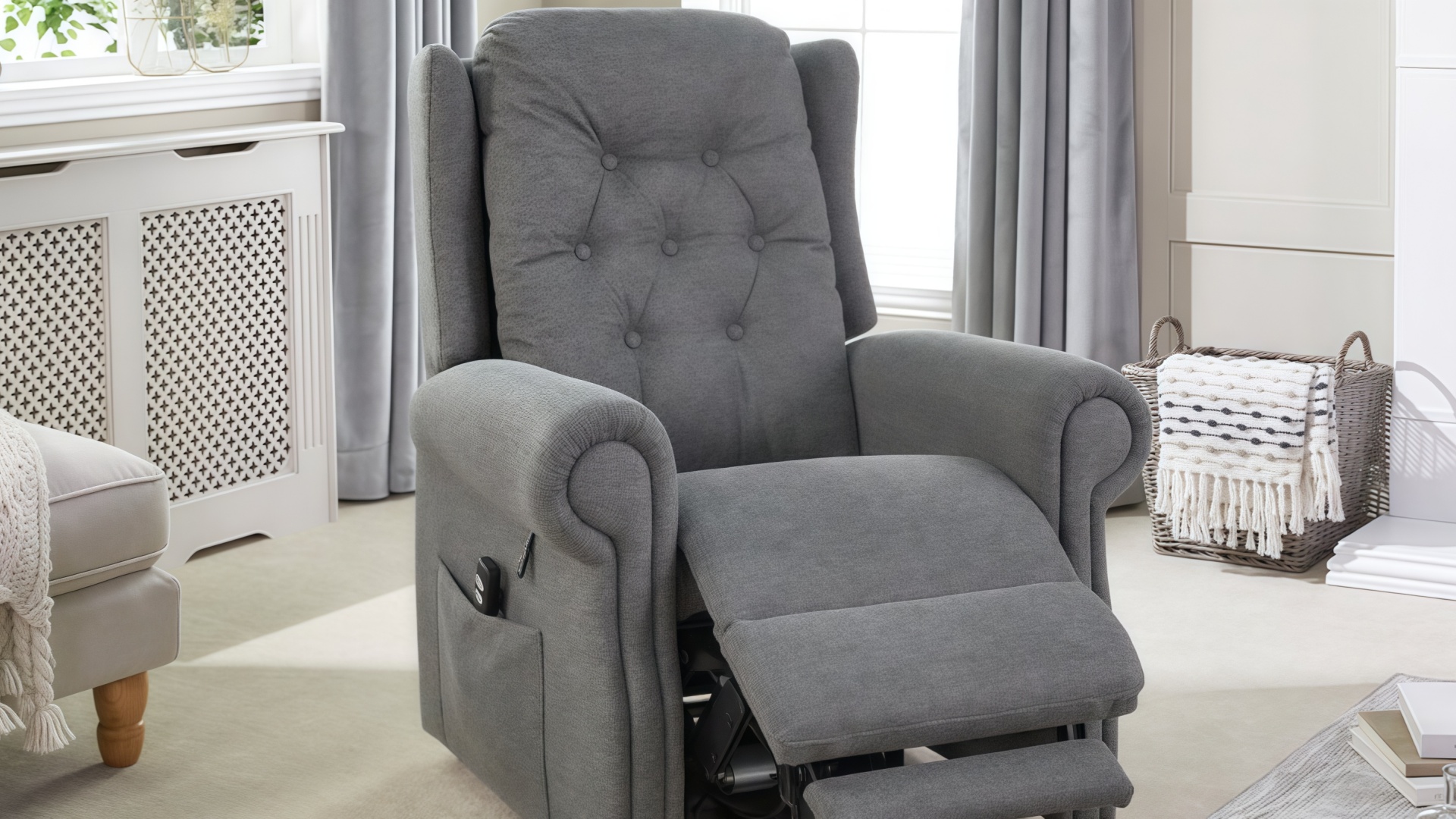
Ceiling‑mounted patient lift chairs are seat units suspended from ceiling track systems that can lift patients from beds, move them across rooms, and lower them into chairs or wheelchairs without floor‑based equipment or manual lifting. They merge patient lifts with strange‑looking medical seating.
Patient transfers (bed‑to‑chair, chair‑to‑toilet, etc.) are the single highest‑injury‑risk tasks for healthcare staff. Ceiling lift systems exist, but traditional sling attachments require staff to wrap fabric around patients. Lift chairs replace slings with rigid seats that patients can sit into directly, speeding transfers and improving dignity.
Transfer Methods: Manual vs Lift Solutions
| Transfer Parameter | Manual Transfer | Floor Lift (Hoyer) | Ceiling Lift (Sling) | Ceiling Lift Chair Innovation |
Staff required | ~2–3 | ~1 | ~1 | ~1 |
Transfer time | ~3–5 minutes | ~2–3 minutes | ~1.5–2 minutes | ~45–60 seconds |
Patient dignity | Low (manual handling) | Moderate | Moderate (sling wrapping) | High (sit directly) |
Weight capacity | Limited by staff | ~200 kg | ~350 kg | ~350 kg |
Floor space needed | Clear floor zone | Large footprint | None (ceiling system) | None (ceiling system) |
Training required | Physical skill | Moderate | Moderate | Minimal |
Lift chairs look like futuristic hovering seats sliding along ceiling rails, but their value is practical: they reduce transfer‑related staff injuries dramatically and improve patients'sense of safety and dignity, especially in long‑term care settings.

Table: Visual Strangeness vs Medical Effectiveness
| Innovation | Visual Strangeness Level | Medical Effectiveness | Cost Premium vs Standard | Key Patient Impact |
High (featureless forms) | Very high (self‑harm prevention) | ~+30–50% | Safety, dignity in behavioral health | |
Bariatric beds | Very high (oversized) | Very high (access to care) | ~+60–80% | Access, comfort, ulcer prevention |
Infection‑control seating | Low (looks normal) | High (HAI reduction) | ~+15–20% | Infection prevention in waiting areas |
Dialysis recliners | Moderate | Very high (long‑session comfort) | ~+40–50% | Treatment adherence and comfort |
MRI‑compatible furniture | High (no visible metal) | Essential (safety requirement) | ~+25–35% | Imaging safety and access |
Intubation chairs | High (articulating head) | Very high (airway success) | ~+45–60% | Life‑saving emergency support |
Negative‑pressure beds | Very high (transparent shell) | Very high (pandemic containment) | ~+200–300% | Airborne infection containment |
Turn‑assist stretchers | Moderate (segmented surfaces) | High (injury reduction) | ~+30–40% | Staff + patient safety |
Sensory‑calming chairs | High (canopies, pads) | High (neurodivergent inclusion) | ~+20–30% | Sensory comfort, treatment access |
Ceiling lift chairs | Very high (floating seat) | Very high (injury reduction) | ~+50–70% | Transfer safety and dignity |
This comparison shows that the strangest medical furniture innovations are often the most clinically effective. Visual weirdness usually reflects a difficult medical problem solved, not gratuitous design.
Hongye Furniture Group's healthcare division does not manufacture all 10 strange medical furniture innovations—no single manufacturer does—but it focuses on three categories directly relevant to everyday hospitals and clinics:
Infection‑control medical seating. Antimicrobial upholstery is standard across Hongye's healthcare seating line, helping waiting areas and patient rooms reduce pathogen survival between cleaning cycles.
Bariatric‑rated patient chairs and beds. Reinforced frames and high‑density cushioning support 250 kg and 350 kg capacity models, making bariatric seating and beds accessible beyond specialized centers.
Sensory‑calming waiting area furniture. Enclosed side panels, muted color palettes, and soft, non‑reflective textures support pediatric and behavioral health units where neurodivergent comfort is critical.
Hongye applies the same design philosophy across strange medical furniture categories: identify the medical problem first, design the furniture solution second, engineer for scalable production third. Features that look unusual—antimicrobial fabrics, enclosed side panels, reinforced bariatric frames—stay in the product only if they solve verified clinical needs. Aesthetics follow function, which is exactly how innovative healthcare furniture should work.
If you share your facility's current healthcare furniture mix, high‑risk zones (behavioral health, bariatric care, dialysis, waiting areas), and infection‑control priorities, Hongye can help identify which strange medical furniture innovations—such as infection‑control seating, bariatric chairs, or sensory‑calming waiting area layouts—will deliver the greatest safety, comfort, and ROI for your hospital or clinic.