
 |


| Quantity: | |
|---|---|
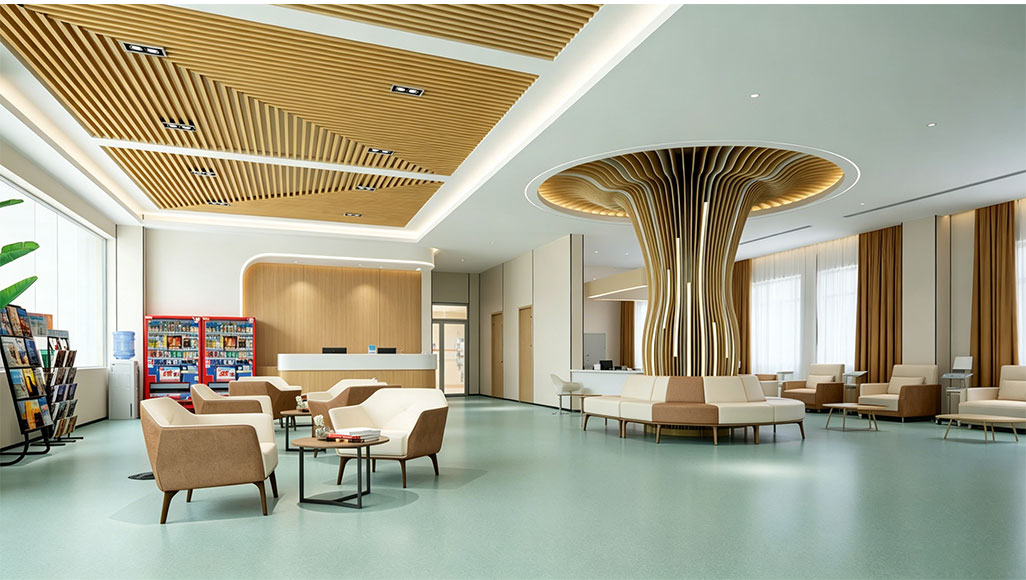
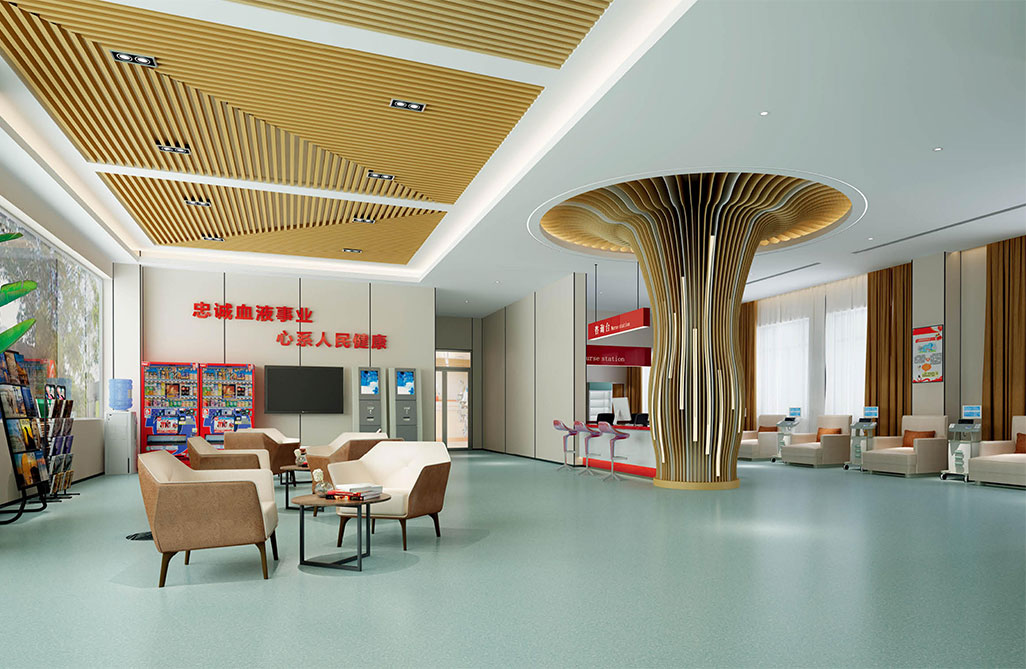
Our hospital public area furniture collection reimagines clinical spaces by combining strict healthcare infection control standards with welcoming hospitality aesthetics. Engineered specifically for high-traffic environments like hospital main lobbies, blood service centers , and outpatient reception zones, this integrated furniture solution delivers long-lasting structural durability while reducing patient anxiety.
From the seamless, curved timber-faced medical clinic reception counter to the creative column-wrapping modular benches , our layouts optimize patient traffic flow and maximize waiting capacity without cluttering the architectural floor space.
Ergonomic Single Waiting Armchair: $820mm \times 780mm \times 800mm$ (Seat height: $450mm$ for easy ingress/egress)
Modular Column-Wrapping Lounge Sofa: Inner diameter customizable (e.g., $\varnothing 1200mm$), outer diameter up to $3200mm$
Curved Medical Reception Counter: Individual modules at $1200mm / 1800mm / 2400mm$ long, desk height $850mm$ for barrier-free access
Minimalist Steel-Frame Coffee Table: $\varnothing 600mm \times 450mm(H)$ or $\varnothing 800mm \times 400mm(H)$
Upholstery & Foam: Premium anti-microbial vinyl and PU leather, combined with high-density, high-resilience molded cold foam that maintains its original shape even after hundreds of thousands of seating cycles.
Internal Support Frame: E0-grade multi-layer solid wood plywood with built-in reinforced structural carbon steel brackets, finished with solid ash wood feet or rust-proof stainless steel base plating.
Infection-Control Upholstery: All seating surfaces feature zero-penetration stitching and specialized fabrics that resist blood, urine, chemical disinfectants, and repeated 75% alcohol wipe-downs.
Column-Optimized Modular Seating: The unique architectural column bench system transforms dead space around structural pillars into highly efficient, comfortable 360-degree passenger-waiting islands.
Integrated Wire & LED Management: The healthcare reception desks feature factory-installed hidden cable routing pathways and recessed soft warm LED under-counter strip lighting to guide patients cleanly through dimly lit pathways.
Product Advantage
No-Deformation Molded Foam: Standard commercial chairs sag within 6 months of intense hospital use. Our premium high-density cold-molded foam guarantees zero sagging and continuous structural support for over 5 years.
Hospital-Grade Sanitization Shield: Traditional vinyl cracks when cleaned with harsh clinical disinfectants. Our medical-grade vinyl skin is scientifically tested to withstand heavy-duty medical chemical sanitization without peeling or fading.
Anxiety-Reducing Color Psychology: Moving away from sterile, freezing steel airport-style benches, our warm camel, beige, and natural oak-tone color science transforms cold hospital lobbies into warm, healing environments .
Solution to the Pain Point
The Structural Breakdown Pain Point: Cheap public seating quickly wobbles and poses safety risks. Our heavy-duty internal steel-to-wood interlocking structure ensures maximum stability under high-stress, heavy-weight public seating wear.
The Cross-Infection Pain Point: Dust and moisture gather in furniture seams, breeding bacteria. Our public chairs are detailed with minimal crevices and seamless fabric wraps, making it impossible for fluids to seep into the inner padding.
The Space Waste Pain Point: Lobbies often face overcrowding due to poor furniture layouts. Our custom-molded column seats (6.jpg) utilize dead corner spaces around pillars, boosting seating density by up to 35%.
Design Philosophy
Our design philosophy follows "Healing Through Warmth, Efficiency Through Form." We believe hospital public spaces should not feel punitive or cold. By blending organic curved shapes, soft tactile materials, and ergonomic lumber support profiles, our furniture serves as a comforting bridge that respects patient dignity while accelerating daily clinical check-in workflows.
Raised Seat Height Profile: Engineered at a precise $450mm$ height with slightly firm cushion support, allowing geriatric, pregnant, or injured patients to stand up easily without straining their knees.
Wall-Saver Leg Design: Rear furniture legs are angled slightly outward to act as a natural buffer, preventing the backrest from scraping and damaging delicate hospital wall paint or drywall panels.
Non-Marring Leveling Glides: Heavy-duty polymer floor protectors are fitted on all metal and wooden feet to prevent scratching epoxy or PVC hospital floors during daily repositioning.
Packaging: International transit-safe engineering packaging. Disassembled components are wrapped in multi-layer PE scratch-resistant films, reinforced corner foam boards, and encased in extra-thick double-wall corrugated cardboard boxes. High-volume orders are palletized on export-standard plastic or fumigated pallets.
Lead Time: 35-45 calendar days for customized healthcare facility orders following architectural blueprint sign-offs.
Returns: As a contract project product built to custom color and layout specifications, returns for buyer's remorse are not accepted. Complete replacement warranties apply instantly to any transport-related damages.
5-Year Heavy Commercial Warranty: Covers the internal structural metal/plywood framework and foam core resilience.
2-Year Surface Quality Warranty: Covers seams, stitching integrity, and anti-microbial leather wear under recommended hospital cleaning schedules.
Q1: Can we customize the diameter of the column waiting sofa to fit the pillars in our specific building?
A: Yes. The column-wrapping sofa shown in 6.jpg is completely modular. You only need to provide the precise circumference/diameter of your lobby columns, and our engineers will calculate the exact scale for a perfect flush fit.
Q2: Are your fabrics certified for flame resistance and commercial hospital usage?
A: Yes, our medical vinyl and fabrics pass strict international flammability standards (such as CAL117 or BS5852) and carry certified test reports for anti-bacterial and anti-mildew performance.
Q3: Can we add integrated USB charging ports or power outlets to the lobby waiting sofas?
A: Absolutely. We can factory-integrate flush-mounted, medical-grade USB ports and power outlets into the armrests or bases of our sofas to provide convenient charging for patients during long waiting times.


