
Views: 0 Author: Rebecca | Senior FF&E Procurement Specialist Publish Time: 2026-08-12 Origin: Site


What makes furniture suitable for infection control in healthcare facilities? Infection-control furniture should support routine cleaning and disinfection through smooth, nonporous or fluid-resistant surfaces, sealed or limited joints, accessible geometry, and documented compatibility with the facility's approved disinfectants. It supports an infection-prevention program, but it does not replace EPA-registered disinfectants, environmental cleaning, hand hygiene, or clinical protocols.

Healthcare furniture is not simply residential or office furniture placed inside a hospital. Patient rooms, nurses'stations, waiting areas, dialysis centers, clinics, and treatment spaces expose furniture to repeated disinfectant use, fluid contact, high-touch traffic, mobility equipment, and demanding maintenance routines. Every material choice—from upholstery and HPL edging to drawer pulls, casters, seams, and frames—affects how effectively staff can clean and maintain the environment.
This guide explains how to select infection-control furniture for healthcare facilities, compare common healthcare furniture materials, identify cleanability risks in patient-care areas, evaluate disinfectant compatibility, and request the supplier documentation needed for procurement review.
1. Infection-control furniture supports cleaning and disinfection. Smooth, nonporous or fluid-resistant surfaces, limited seams, sealed edges, and accessible geometry make routine cleaning more effective.cdc+1
2. Material selection must match actual cleaning protocols. Ask manufacturers to confirm compatibility with the facility’s approved disinfectants, use dilution, wet contact time, application method, and cleaning frequency.
3. Near-patient furniture deserves the highest scrutiny. Overbed tables, bedside cabinets, recliners, chair arms, patient seating, bed-adjacent storage, and staff work surfaces receive frequent contact and should be easy to access and disinfect.
4. Antimicrobial treatments are supplementary. They do not replace cleaning, disinfection, hand hygiene, or infection-prevention programs; public-health antimicrobial claims require appropriate regulatory support and labeling.
5. Supplier documentation is part of the furniture specification. Product drawings, material data, seam details, cleaning instructions, chemical-compatibility information, repair procedures, and warranties should be reviewed before purchase.
Healthcare furniture is easier to clean when it has a smooth, accessible, durable surface that staff can wipe thoroughly without damaging the product. The goal is not simply to select a material described as “antimicrobial,” but to make sure furniture can be cleaned consistently and completely during daily, between-patient, and terminal-cleaning processes.
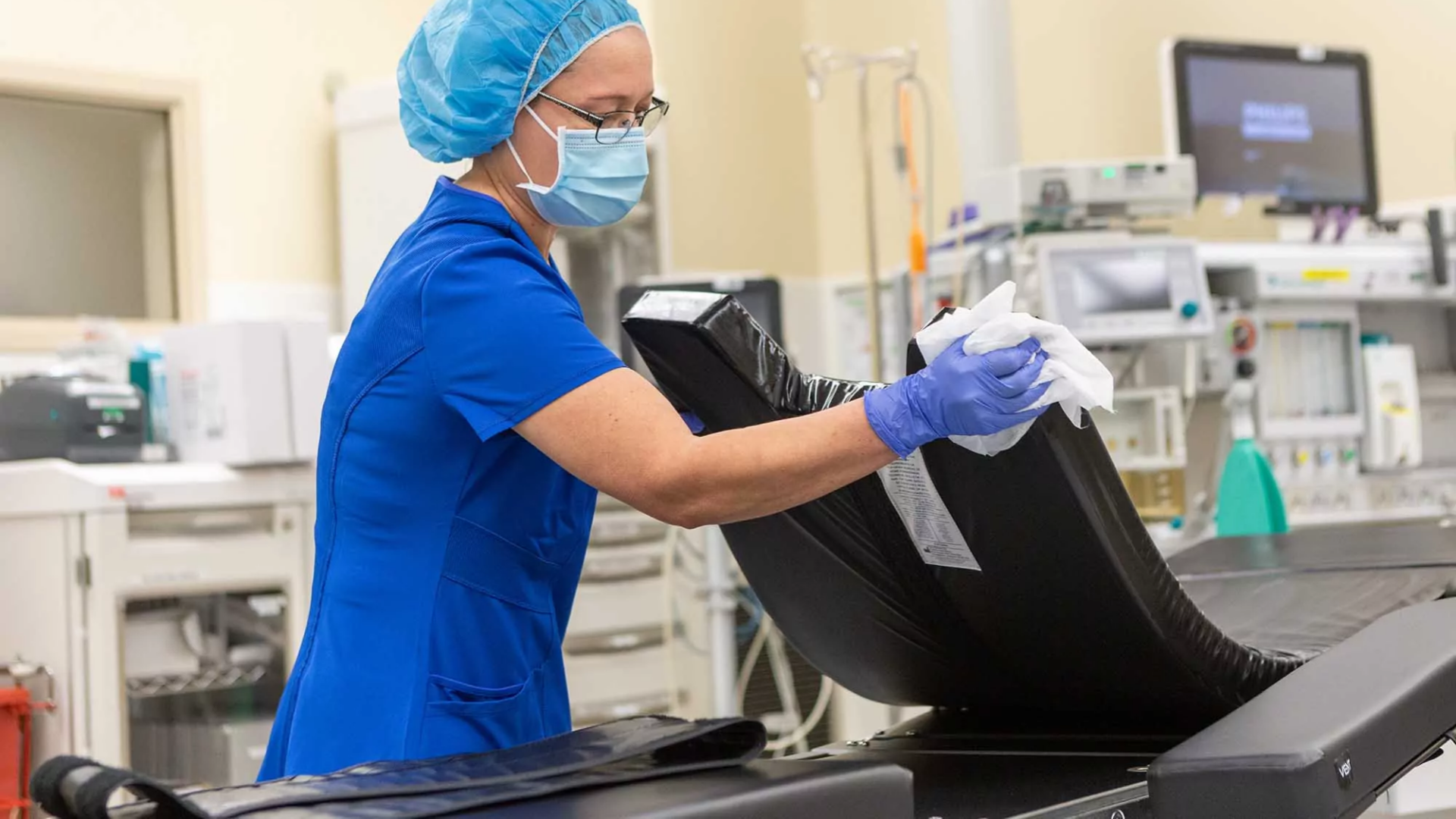
The four core principles are:
Nonporous or fluid-resistant surfaces. These reduce fluid absorption and make routine wiping more effective.
Limited seams and joints. Fewer gaps, cracks, and exposed fasteners reduce areas where soil, moisture, and debris can accumulate.
Accessible geometry. Rounded corners, visible surfaces, sealed edges, and adequate clearance beneath furniture help environmental services teams reach all cleanable areas.
Chemical compatibility. Materials, finishes, adhesives, edge bands, coatings, upholstery, and hardware must tolerate the disinfectants actually used in the facility.
CDC guidance emphasizes regular cleaning and disinfection of environmental and medical-equipment surfaces using appropriate EPA-registered disinfectants. Furniture should be selected to support these processes, not as a substitute for them.
No single material is best for every healthcare setting. The correct choice depends on patient-contact level, fluid exposure, cleaning protocol, aesthetics, expected service life, repairability, budget, and applicable safety requirements.
AHE and BIFMA cleanability guidance emphasize smooth surfaces, minimized joints, and nonporous or barrier-protected materials because these features allow more effective routine cleaning.
Material selection alone does not determine cleanability. The way furniture is designed, assembled, installed, and maintained can either support or hinder infection-control workflows.

The most important question is practical: Can environmental services staff reach, wipe, inspect, and maintain every patient-accessible surface using the facility's real cleaning process?
Near-patient surfaces are furniture components in or immediately around the patient-care zone. They are touched frequently by patients, visitors, nurses, physicians, therapists, and environmental services staff. These items should receive the highest level of cleanability review.
Common near-patient furniture surfaces include:
Overbed tables and height-adjustment controls
Bedside cabinets, drawer pulls, and bedside storage
Patient recliners, chair arms, and control panels
Visitor chair arms and side tables
Bed-adjacent wardrobes and personal-storage units
Nurse charting surfaces and mobile workstations
IV-pole supports, equipment carts, and treatment tables
Call-device supports and patient-accessible headwall furniture components
For these products, prioritize smooth patient-contact surfaces, minimal upholstery seams, sealed edges, durable hardware, and written disinfectant compatibility. Assign clear responsibility for cleaning and inspection between nursing, environmental services, and facilities teams.

Healthcare facilities should select furniture based on use intensity and patient-contact risk, not simply by department name.
Even low-acuity or public zones need materials that can handle real use and routine maintenance. “Commercial grade” does not automatically mean suitable for healthcare environments.
Furniture should be selected only after reviewing the facility's actual cleaning and disinfection program. That means identifying which disinfectants are used, how they are diluted, how long they remain wet on surfaces, how often they are applied, and whether they are sprayed, wiped, or applied through electrostatic or UV-based processes.
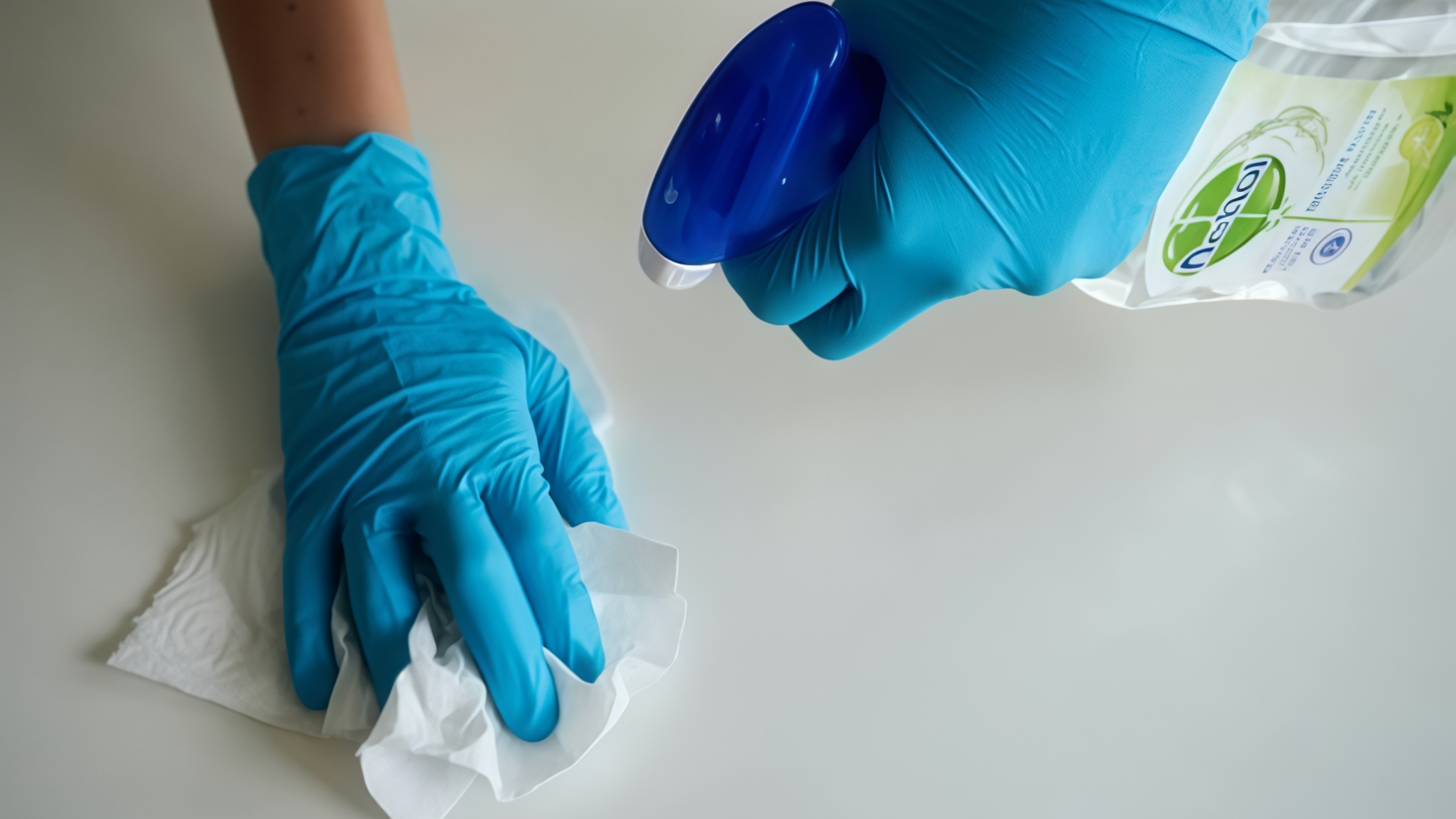
CDC recommends regular cleaning and disinfection of environmental surfaces with appropriate EPA-registered products. Facilities should follow both the disinfectant label and the furniture manufacturer's cleaning instructions.
Before approving furniture, request written documentation that addresses:
Discoloration and fading
Cracking, embrittlement, or delamination
Corrosion of metal components
Loss of coating or surface gloss
Seam and adhesive failure
Upholstery damage or fluid-barrier degradation
Warranty exclusions related to cleaning chemicals
A surface that survives one wipe in a showroom may not survive years of high-frequency cleaning in a patient-care environment.
Some healthcare furniture materials incorporate antimicrobial additives, such as silver, copper, zinc-based compounds, or other treatments. These materials may be used to help protect the treated article itself from odor-causing bacteria, mildew, staining, or material deterioration where permitted by law and supported by supplier documentation
However, antimicrobial furniture should not be marketed or specified as a replacement for environmental cleaning or disinfection.
Antimicrobial additives do not replace EPA-registered disinfectants.
Antimicrobial-treated furniture does not replace hand hygiene, environmental services, or infection-prevention procedures.
A claim that a furniture surface kills pathogens, protects patients, prevents disease transmission, or reduces HAIs may require EPA registration and product-specific labeling in the United States.
Buyers should ask suppliers to provide the exact antimicrobial claim language, relevant registration or treated-article documentation, and cleaning instructions for the specific product configuration.
1. Is the antimicrobial additive incorporated into the material, applied as a finish, or both?
2. What claim is legally permitted for this product in the target market?
3. Does the claim protect the treated material only, or is there an EPA-registered public-health claim?
4. Does the material remain compatible with the facility's approved disinfectants?
5. Is the antimicrobial technology covered by a warranty, and what exclusions apply?
6. Does the supplier provide third-party documentation for the exact product and material?
The most reliable infection-control strategy remains straightforward: select furniture that can be thoroughly cleaned, then ensure cleaning is performed correctly and consistently.
Behavioral health furniture must balance cleanability with additional safety requirements. Higher-risk patient-accessible spaces may need ligature-resistant, tamper-resistant, weighted, anchored, or one-piece furniture configurations based on a room-by-room ligature risk assessment.
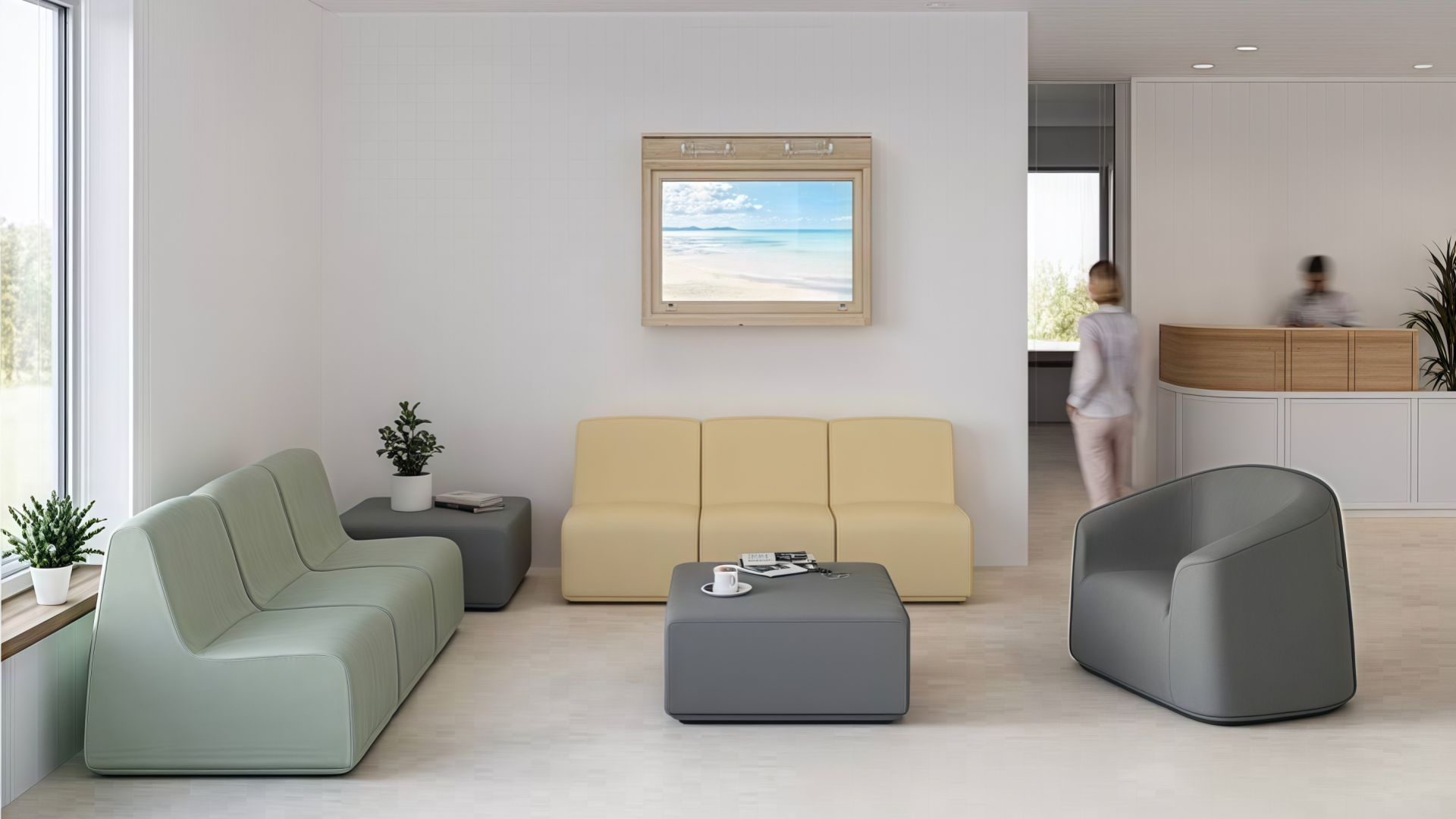
Not every behavioral health room requires the same furniture configuration. Requirements depend on patient population, room access, observation level, local regulations, and the facility's documented ligature risk assessment.
For a deeper review, see Hongye's Anti-Ligature Behavioral Health Furniture Design Guide, which explains risk-based furniture selection, ligature-resistant design considerations, and supplier documentation requirements.
Use this checklist when evaluating furniture for a hospital, clinic, rehabilitation center, dialysis center, senior living community, or other patient-care environment:
1. Identify the room's use and risk level. Determine who uses the furniture, how frequently it is touched, and what cleaning intensity it will experience.
2. Confirm material suitability. Evaluate porosity, fluid resistance, edge sealing, seam construction, and repairability.
3. Review cleaning access. Check whether staff can clean underneath, behind, inside, and around each item without moving heavy furniture unnecessarily.
4. Match furniture to disinfectants. Request written compatibility confirmation for actual facility cleaning products and protocols.
5. Inspect seams and joints. Avoid unnecessary crevices, exposed staples, decorative piping, unfinished cut edges, and unsealed joints.
6. Check hardware and controls. Ensure pulls, handles, casters, control buttons, and adjustment mechanisms can be wiped thoroughly.
7. Request supplier documentation. Obtain cleaning guides, material data, test reports, warranty terms, repair instructions, and replacement-part information.
8. Plan for lifecycle maintenance. Define inspection routines for damaged upholstery, chipped coatings, failed edge bands, rust, loose hardware, and fluid intrusion.
9. Coordinate responsibilities. Clarify what environmental services, nursing, facilities, and vendors are responsible for cleaning and maintaining.
10. Pilot before large deployment. Where possible, test a sample product against the facility’s actual cleaning chemicals and workflow before a full rollout.
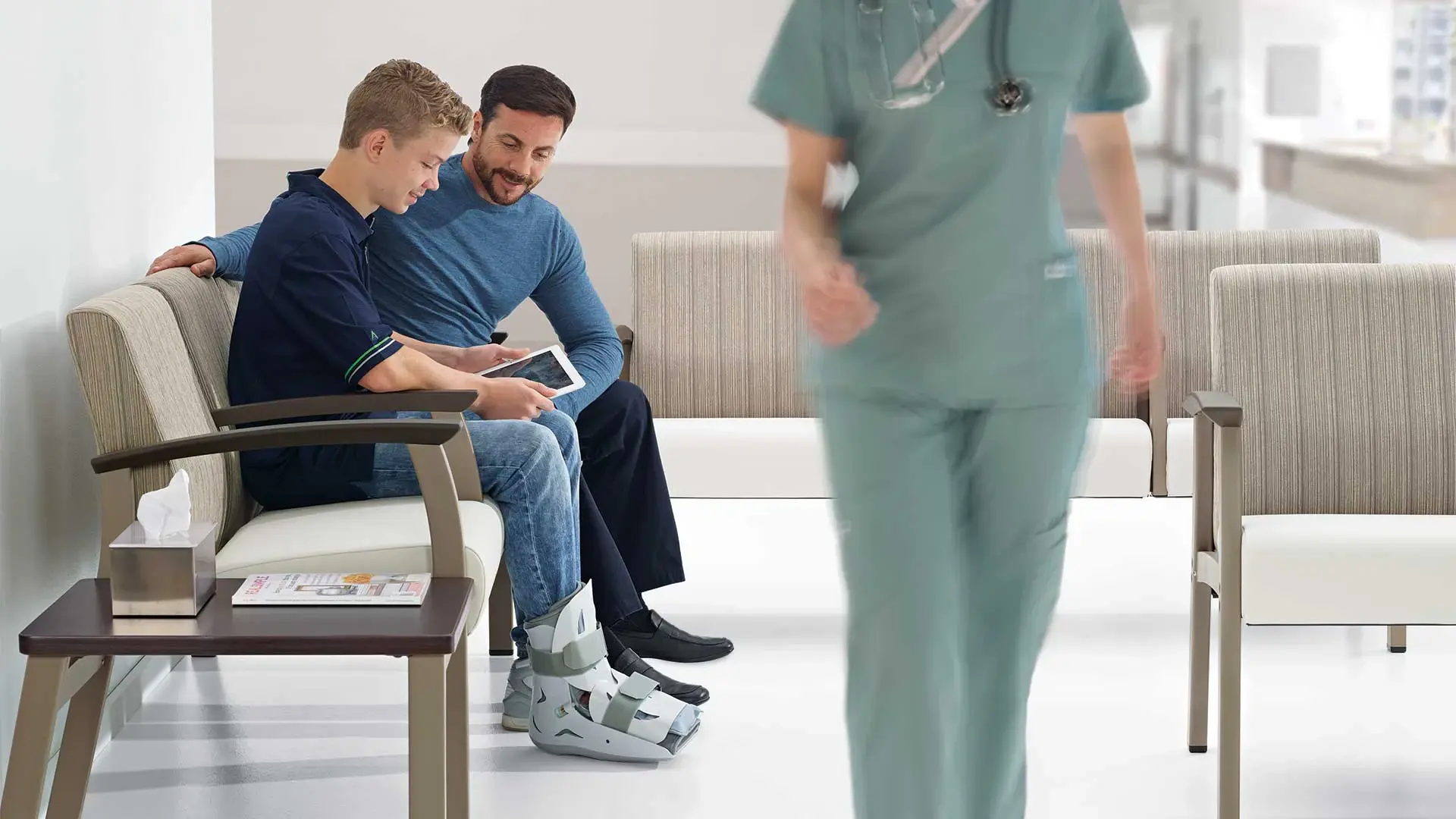
A complete infection-control furniture submittal should include more than a catalog page. Ask suppliers to provide:
Product data sheet and intended room application
CAD drawings and installation details
Material composition and finish schedule
Upholstery, seam, edge-band, and joint-construction details
Cleaning and disinfection instructions
Chemical-compatibility confirmation for approved facility disinfectants
Warranty and cleaning-related exclusions
Fire-performance documentation where applicable
Field-repair procedures and replacement-parts availability
Caster, hardware, and moving-part maintenance instructions
Any antimicrobial treatment claim language and supporting regulatory documentation
Sustainability or indoor-air-quality documentation, if required by the project
This documentation helps infection-prevention teams, architects, facilities managers, and procurement teams make decisions based on verified performance rather than broad marketing claims.
Furniture is suitable for infection-control-oriented healthcare environments when it supports routine cleaning and disinfection through smooth, nonporous or fluid-resistant surfaces, accessible geometry, limited seams, sealed edges where appropriate, and written compatibility with the facility's approved disinfectants. It supports infection prevention but does not independently certify a room or facility as infection-control compliant.
Standard office furniture may be suitable in administrative spaces where patients do not receive care and exposure to clinical cleaning protocols is limited. In patient-care, treatment, waiting, and high-touch areas, furniture should be selected for cleanability, durability, fluid resistance where needed, and compatibility with the facility's cleaning process.
Safe chemicals depend on the specific furniture materials and finishes. Healthcare facilities should follow the disinfectant label and the furniture manufacturer's cleaning instructions. Before procurement, request written compatibility confirmation for the actual products, concentrations, wet contact times, cleaning frequency, and application methods used in the facility.
No. Antimicrobial additives do not replace cleaning, disinfection, hand hygiene, or infection-prevention protocols. In the United States, claims that a treated surface protects people against pathogens, prevents disease transmission, or reduces HAIs may require EPA registration and product-specific labeling.
Behavioral health furniture must support infection control while also meeting the safety requirements identified in a room-by-room ligature risk assessment. Higher-risk patient-accessible spaces may require tamper-resistant hardware, weighted or anchored bases, concealed frames, reduced attachment opportunities, and one-piece or ligature-resistant construction.
Near-patient surfaces need the highest level of review. This includes overbed tables, bedside cabinets, recliner arms and controls, patient seating, visitor chair arms, headwall-adjacent furniture, mobile workstations, treatment tables, and other items frequently touched by patients, visitors, and staff.
Hongye Furniture Group's healthcare furniture division supports hospitals, clinics, rehabilitation centers, dialysis facilities, senior living communities, and specialized medical environments with furniture designed for clinical durability, cleanability, comfort, and workflow efficiency.
Hongye can provide product specifications, material submittals, cleaning guidance, available test documentation, upholstery options, and project-based furniture coordination for healthcare projects. For infection-control furniture planning, share your room list, intended use, approved cleaning products, maintenance requirements, and project timeline so our team can recommend appropriate material and furniture configurations.
Contact Hongye Healthcare Furniture to discuss cleanable patient-room furniture, healthcare seating, medical storage, nurse-station casework, treatment tables, and project-specific FF&E solutions.


