
Views: 0 Author: Rebecca | Senior FF&E Procurement Specialist Publish Time: 2026-08-11 Origin: Site


What is anti-ligature furniture, and which standards govern behavioral health facilities? Anti-ligature furniture—also referred to as ligature-resistant furniture—is designed to reduce opportunities for a cord, sheet, belt, clothing, or similar material to form a sustainable attachment point that could be used for self-harm. In behavioral health settings, furniture selection should be based on a documented, room-by-room ligature risk assessment, applicable state and local regulations, CMS expectations where relevant, accreditation requirements, and project-specific clinical safety criteria.
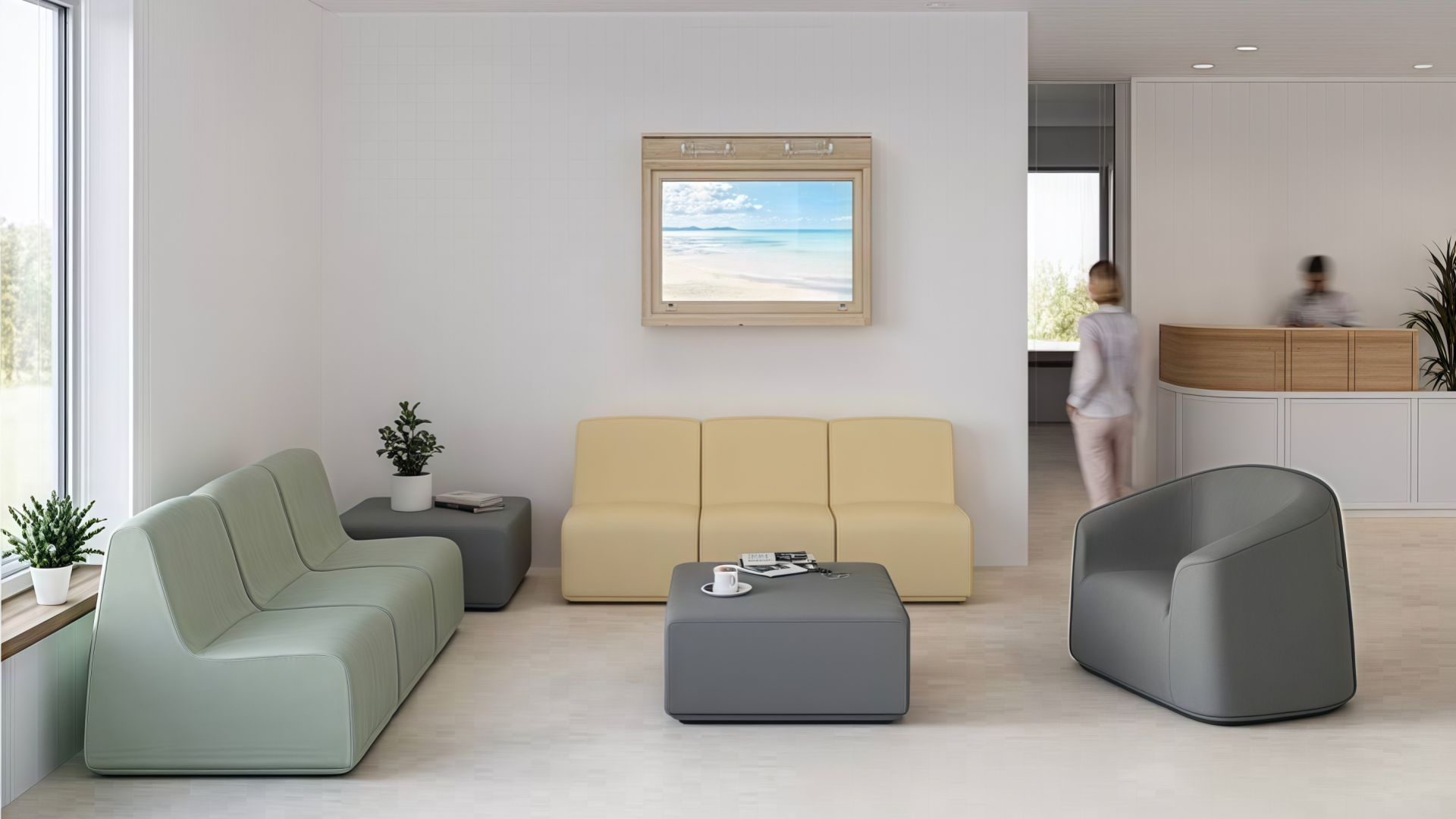
There is no single “approved” product list or universal certification bundle that automatically makes a psychiatric unit compliant. Rather, safe behavioral health furniture is one component of a wider environmental safety strategy that includes supervision, access control, maintenance, staff training, cleaning protocols, door hardware, building systems, and ongoing risk assessments.
1. Ligature-resistant furniture reduces risk; it does not guarantee absolute safety. Furniture must be selected in response to the risk profile of each accessible space, patient acuity, supervision level, and applicable regulatory requirements.
2. Behavioral health furniture must balance safety, dignity, durability, and therapeutic comfort. High-risk spaces may require fixed, weighted, tamper-resistant, and ligature-resistant furniture, while lower-risk or staff-only spaces may use different specifications.
3. Risk assessment comes before product selection. Doors, hardware, beds, seating, cabinetry, windows, HVAC grilles, plumbing, electrical outlets, and accessories should be evaluated as one interconnected environment.
4. Product verification is essential. Buyers should request test reports, anchoring details, fire-performance documentation, chemical-compatibility evidence, product drawings, maintenance instructions, and material submittals.
5. Certifications are project-dependent. Structural testing, low-emission materials, responsible wood sourcing, fire testing, and disinfectant compatibility may be required depending on local rules, the owner's specification, and procurement policy.
Behavioral health environments—including psychiatric inpatient units, crisis stabilization centers, addiction treatment facilities, forensic units, and correctional healthcare spaces—must provide therapeutic comfort while reducing foreseeable self-harm and tampering risks. Ligature-resistant behavioral health furniture is designed to minimize accessible projections, gaps, edges, hardware, and removable elements that could create an attachment opportunity.

The term “ligature-resistant”is generally more accurate than “ligature-free.” It is not realistic to claim that any physical environment can remove every possible risk point; instead, facilities identify hazards, assess their level of risk, and apply appropriate controls. The Joint Commission does not publish a mandatory furniture catalog, and no individual chair, bed, cabinet, or table makes a facility automatically compliant.
FGI guidance recommends behavioral health furniture that is sturdy, heavy where appropriate, and easy to clean or reupholster. It also recommends ligature-resistant locksets for patient-accessible doors. CMS guidance identifies furniture that can be easily moved or thrown, as well as accessible sharp objects, among the environmental safety concerns in psychiatric settings.
Before choosing anti-ligature furniture, the project team should conduct a room-by-room environmental risk assessment. The assessment should involve clinical leadership, safety officers, facilities personnel, architects, infection-prevention staff, behavioral health specialists, and furniture/FF&E teams.
A ligature risk assessment should evaluate:
Patient access: Can patients enter the room independently, and are they ever unsupervised there?
Patient population: Does the space serve individuals at elevated risk of self-harm, aggression, elopement, tampering, or contraband concealment?
Observation level: Is direct staff observation continuous, intermittent, or unavailable?
Furniture behavior: Can an item be moved, lifted, thrown, dismantled, climbed, or used to conceal objects?
Attachment opportunities: Do gaps, handles, seams, hinges, overhangs, brackets, fasteners, or exposed frames create an unacceptable ligature risk?
Material safety: Can upholstery be torn, picked apart, peeled back, or damaged by approved cleaning chemicals?
Maintenance requirements: Can the facility inspect, repair, and document the furniture’s condition throughout its lifecycle?
This assessment should document the selected controls for each room, including furniture type, anchoring method, observation protocol, maintenance frequency, and corrective-action process. CMS and accreditation expectations are risk-based; the required level of ligature resistance depends on the patient population, setting, supervision, and the facility’s documented assessment.
Behavioral health furniture should be specified according to the risk profile of each room rather than applying one identical product specification throughout the entire facility.
| Risk Level | Example Patient Area | Furniture Approach | Key Decision Factors |
| Higher risk | Patient bedrooms, seclusion rooms, high-acuity psychiatric units, unsupervised patient areas | Ligature-resistant, tamper-resistant, heavy or anchored furniture; limited removable components | Patient acuity, unsupervised access, self-harm risk, local regulations |
| Moderate risk | Day rooms, dining rooms, activity spaces, corridors | Durable, cleanable, tamper-resistant furniture with reduced ligature opportunities and stable bases | Staff observation, circulation, furniture mobility, patient mix |
| Lower risk | Staff-only spaces, secured offices, controlled interview rooms | Standard healthcare or commercial furniture may be appropriate | Confirm patients cannot access spaces without supervision |
| Public areas | Reception spaces, family waiting rooms, outpatient lobbies | Cleanable, durable, accessible furniture; ligature resistance based on patient access and supervision | Open access, visibility, visitor use, security protocols |
Higher-risk havioral health spaces often require the most rigorous furniture controls. However, even in lower-risk areas, facilities should avoid treating furniture selection as a purely aesthetic decision. Furniture condition, accessibility, infection control, durability, and maintainability remain central to safety and patient experience.
The following are practical design and procurement considerations—not universal regulatory thresholds. Every specification should be validated against the facility's ligature risk assessment, local code, project requirements, and available product documentation.
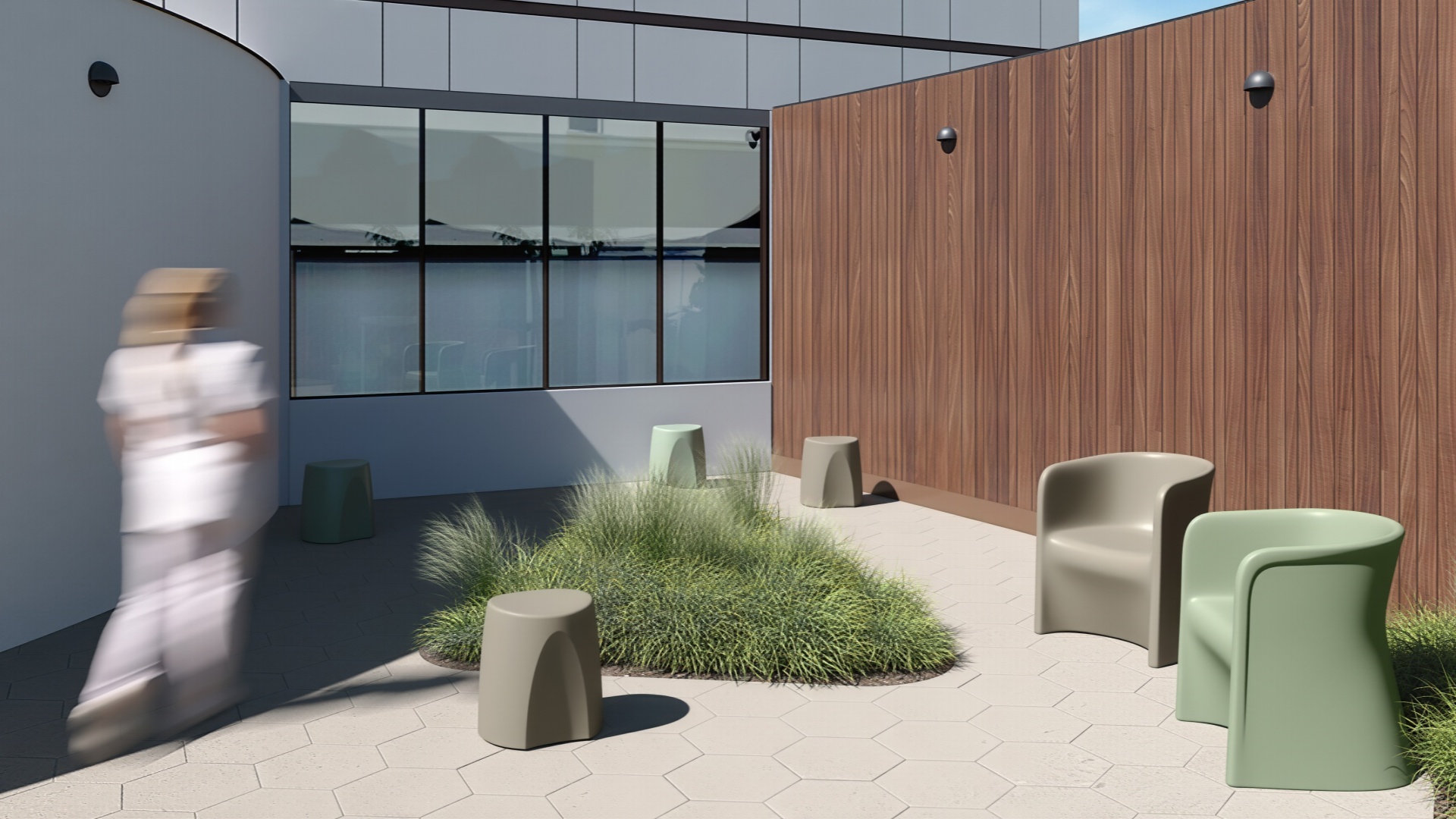
Sharp corners can cause injury during falls, aggression, or patient contact. Radiused edges also reduce obvious points where materials may catch or wrap.
Specify:
Smooth, rounded exposed corners on beds, seating, tables, desks, and storage
Consistent edge treatment across patient-accessible surfaces
No sharp metal corners, exposed brackets, or chipped laminate edges
Furniture geometry that avoids hooks, narrow projections, or pronounced overhangs
A project may specify a minimum corner radius, but the exact dimension should come from the project specification and risk assessment rather than being represented as a universal FGI or CMS requirement.
Exposed hinges, pulls, brackets, screws, and latch mechanisms may create risks related to ligature attachment, tampering, contraband concealment, or weaponization.
| Hardware Type | Standard Commercial Approach | Ligature-Resistant Behavioral Health Approach |
| Door hinges | Exposed butt hinges | Continuous or concealed hinge systems, where appropriate |
| Drawer pulls | Projecting D-pulls or knobs | Recessed pulls, integrated finger channels, push-latch systems |
| Fasteners | Exposed standard screws | Concealed or tamper-resistant fasteners |
| Vent covers | Projecting grilles or louvers | Flush, secured, perforated covers subject to facility review |
| Wall fixtures | Hooks and exposed brackets | Recessed, flush-mounted, breakaway, or eliminated components |
Furniture must also work with behavioral health door hardware, window systems, plumbing fixtures, and building accessories. A ligature-resistant chair cannot compensate for a hazardous adjacent wall fixture or accessible door closer arm.
Patient-accessible furniture should be difficult to dismantle with improvised tools. Tamper-resistant construction helps reduce the chance that patients can remove components, expose sharp edges, obtain fasteners, or access concealed cavities.
Common approaches include:
Tamper-resistant security fasteners
Concealed connection points
Welded or permanently secured frame components where appropriate
Solid or visible interiors that avoid hidden contraband cavities
Hardware that requires specialized tools for authorized maintenance
Documented inspection points for facility maintenance teams
Suppliers should provide assembly drawings, fastener information, maintenance instructions, and any available tamper-resistance testing or internal verification records.
Upholstered behavioral health furniture should balance comfort with resistance to fluids, tears, picking, and high-frequency cleaning. Loose covers, accessible zippers, exposed Velcro, decorative piping, and fragile seams can create maintenance and safety concerns.
Request upholstery that offers:
Healthcare-grade, fluid-resistant surfaces
Minimal exposed seams in patient-contact areas
High tear and abrasion resistance
Compatibility with the facility's approved disinfectants
Foam and upholstery assemblies suitable for applicable fire-performance requirements
Repairability or replacement plans that preserve the original safety configuration
FGI guidance emphasizes that behavioral health furniture should be easily cleaned, sturdy, and as heavy as practical for the use case.
Furniture that is too light may be moved, thrown, stacked, used for climbing, or repositioned against doors and windows. Depending on the room risk level, furniture may need weighted bases, floor anchoring, wall anchoring, or anti-tip mechanisms.
| Furniture Type | Possible Risk-Control Options | Procurement Questions |
Patient chair | Weighted base, stable footprint, no casters in high-risk rooms | Can one patient lift, drag, throw, or stack it? |
| Dining table | Weighted pedestal, floor anchoring, rounded base | Can it tip or be used as a barricade? |
| Bedroom dresser | Wall anchoring, anti-tip restraint, tamper-resistant attachment | Can drawers be removed or the unit tipped? |
| Bed frame | Integrated construction, floor anchoring where required | Can components be dismantled, moved, or used as anchor points? |
| Storage unit | Anchored casework, recessed pulls, limited removable shelves | Are gaps, hinges, shelves, or handles creating risk? |
Do not rely on a generic chair-weight figure as a universal safety threshold. The correct weight and anchoring strategy depend on the room, patient group, supervision level, access to other objects, and local requirements.
Patient-accessible areas should avoid unnecessary handles, hooks, protruding arms, shelf brackets, towel bars, exposed rails, and similar projections. Where a functional feature is required, the design team should consider recessed, flush-mounted, breakaway, or otherwise risk-reduced alternatives.
Examples include:
Recessed window controls
Flush cabinet and drawer pulls
Ligature-resistant door hardware
Minimal or integrated shelf systems
Breakaway accessories where clinically appropriate
No exposed arms on door closers in patient-accessible zones, where risk assessment requires alternatives
The decision must consider clinical usability, accessibility, maintenance access, emergency response, and local code obligations.
Material selection affects safety, infection prevention, lifecycle cost, repairability, and patient dignity.
| Component | Commonly Considered Materials | Materials Requiring Extra Review | Why It Matters |
| Frames | Powder-coated steel, solid wood, integrated molded materials | Hollow frames or easily opened components | Strength, tamper resistance, reduced concealment risk |
| Upholstery | Healthcare-grade polyurethane or contract vinyl | Loose-weave fabric, removable covers, easily picked materials | Fluid resistance, cleanability, tear resistance |
| Tabletops | Solid surface, sealed laminate, stainless steel | Glass, exposed laminate edges, fragile decorative layers | Shatter resistance, cleanability, durability |
| Fasteners | Stainless or coated tamper-resistant hardware | Standard exposed fasteners in patient-accessible zones | Corrosion resistance, tamper control |
| Storage | Anchored casework with secured hardware | Freestanding or easily tipped units | Stability, contraband control, safe access |
Materials should be selected only after confirming chemical compatibility with actual cleaning products and planned cleaning frequency. Ask suppliers for written cleaning guidance rather than relying on generic “antimicrobial” claims.
Behavioral health furniture procurement should include verification requirements that are relevant to the product and project. Not every product needs the same test method, and no single test can establish full behavioral health safety.
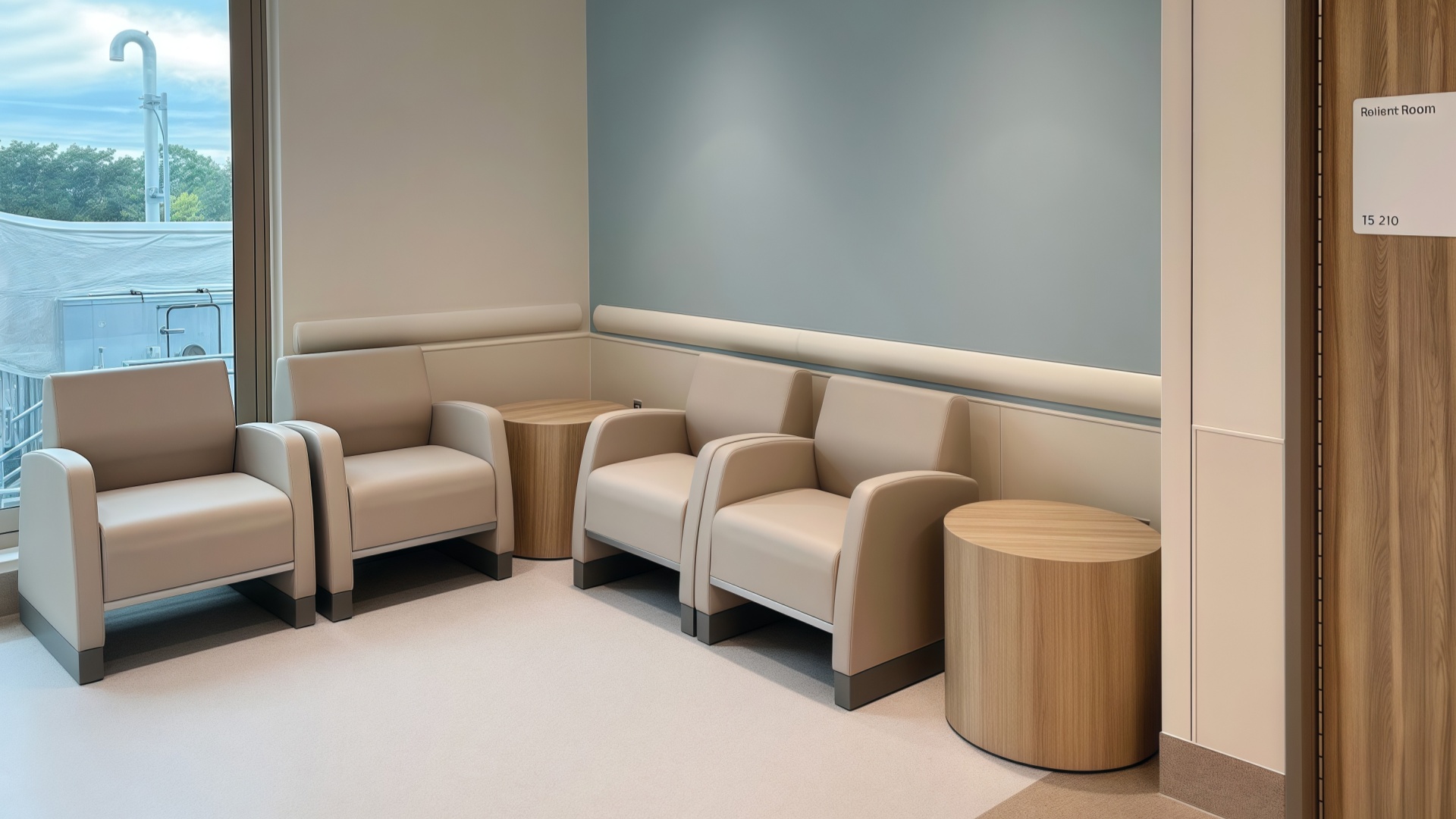
| Verification Area | What to Request | Why It Matters |
| Structural performance | Applicable ANSI/BIFMA, healthcare, or project-specific test reports | Confirms load capacity, durability, and stability |
| Tip and impact resistance | Product-specific stability data, impact testing where specified | Helps assess use under force, climbing, or dynamic loading |
| Ligature-risk design review | Product drawings, accessible-gap/projection review, risk-reduction features | Supports the facility’s room-by-room ligature risk assessment |
| Tamper resistance | Fastener schedule, assembly drawings, maintenance tool requirements | Helps prevent unauthorized disassembly |
| Fire performance | Applicable upholstery, textile, foam, or assembly fire documentation | Supports code compliance and procurement requirements |
| Cleanability and chemical compatibility | Approved-disinfectant list, wipe-test or chemical-resistance data | Ensures furniture survives real cleaning protocols |
Buyers should ask each supplier to identify the exact test standard, edition, product configuration, laboratory, date, and pass/fail criteria. Do not accept a generic statement such as “BIFMA compliant” without knowing which standard was tested and whether it applies to the product being purchased.
Before approving behavioral health furniture, procurement teams should confirm the following:
1. Risk alignment: The item is appropriate for the specific room and the documented ligature risk assessment.
2. Clinical review: Behavioral health clinicians, facilities, safety officers, and infection-prevention teams have reviewed the product application.
3. Product drawings: Drawings identify dimensions, accessible seams, fasteners, gaps, hardware, anchoring points, and maintenance access.
4. Anchoring plan: Floor, wall, or anti-tip requirements are coordinated with construction details and facility operations.
5. Material documentation: Upholstery, foam, wood, coatings, adhesives, and hardware are documented.
6. Cleaning compatibility: The product is compatible with the facility’s EPA-registered disinfectants and required contact times.
7. Fire documentation: Relevant fire-performance reports are supplied for upholstered components, textiles, or assemblies.
8. Repair plan: Replacement upholstery, parts, security fasteners, and maintenance procedures are available.
9. Lifecycle inspection: The facility has a documented inspection schedule for loose hardware, torn upholstery, damaged edges, and anchoring integrity.
10. Installation verification: Furniture placement, anchoring, and room clearances are inspected before patient occupancy.
This checklist helps prevent a common procurement failure: evaluating furniture only by price, appearance, or general durability rather than verifying whether it supports the room's actual behavioral health safety strategy.
Behavioral health furniture requirements vary by jurisdiction, facility type, patient population, and accreditation pathway. The following framework can guide early planning.
| Source / Authority | Primary Focus | Furniture Implication |
| CMS | Patient safety expectations in psychiatric settings, especially for ligature risk | Locked psychiatric units and comparable high-risk settings may require ligature-resistant environments based on CMS expectations. |
| FGI Guidelines and behavioral health design resources | Facility design guidance and best practices | Supports sturdy, cleanable, heavy-as-practical furniture and ligature-resistant approaches in patient-accessible areas. |
| The Joint Commission | Accreditation and environmental risk management | Focuses on risk assessment, mitigation, documentation, corrective actions, and ongoing safety processes—not a fixed furniture product list. |
| State and local authorities | Licensing, fire code, health-facility requirements | May impose project-specific requirements that exceed national guidance |
| Owner / healthcare system | Procurement policy and performance standards | May require low-emission materials, sustainability documentation, testing reports, infection-control data, or supplier qualification |
| International authorities | Regional hospital standards and local codes | Requirements vary by country and must be validated during design and procurement |
For example, CMS guidance has distinguished locked psychiatric units and certain emergency department psychiatric areas from unlocked psychiatric units or general medical beds. The appropriate furniture response must therefore be based on the specific care environment—not merely the name of the department.
Project: Saudi German Hospital Makkah, part of Saudi German Health Group
Facility Scale: 300 beds, 100 outpatient clinics, ICU facilities, a 30-room dialysis unit, modern operating rooms, and a medical command center
Scope: Healthcare FF&E solutions for the lobby, wards, nurse stations, waiting areas, ICU spaces, and medical command center
Furniture Solution: Reception desks, adjustable hospital beds, ergonomic visitor and staff seating, medical storage, nurse-station workstations, waiting-area seating, and command-center furniture
Key Design Focus: Patient comfort, staff workflow, hygiene, durability, and circulation across a high-capacity hospital environment
Saudi German Hospital Makkah is a large healthcare facility with 300 beds, 100 outpatient clinics, ICU services, a 30-room dialysis unit, modern operating rooms, and a medical command center. Hongye Furniture Group provided furniture solutions across public, clinical, and staff-support areas, including the lobby, wards, ICU, nurse stations, waiting areas, and command center.
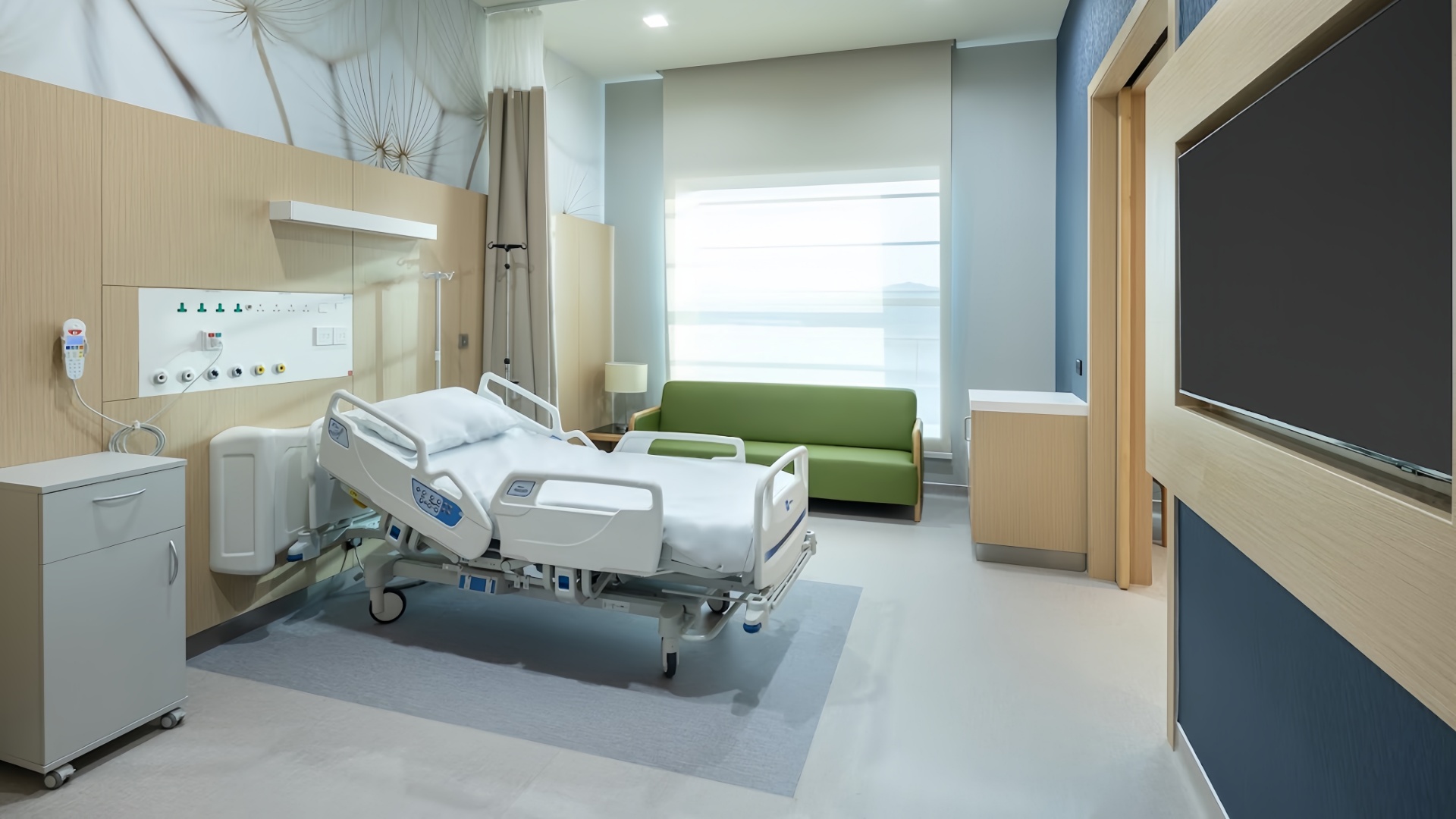


The project demonstrates Hongye's capacity to coordinate healthcare FF&E across complex medical environments. Its solutions combined adjustable hospital beds, ergonomic seating, medical storage, patient-facing reception furniture, waiting-area seating, and workstations designed to support staff workflow and clinical operations.
Project relevance note: Saudi German Hospital Makkah is a general healthcare FF&E project. It is not presented as evidence of behavioral health, anti-ligature, FGI behavioral health, CMS psychiatric-unit, or Joint Commission compliance. Behavioral health projects require separate, room-specific review against the facility's ligature risk assessment and applicable local requirements.
Anti-ligature furniture, more accurately called ligature-resistant furniture, is designed to reduce points where a cord, rope, sheet, belt, clothing, or similar material could be looped or tied to create a sustainable attachment point for self-harm. Common design approaches include reduced projections, concealed or recessed hardware, stable construction, tamper-resistant fasteners, and cleanable upholstery.
There is no single universal behavioral health furniture standard. In the United States, decisions may be informed by CMS expectations, state licensing rules, fire codes, FGI guidance, accreditation requirements, owner specifications, and a documented environmental ligature risk assessment. Requirements must be confirmed for the specific project and location.
No. No individual piece of furniture or certification bundle automatically makes a facility compliant. Safety depends on the entire environment, the patient population, room access, supervision level, maintenance program, staff training, risk assessment, and applicable regulatory requirements.
High-risk rooms may require ligature-resistant beds, fixed or weighted seating, anchored storage, tamper-resistant tables, seamless and cleanable upholstery, and hardware with reduced attachment opportunities. The exact product configuration must be determined by the facility's room-by-room risk assessment.
Yes. Custom behavioral health furniture can be designed for room dimensions, aesthetics, branding, storage needs, accessibility, and workflow. However, custom products should undergo the same project-specific review as standard products, including drawings, material selections, anchoring details, cleanability review, fire documentation, structural verification, and ligature-risk evaluation.
Buyers should request product specifications, CAD drawings, anchoring details, materials lists, cleaning instructions, chemical-compatibility information, relevant test reports, fire documentation, warranty terms, maintenance instructions, replacement-parts availability, and a product-specific ligature-risk design summary.
Per-room cost depends on the room's risk classification, anchoring requirements, material performance, custom millwork, upholstery, testing, shipping, installation, and local code requirements. Request a line-item quote that separates furniture, anchoring, freight, installation, documentation, and any custom engineering costs. This enables accurate comparison between suppliers and avoids misleading “per-room” estimates.
Hongye Healthcare Furniture supports behavioral health furniture procurement with product specifications, material submittals, drawings, anchoring options, available test documentation, and project-based FF&E coordination.
If you are planning a psychiatric hospital, crisis stabilization unit, behavioral health ward, addiction treatment center, or correctional healthcare project, share your room list, jurisdiction, risk classification, cleaning protocol, and procurement timeline. Hongye's team can help prepare a furniture schedule for review by your clinical, design, safety, and compliance stakeholders.
Rebecca is Senior FF&E Procurement Specialist at Hongye Furniture Group, with more than eight years of experience in commercial furniture specification across 1,000+ projects in 50+ countries. She covers BIFMA and GREENGUARD compliance documentation, material selection, supplier coordination, and procurement planning for hospitality, office, healthcare, and education sectors.
For behavioral health furniture projects, Rebecca works with Hongye's product, quality, and project teams to coordinate product documentation, material submittals, durability requirements, and project-specific procurement schedules. Final product selections should always be reviewed by the facility's clinical, safety, design, and compliance teams against the applicable ligature risk assessment and local requirements.


