
Views: 0 Author: Rebecca | Senior FF&E Procurement Specialist Publish Time: 2026-08-20 Origin: Site


What is the best waiting room seating material for infection control? There is no single best material for every healthcare waiting area. Polypropylene is often a practical option for high-turnover seating because molded surfaces can be easy to wipe. Healthcare-grade upholstery may suit longer-wait and family-centered spaces when seam construction and disinfectant compatibility are documented. Stainless steel can be appropriate in selected high-durability settings, but its comfort, thermal feel, and maintenance requirements should be considered.
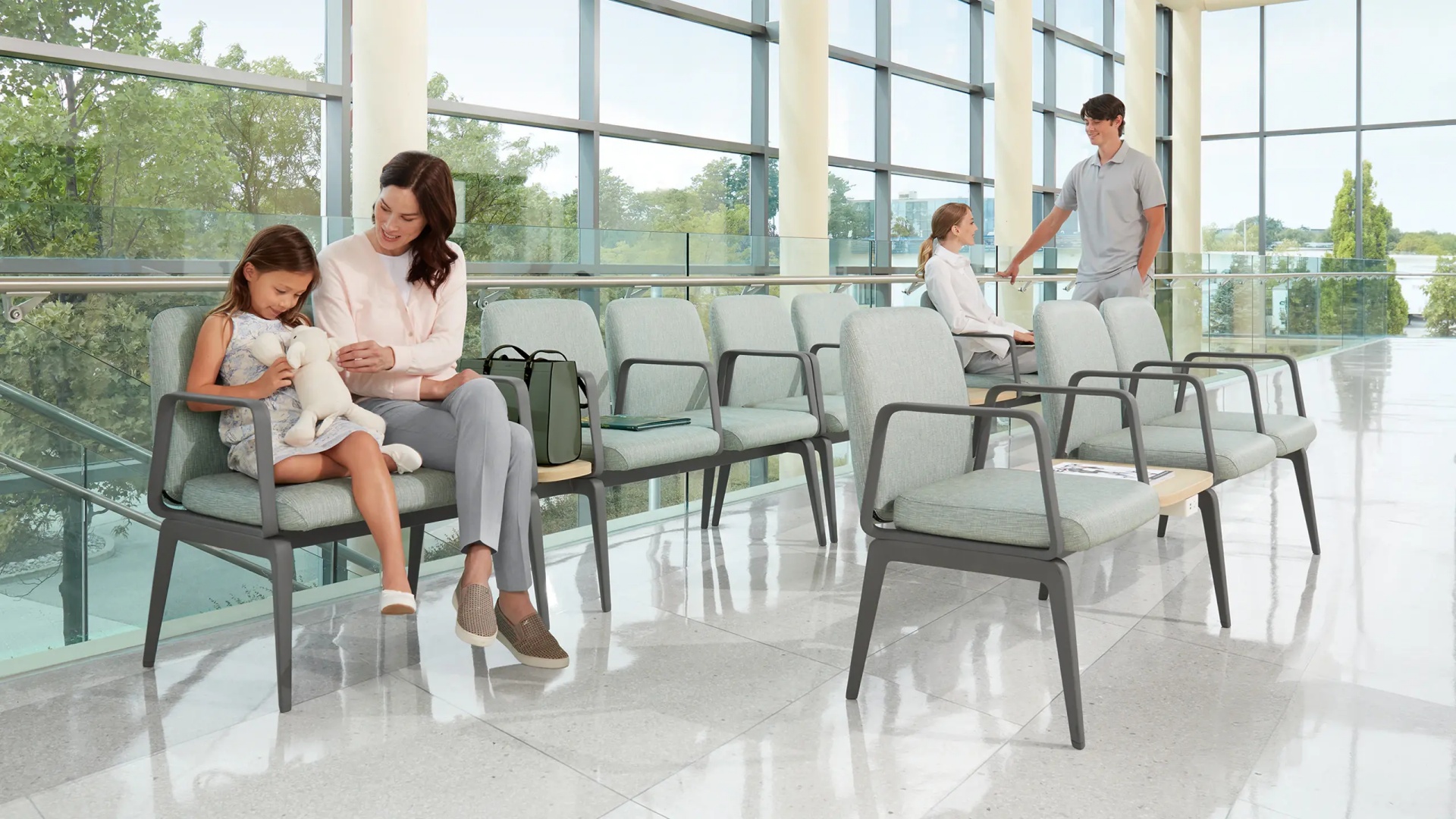
The correct seating choice depends on the facility's cleaning protocol, expected patient volume, dwell time, patient population, accessibility requirements, safety assessment, maintenance capacity, and design goals. A busy emergency department, a pediatric outpatient clinic, an ICU family lounge, and a behavioral health waiting area may all need different seating strategies.
This guide compares polypropylene, upholstered, and stainless steel healthcare waiting room seating to help hospitals, clinics, senior living communities, and healthcare planners select materials that balance cleanability, comfort, durability, and long-term operational value.
1. Material selection should support cleaning workflows. Smooth, accessible, nonporous or fluid-resistant surfaces can be easier to wipe, inspect, and maintain in high-traffic healthcare waiting areas.
2. Polypropylene seating is often effective for high-turnover areas. Molded chairs can provide simple, seam-limited, durable seating with straightforward daily maintenance.
3. Healthcare-grade upholstery supports comfort and family-centered care. It should be specified with appropriate seam construction, fluid resistance, cleaning instructions, repair options, and disinfectant compatibility.
4. Stainless steel is durable but not automatically the right choice for every high-acuity setting. It may suit selected high-durability applications, but long waiting times may require more supportive or cushioned seating.
5. No seating material replaces infection-prevention procedures. Furniture should support cleaning and disinfection, but it does not replace environmental services, approved disinfectants, hand hygiene, or facility infection-control protocols.
Healthcare waiting room seating is not simply a design decision. It affects patient comfort, family experience, staff observation, accessibility, cleaning efficiency, crowd management, and the overall perception of care.
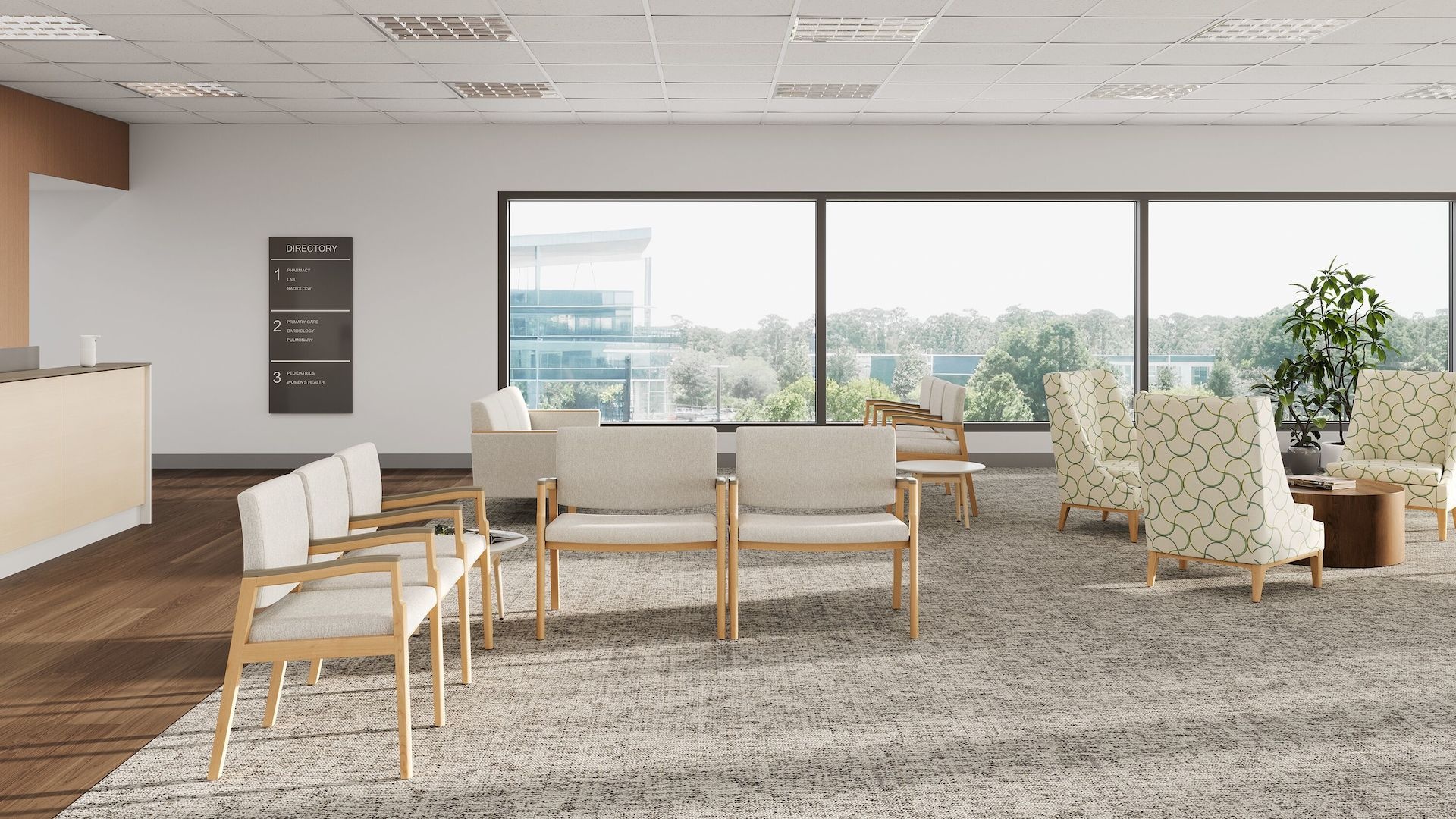
Waiting areas may serve:
Patients arriving for urgent or scheduled care
Families awaiting surgery, ICU updates, or test results
Children and caregivers
Older adults with mobility limitations
People using wheelchairs, walkers, strollers, or other mobility devices
Patients experiencing pain, fatigue, anxiety, or behavioral health crises
Visitors spending short periods or several hours in the space
The ideal hospital waiting room chair should be easy to clean, stable, accessible, repairable, comfortable enough for the expected dwell time, and suitable for the room's safety and operational requirements.
The following comparison focuses on practical procurement and maintenance factors—not claims that a material independently prevents infection.
| Property | Polypropylene Seating | Healthcare Upholstery | Stainless Steel Seating |
Surface form | Often molded, smooth, and seam-limited | Depends on upholstery, seams, cushion design, and barrier construction | Smooth metal with welded or mechanical joints |
Routine cleanability | Often straightforward | Depends heavily on upholstery specification and seam design | Often straightforward, though fingerprints and scratches may show |
Comfort | Firm; varies by ergonomics and shell design | Higher potential comfort through cushioning and supportive geometry | Firm; may need cushions for long dwell times |
Typical use pattern | High-turnover waiting, outpatient, public areas | Family lounges, pediatric areas, senior care, longer waits | Selected high-durability, utility, or specialized settings |
Repair strategy | Often replacement-oriented | May allow reupholstery or cushion replacement | May be durable but dents and scratches can be difficult to restore cosmetically |
Chemical compatibility | Must be verified by product and finish | Must be verified by upholstery supplier and product construction | Must be verified by metal grade, finish, welds, and cleaning chemistry |
Seating flexibility | Individual chairs, beam seating, stacking options | Lounge chairs, bariatric seating, sofas, sleeper seating, modular arrangements | Individual or beam seating; more limited comfort configurations |
Visual character | Contemporary, practical, wide color range | Warm, residential, family-friendly, highly customizable | Functional, clinical, industrial, or transit-oriented |
The most appropriate material is the one that supports the intended waiting-area workflow while matching the facility's maintenance and patient-experience needs.
Polypropylene healthcare chairs are often selected for high-traffic areas because they can be molded into one-piece or seam-limited forms. Their relatively simple geometry can make them easier to wipe than heavily upholstered seating with multiple cushions and decorative details.
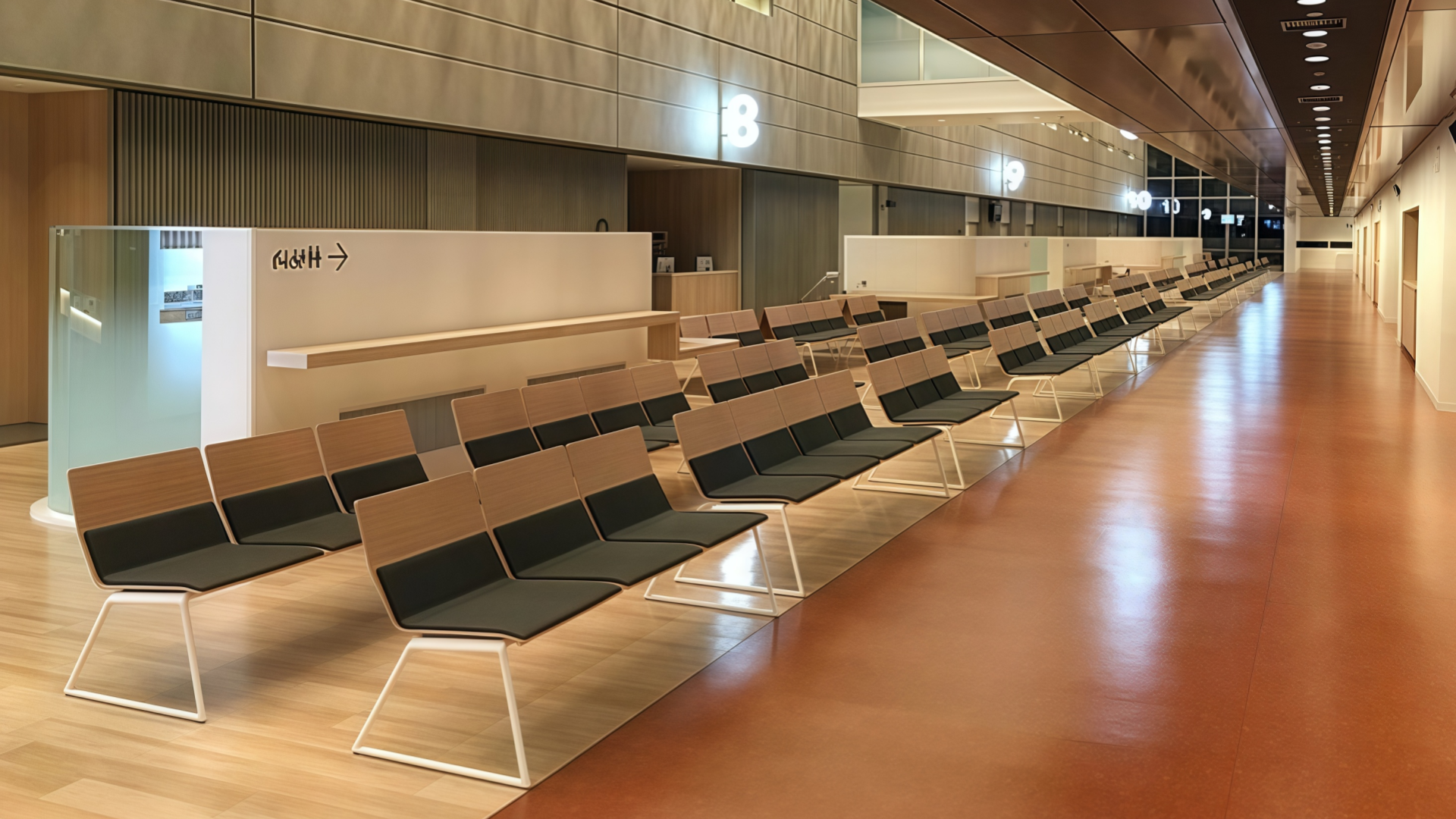
Smooth molded surfaces with limited seams
Often lightweight enough for flexible layouts
Available as individual chairs, stacking chairs, and beam seating
Suitable for many outpatient, registration, urgent-care, and high-turnover waiting zones
Broad color selection for wayfinding or department identity
Can be paired with metal frames, glides, or wall-mounted systems
May offer armrest, bariatric, and accessible-seating configurations depending on model
Polypropylene is not automatically compatible with every cleaning chemical. Chair shells may contain different additives, pigments, coatings, textures, or frame components. Confirm compatibility with the facility's actual disinfectants, concentration, wet contact time, cleaning frequency, and application method.
Ask suppliers:
Is the shell one-piece or assembled from multiple components?
Can staff clean beneath, behind, and around the chair?
Are frame joints, glides, fasteners, and armrests accessible for cleaning?
Is the chair stable when a patient uses the arms to stand?
Are bariatric and companion seating options available?
Can damaged shells, glides, or arms be replaced individually?
Is the surface finish appropriate for the actual cleaning protocol?
Polypropylene seating is often an efficient option for general waiting areas, but it may not provide the level of cushioning needed for long waits, pain management, older adults, or family overnight use.
Healthcare upholstered seating can provide warmth, comfort, and a less institutional environment. It is often used in family waiting areas, outpatient clinics, pediatric spaces, senior care settings, consultation areas, and other locations where people may sit for extended periods.
Healthcare-grade upholstery may include polyurethane, vinyl, coated performance textiles, or other approved materials. The material should be selected based on use intensity, fluid exposure, seam construction, cleaning protocol, repair options, and project-specific fire requirements.

Greater comfort for extended waiting periods
Supportive cushioning and armrests for older adults or people with mobility limitations
Broad choice of colors, textures, and forms
Ability to create family-centered, hospitality-inspired environments
Options for lounge seating, modular seating, sleeper seating, bariatric seating, and companion seating
Some configurations allow cushion or upholstery replacement rather than full chair replacement
| Feature | What to Review |
Upholstery type | Healthcare-grade vinyl, polyurethane, coated textile, or other project-approved material |
Fluid resistance | Confirm barrier construction, strike-through resistance, and seam performance where relevant |
Seam design | Minimize difficult-to-clean welts, decorative piping, exposed zippers, and inaccessible stitching |
Cushion construction | Review foam comfort, support, pressure distribution, and replaceability |
Cleaning guidance | Request written instructions for actual disinfectants and cleaning frequency |
Repair method | Confirm field repair, reupholstery, cushion replacement, and spare-material availability |
Frame construction | Check stability, arm support, joint design, and cleaning access beneath seating |
Fire performance | Confirm applicable local fire, life-safety, and owner requirements |
Warranty | Review exclusions related to chemical cleaners, stains, abrasion, and seam failure |
Upholstery does not automatically make seating unsuitable for healthcare waiting rooms. The correct question is whether the specific product has a cleanable, maintainable construction that suits the space and cleaning protocol.
Stainless steel seating can be a durable option in selected healthcare environments where robust construction, long service life, and simple cleaning access are high priorities. It is commonly considered for public circulation areas, transport-related zones, utility-adjacent areas, certain outdoor or semi-outdoor waiting locations, and other high-use settings.

Smooth, durable metal surfaces
Strong structural performance when properly designed
Suitable for beam seating, benches, and fixed public-area seating
Resistant to many forms of impact and heavy use
Can be paired with armrests, individual seat divisions, and accessible companion positions
Often suitable for spaces where minimal upholstery is preferred
Stainless steel is not automatically compatible with every disinfectant, cleaning concentration, or exposure frequency. The metal grade, finish, weld quality, fasteners, surrounding materials, and cleaning products all affect long-term appearance and corrosion resistance.
Also consider:
Metal seating may feel cold, hard, or unwelcoming during long waits
Long-duration waiting areas may need supportive cushions or alternative seating options
Fingerprints, smudges, scratches, and dents may be more visible
Highly polished finishes can create glare
Edges, welds, joints, and under-seat surfaces must be accessible for cleaning
Beam seating layouts should preserve accessible seating positions and companion spaces
Stainless steel may be appropriate for selected durability-driven applications, but it should not be treated as the default seating material for every surgical, ICU, isolation, or high-acuity waiting area.
| Healthcare Zone | Primary Selection Priorities | Seating Options to Consider |
Emergency department waiting | High traffic, visibility, cleanability, mobility access, flexible capacity | Polypropylene, healthcare vinyl seating, mixed seating packages |
Urgent care or walk-in clinic | Quick turnover, durable surfaces, easy cleaning, compact footprints | Polypropylene, beam seating, selected wipeable upholstered seating |
Outpatient clinic waiting | Comfort, cleanability, family seating, design flexibility | Polypropylene, healthcare upholstery, modular seating |
Surgical or ICU family waiting | Longer dwell time, privacy, family support, comfort, cleanability | Supportive upholstered seating, lounge chairs, mixed-material layouts |
Pediatric waiting | Supervision, safety, comfort, child-scale seating, family accommodation | Molded polymer seating, wipeable upholstery, family seating |
Senior living common areas | Transfer support, comfort, familiar design, cleanability | Supportive healthcare upholstery, armchairs, selected molded chairs |
Behavioral health waiting | Room-specific risk assessment, supervision, stability, tamper resistance | Stable, weighted, anchored, tamper-resistant, or ligature-resistant seating where required |
Isolation-adjacent waiting | Facility infection-prevention policy, limited clutter, cleaning frequency | Materials selected for the site's specific protocol and maintenance plan |
Outdoor or semi-outdoor waiting | Weather resistance, durability, drainage, UV resistance | Stainless steel, coated metal, molded polymer, outdoor-rated seating |
Waiting areas often work best with a mixed seating strategy rather than one material throughout the space. For example, polypropylene chairs may support quick-turnover seating near registration, while upholstered lounge seating supports family members in a quieter long-wait zone.
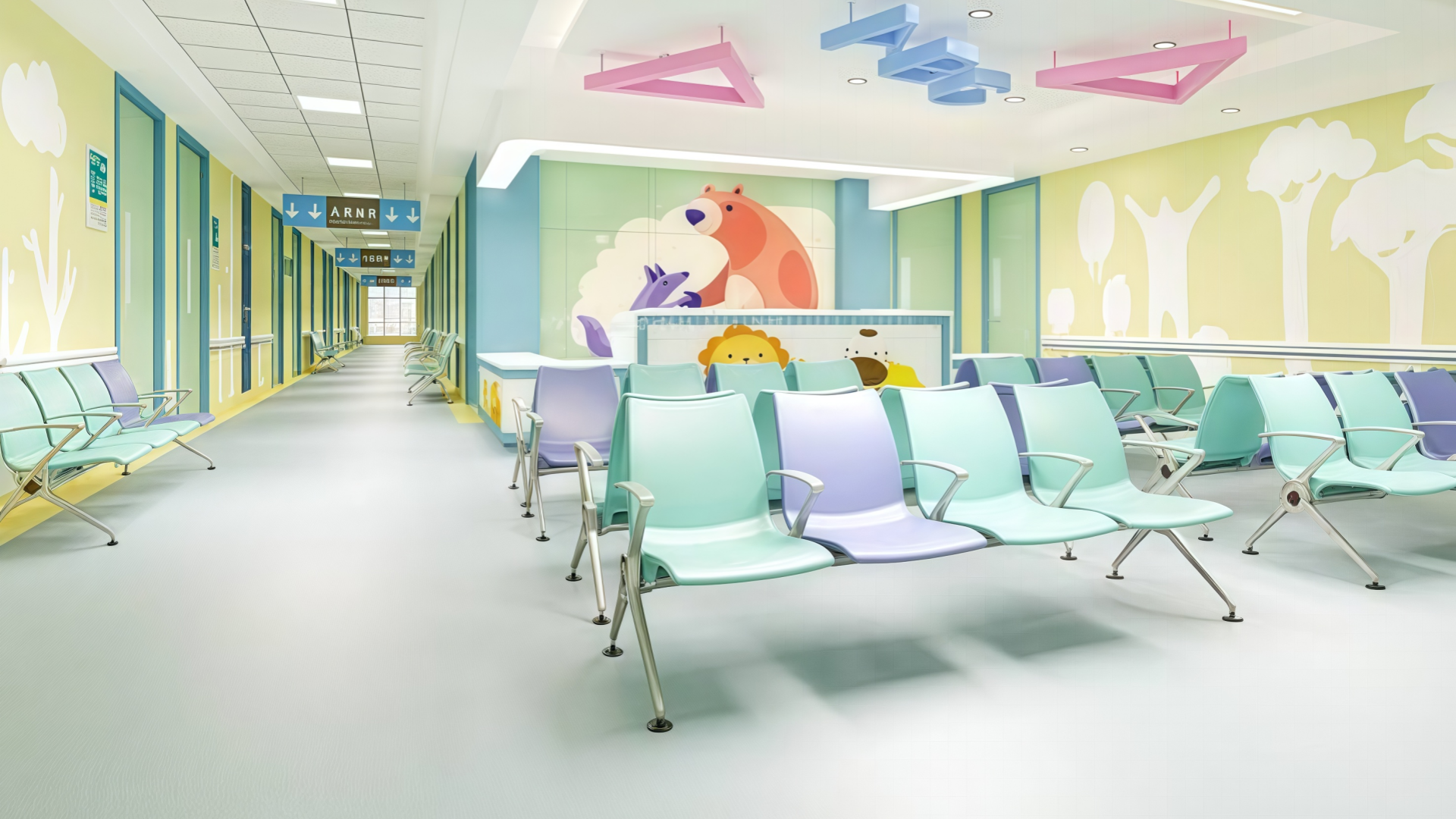
Waiting room seating should support routine cleaning and disinfection. The goal is to make high-touch surfaces accessible, reduce difficult-to-clean construction details, and ensure that materials can tolerate the facility's approved cleaning process.
Smooth, reachable chair surfaces
Limited seams, grooves, and decorative trim
Accessible chair arms, backs, legs, and undersides
Stable bases that allow cleaning beneath seating
Sealed frame joints and protected fasteners where appropriate
Durable glides or casters that can be inspected and replaced
Upholstery with documented cleaning instructions
Furniture layouts that allow environmental services staff to reach all surfaces
High-touch waiting room surfaces may include chair arms, seat pans, backs, table edges, tabletops, registration counters, door hardware, charging stations, and assistive-device contact points. Furniture should support the facility's environmental cleaning process rather than create areas that cannot be reached or maintained.
Some furniture materials include antimicrobial additives. Under U.S. EPA treated-article guidance, claims for a treated article generally must be limited to protecting the article itself, such as helping protect the material from odor-causing bacteria, mildew, or material deterioration.
Antimicrobial-treated seating does not replace:
Routine cleaning and disinfection
EPA-registered disinfectants
Hand hygiene
Staff and visitor infection-prevention practices
Environmental services protocols
Facility infection-prevention policies
Any claim that seating kills human pathogens, protects patients, prevents disease transmission, or reduces healthcare-associated infections should be supported by the appropriate EPA registration and product-specific labeling.
Material is only one part of healthcare waiting room seating selection. The chair's geometry, arms, height, depth, stability, and placement may matter more to patients than the base material.
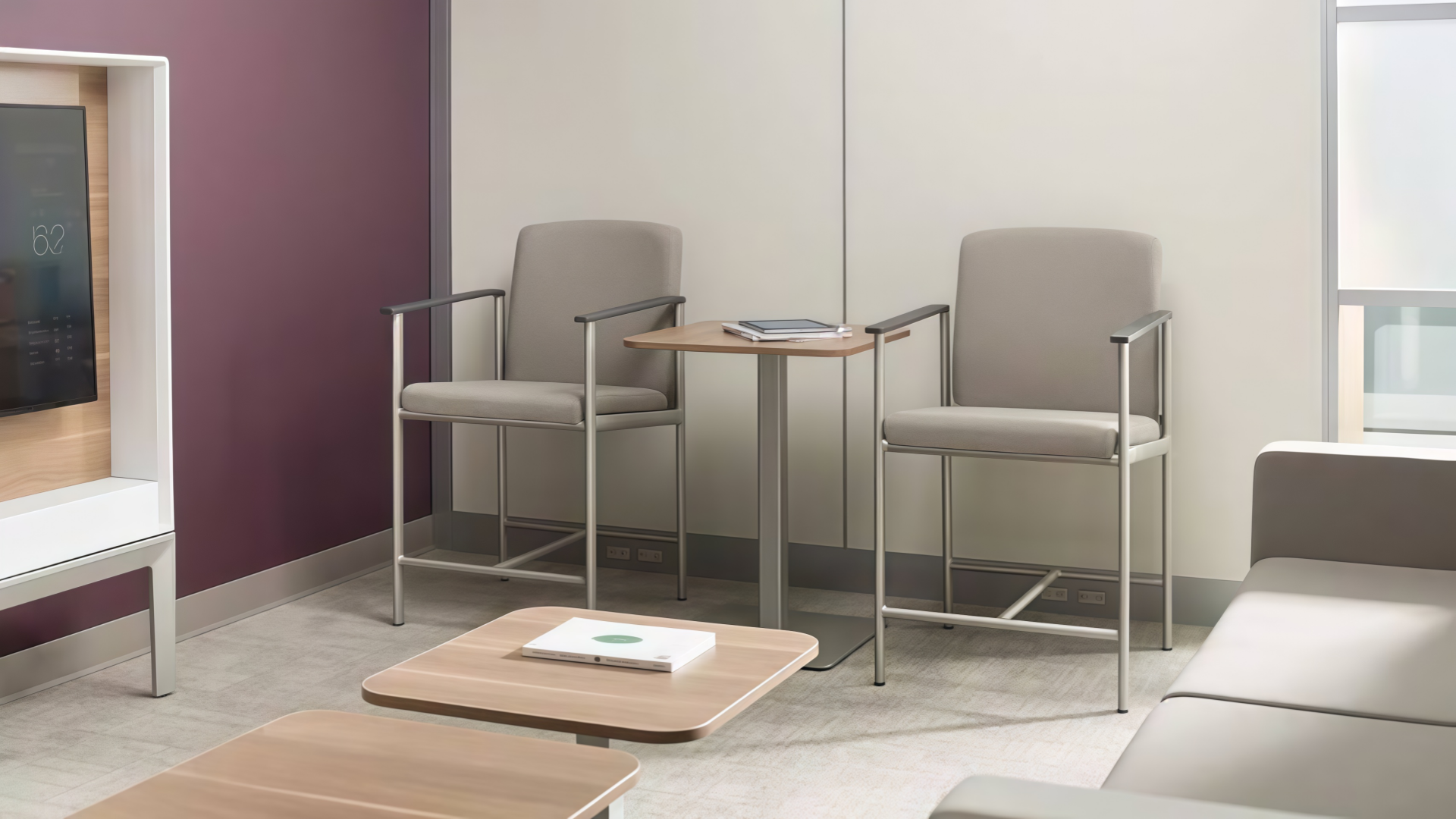
| Feature | Why It Matters |
Seat height | Affects safe sit-to-stand movement, especially for older adults and people with limited leg strength |
Armrests | Help many patients and visitors stand, sit, and transfer more safely |
Seat depth | Should support users without forcing shorter individuals to slide forward |
Back support | Important for long waits, pain management, older adults, and family members |
Weight capacity | Must match the facility’s patient population and bariatric policy |
Stable base | Reduces tipping, sliding, and unexpected movement |
Wheelchair companion space | Allows people using wheelchairs to sit with family rather than apart from them |
Spacing between chairs | Supports access, cleaning, personal comfort, mobility devices, and circulation |
Ganging or beam seating | Can preserve order in high-traffic spaces but may limit flexibility |
Individual seating | Offers flexibility but needs careful placement to preserve visibility and egress |
Accessible waiting areas should include clear routes, wheelchair locations, companion seating, and choices for people who need arms, firmer seating, or additional space. Final layouts should be reviewed against applicable accessibility codes, local requirements, and the facility's operational policies.
A waiting room is a flow environment, not simply a collection of chairs. Seating selection should be coordinated with registration, triage, security, staff observation, family needs, restrooms, charging, children's activities, and emergency egress.
Preserve clear routes from entry to registration, triage, toilets, exits, and treatment areas
Maintain staff visibility across seating zones
Avoid tall furniture or seating clusters that create hidden corners
Provide accessible seating and wheelchair companion spaces
Separate or zone seating based on workflow when appropriate, such as pediatric, family, quiet, or higher-observation areas
Allow enough space for walkers, wheelchairs, strollers, and mobility devices
Provide seating options with arms and varied comfort levels
Coordinate charging points and side tables without creating cable or trip hazards
Consider daylight, glare, acoustics, temperature, and visual stress
Ensure environmental services can clean beneath, behind, and between seating groups
Avoid loose furniture placement that blocks egress or staff access during peak volumes
The best waiting room seating package balances throughput and comfort. A high-volume ED may require straightforward, durable seating near triage, while a surgical family area may prioritize supportive chairs, side tables, charging, and privacy.
Do not assume that polypropylene, healthcare vinyl, polyurethane, stainless steel, powder-coated frames, adhesives, glides, or fasteners are compatible with every disinfectant.
Before purchasing healthcare waiting room seating, request written supplier guidance for:
Quaternary ammonium products
Chlorine-based disinfectants
Hydrogen peroxide-based disinfectants
Alcohol-based cleaners
Neutral detergents
Electrostatic application, if used by the facility
UV-C exposure, if used by the facility
Cleaning frequency and wet contact time
Approved repair methods after chemical or physical damage
Ask suppliers to identify potential issues such as discoloration, cracking, corrosion, surface haze, delamination, seam damage, loss of fluid resistance, adhesive failure, and warranty exclusions.
Test samples using the facility's actual cleaning products whenever possible. This is especially important before large deployments in emergency departments, outpatient networks, behavioral health facilities, and senior living communities.
Use this checklist before approving a waiting room seating package:
1. Define the zone. Identify whether the area is ED, outpatient, pediatric, surgical family, behavioral health, senior living, public lobby, or another setting.
2. Map the expected dwell time. Short-turnover and long-wait areas may need different comfort levels and seating forms.
3. Confirm cleaning protocol. Identify approved disinfectants, dilution, contact time, application method, and frequency.
4. Review material construction. Check seams, joints, frame finishes, glides, fasteners, under-seat access, and repairability.
5. Assess accessibility. Include seating with arms, wheelchair companion spaces, bariatric options, and clear circulation routes.
6. Evaluate patient comfort. Test seat height, depth, back support, arm support, temperature feel, and long-duration comfort.
7. Review safety requirements. Consider stability, tip resistance, tamper resistance, risk assessment, and local code requirements.
8. Plan layout and observation. Preserve staff sightlines, clear routes, family seating, pediatric supervision, and egress.
9. Request documentation. Obtain product data, cleaning guides, chemical-compatibility information, test reports where applicable, warranties, and repair procedures.
10. Install a mock-up. Test sample seating with staff, patients, mobility devices, cleaning tools, lighting conditions, and actual waiting-area traffic.


Healthcare Waiting Room Armchair for Hospital & Outpatient Clinics
The cost of waiting room seating should be evaluated over its expected service life, not only at the initial purchase stage. Different materials offer different strengths, repair options, comfort levels, and maintenance demands.
| Cost Factor | Polypropylene Seating | Healthcare Upholstery | Stainless Steel Seating |
Upfront cost | Often lower to mid-range | Varies widely by foam, upholstery, seam design, and frame | Often mid- to high-range |
Comfort upgrades | Limited without ergonomic shaping or added pads | Broad options for cushioning, arms, and support | May need cushions or alternative seating for long waits |
Cleaning maintenance | Inspect for scratches, stress cracking, frame wear, and glide condition | Inspect seams, fluid barrier, cushion integrity, and upholstery wear | Inspect welds, corrosion, dents, and finish condition |
Repair strategy | Often component or chair replacement | May allow cushion replacement or reupholstery | Long-lived but cosmetic repair may be difficult |
Design flexibility | Broad color and configuration options | Highest flexibility in form, comfort, and hospitality appearance | More limited comfort and visual options |
Lifecycle review | Depends on use intensity, chemical exposure, damage rate, and warranty | Depends on cleaning protocol, upholstery serviceability, and repair plan | Depends on material grade, maintenance, environment, and user comfort needs |
Evaluate total cost of ownership using your facility's actual seating volume, patient wait times, cleaning program, maintenance history, labor availability, warranty, freight, replacement-parts availability, and expected renovation cycle.
There is no single best material for every healthcare waiting area. Polypropylene can be a practical choice for high-turnover spaces because molded surfaces may be easy to wipe. Healthcare-grade upholstered seating can support longer waits and family-centered spaces when seam construction, fluid resistance, and disinfectant compatibility are documented. Stainless steel may suit selected high-durability settings but may not provide the comfort needed for extended waiting periods.
Replacement timing depends on traffic level, cleaning exposure, material quality, repairability, warranty, maintenance, and visible damage. Facilities should inspect seating regularly for cracks, damaged edges, loose hardware, seam separation, fluid-barrier failure, unstable frames, worn glides, cushion breakdown, and corrosion. Use condition-based maintenance and replacement planning rather than a universal replacement schedule.
Safe disinfectants depend on the specific chair formulation, surface finish, additives, frame, and cleaning protocol. Request written manufacturer compatibility guidance for the exact disinfectants, dilution, wet contact time, frequency, and application method used by your facility. Do not assume that every polypropylene chair is compatible with every EPA-registered disinfectant.
Yes. Upholstered furniture can be used in healthcare waiting areas when the upholstery, seams, cushions, frame, and cleaning protocol are appropriate for the space. Healthcare-grade vinyl, polyurethane, and selected coated performance textiles may be suitable depending on fluid exposure, cleaning frequency, expected dwell time, fire requirements, and repair strategy. Upholstery should be selected through product-specific review rather than ruled out categorically.
Healthcare seating should support the facility's environmental cleaning and infection-prevention program through cleanable construction, accessible surfaces, appropriate material selection, and documented compatibility with approved disinfectants. CDC guidance supports cleaning and disinfecting high-touch environmental surfaces; it does not establish a single furniture material or a universal seating certification. Buyers may also need to review applicable fire, accessibility, indoor-air-quality, structural-performance, and local regulatory requirements.
Not automatically. Ligature resistance depends on furniture geometry, attachment points, gaps, fasteners, anchoring, removable components, room access, supervision level, and the facility's risk assessment—not the base material alone. Behavioral health waiting areas should use a room-by-room safety review to determine whether stable, weighted, anchored, tamper-resistant, or ligature-resistant seating is needed.
Hospitals should request product data sheets, material samples, cleaning instructions, chemical-compatibility information, upholstery and seam details, weight capacity, stability information, warranty terms, repair procedures, replacement-parts availability, fire-performance documentation where applicable, and installation details. For behavioral health areas, request product drawings and risk-relevant documentation for review against the facility’s safety assessment.
Rebecca Lin is Senior FF&E Procurement Specialist at Hongye Furniture Group, with more than eight years of experience in commercial furniture specification across 1,000+ projects in 50+ countries. She covers BIFMA and GREENGUARD documentation coordination, material selection, supplier coordination, and procurement planning for hospitality, office, healthcare, and education sectors.
For healthcare waiting room projects, Rebecca works with Hongye's product, quality, and project teams to coordinate seating schedules, finish samples, material submittals, cleaning guidance, product documentation, and procurement planning. Final code, clinical, infection-prevention, safety, and accessibility review should be completed by the project's licensed design, clinical, and compliance teams.
Hongye Healthcare Furniture supports hospitals, clinics, senior living communities, outpatient centers, and public healthcare spaces with polypropylene seating, healthcare upholstered seating, stainless steel seating, beam seating, bariatric seating, pediatric seating, and project-specific waiting room furniture packages.
If you are planning a new waiting area, ED renovation, outpatient clinic, surgical family lounge, pediatric zone, behavioral health reception area, or senior living common space, share your floor plan, expected patient volume, dwell-time profile, cleaning protocol, furniture schedule, accessibility requirements, and project timeline.
Hongye can prepare seating recommendations, material samples, product documentation, mock-up options, and procurement support for review by your design, facilities, infection-prevention, clinical, and purchasing teams.


