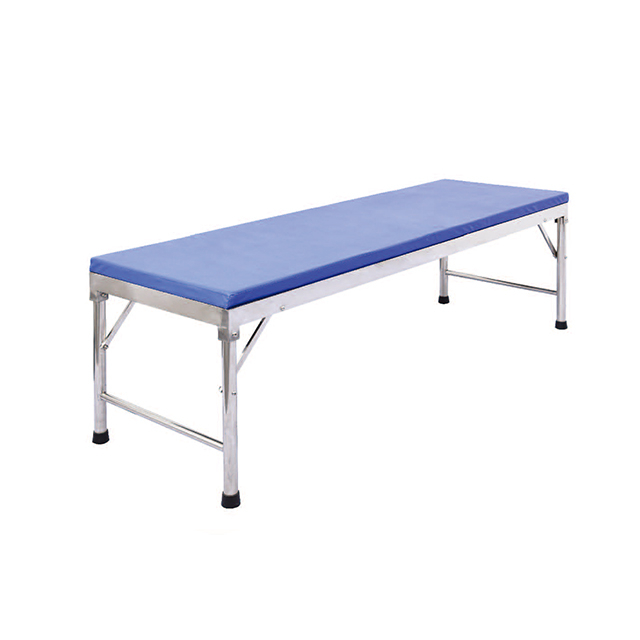
The traction bed for back pain is equipped with a breathable headband that enhances comfort during use.
The headband allows for adequate airflow, preventing excessive heat and sweat accumulation, and ensuring a pleasant experience for the user.
The traction equipment is constructed with a premium PVC material surface, which is not only durable but also easy to clean and maintain.
It provides a smooth and comfortable surface for patients during their traction therapy sessions.
The bed also incorporates a 2-inch/5cm premium high density foam layer, enhancing comfort and support for patients throughout their treatment.
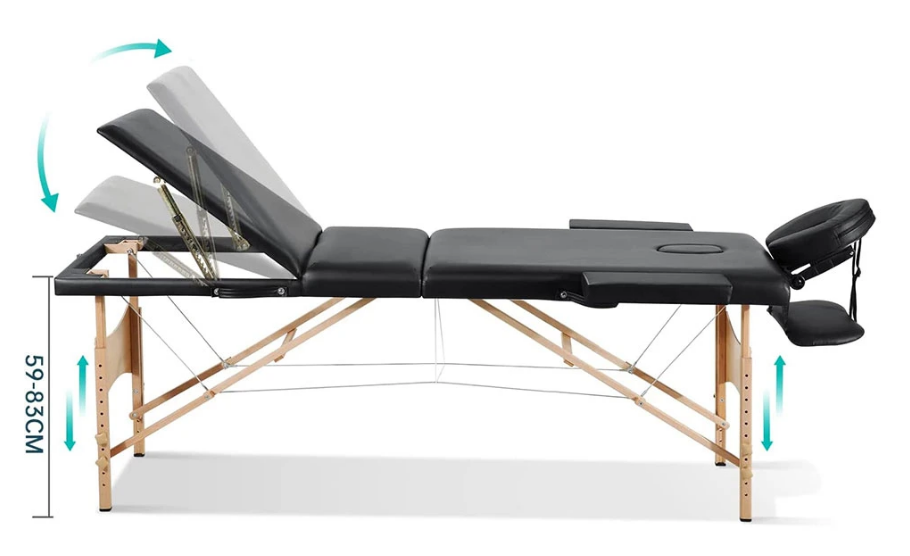
Adjustable Leg Paddle
For added versatility and convenience, the traction bed features an adjustable leg paddle.
This feature allows therapists to adjust the positioning of the patient's legs during traction therapy,accommodating different treatment requirements and ensuring optimal traction effectiveness.
Adjustable Height (59-83cm)
The traction bed offers adjustable height settings, ranging from 59 to 83cm.
This feature enables therapists to customize the bed's height according to the needs of each patient, ensuring proper alignment and optimal positioning during traction therapy.
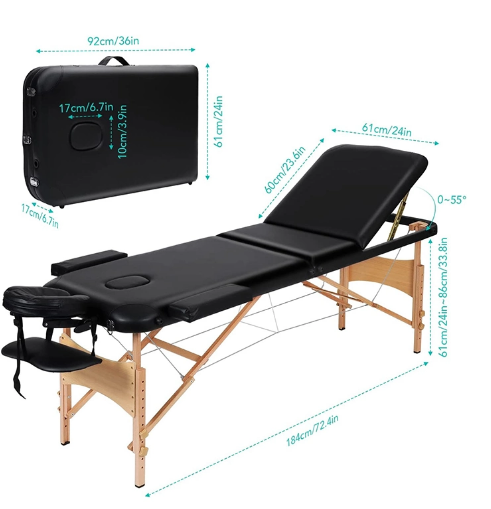
Foldable Design
The traction bed is designed to be foldable, providing easy storage and portability.
This feature allows for convenient transportation of the bed and saves space when not in use, making it suitable for healthcare facilities with limited space or for therapists who need to provide traction therapy at different locations.
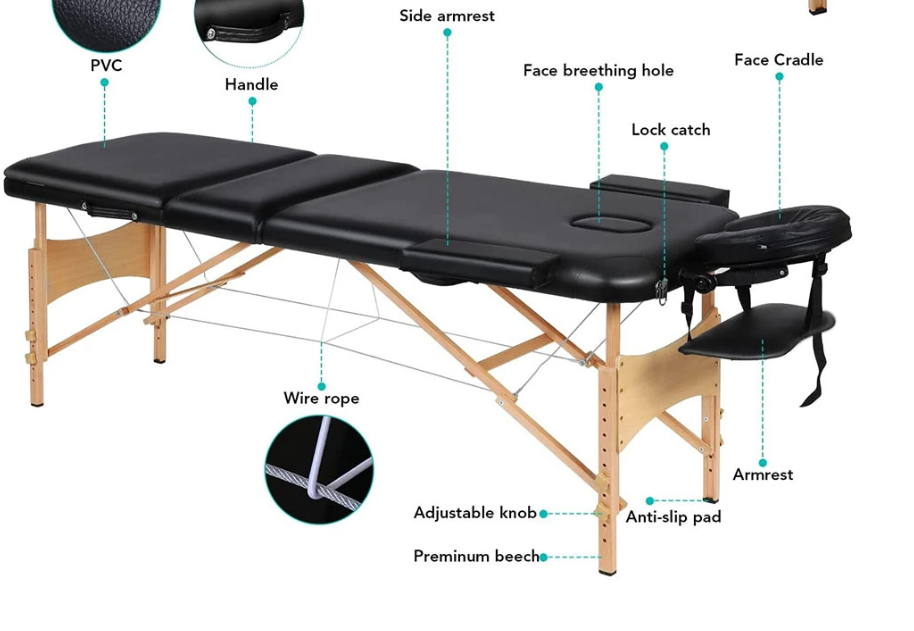
Sturdy and Reliable
Built with a strong wooden frame, the traction bed ensures stability and reliability during use.
It has a weight capacity of up to 495 lbs, making it suitable for a wide range of patients and ensuring their safety and security during traction therapy sessions.
Easy Set-Up and Use
The traction bed is designed for easy set-up and use.
No tools are required to assemble the bed, allowing therapists to quickly prepare the bed for treatment sessions.
With its user-friendly design, therapists can unfold the bed's legs, adjust the height to the desired level, and attach the necessary accessories such as the headrest and armrests, enabling a comfortable and efficient traction therapy experience.