| Material: | |
|---|---|
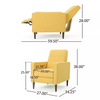
| Width Depth Height : | |
| Color: | |
| Weight Limit: | |
| Base Material: | |
| Availability: | |
| Quantity: | |

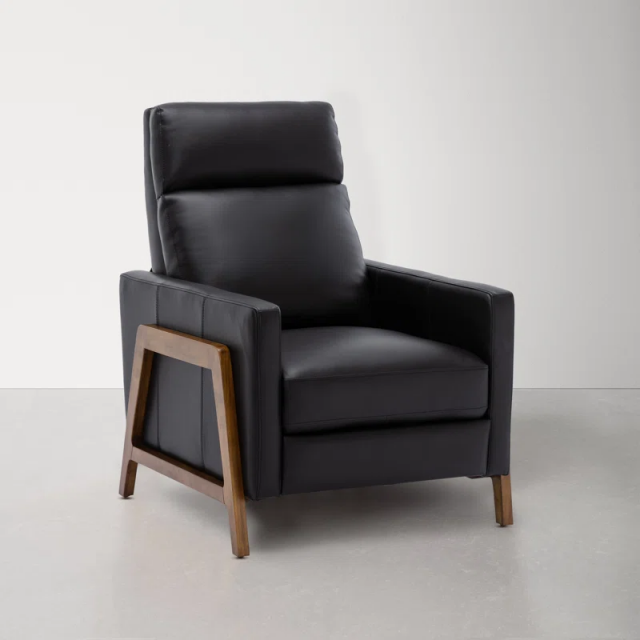
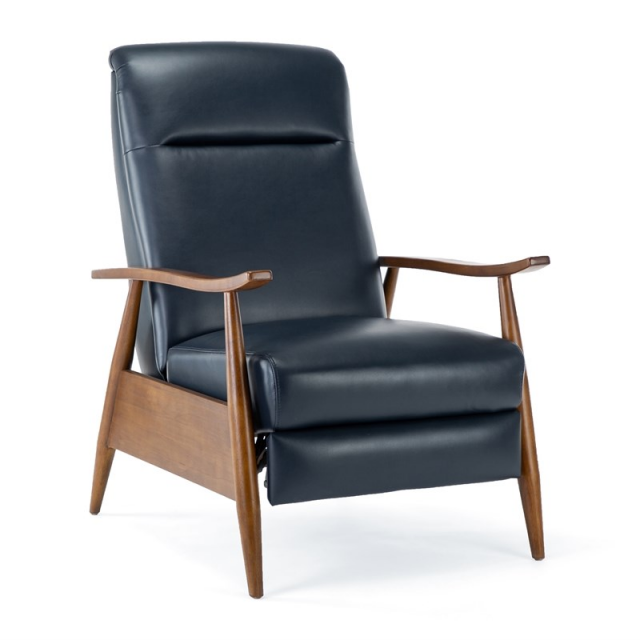
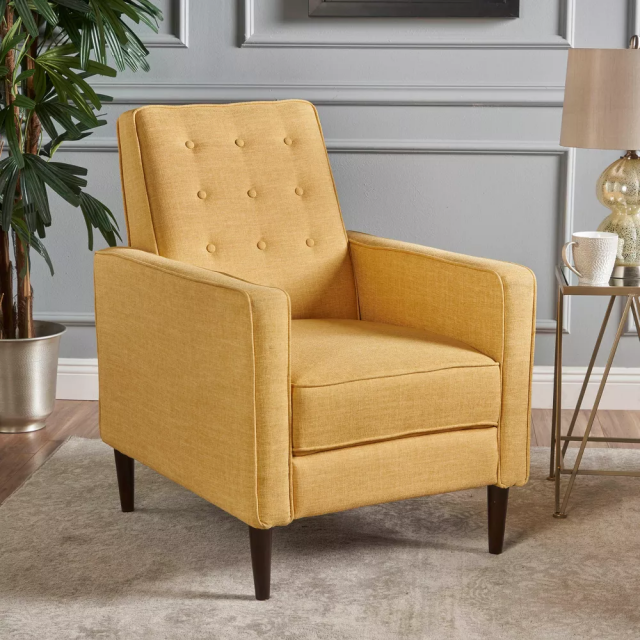
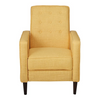
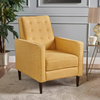
The low back recliner chair showcases a high leg design, where the legs are positioned higher above the ground.
This design not only enhances the recliner's visual appeal but also facilitates convenient cleaning and can harmonize with other furniture items.

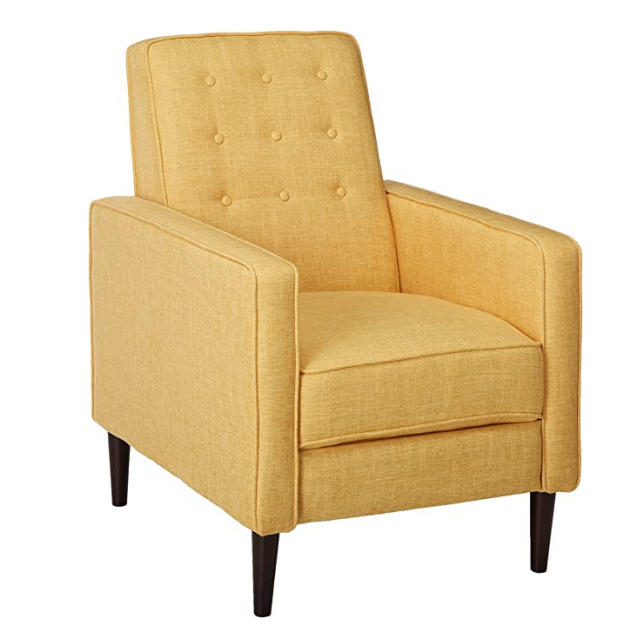
The yellow recliner chair stands on graceful tapered legs crafted from beech wood.
These legs add an elegant aesthetic with their warm and vibrant color, as well as their straight, finely grained appearance.
Made from durable beech wood, they can be polished to maintain their pristine look and withstand everyday use.

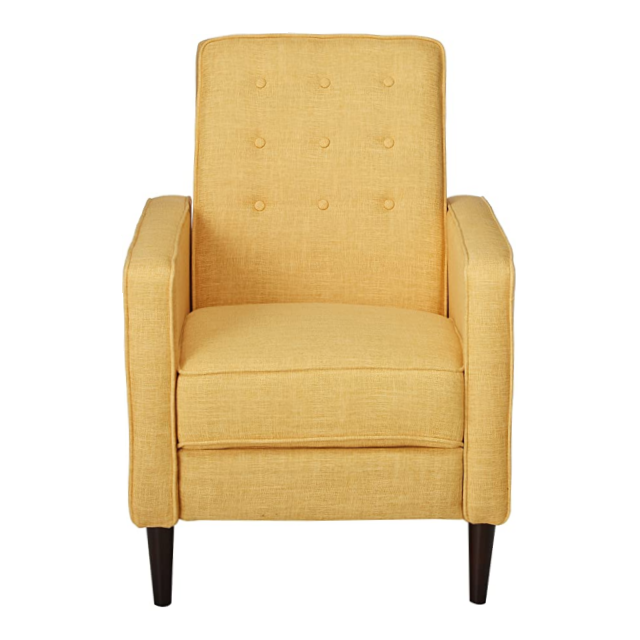
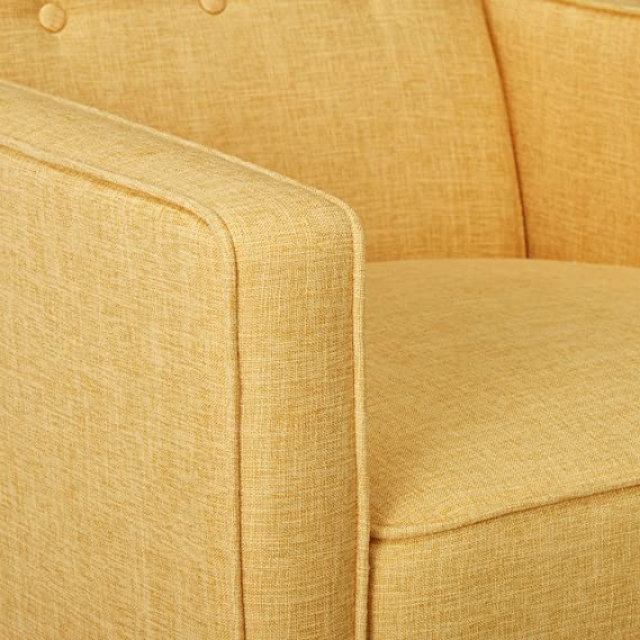
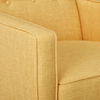
Button-tufted stitching helps to secure the upholstery to the underlying padding or frame of the recliner.
The buttons or tufts are typically attached to the fabric, which is pulled tightly over the padding or frame, ensuring that it remains in place and maintains its shape over time.
The stitching can also help distribute the padding or foam evenly across the backrest, providing optimal comfort and support.
It helps to prevent the upholstery from sagging or shifting, ensuring a consistent and comfortable seating experience.
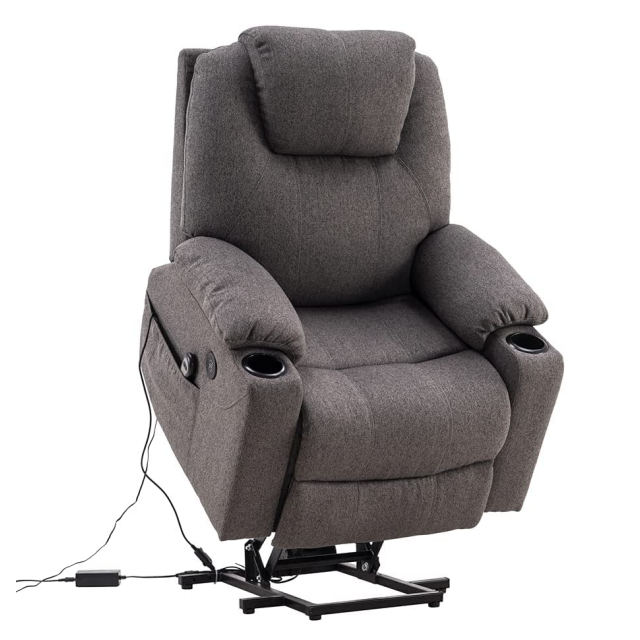
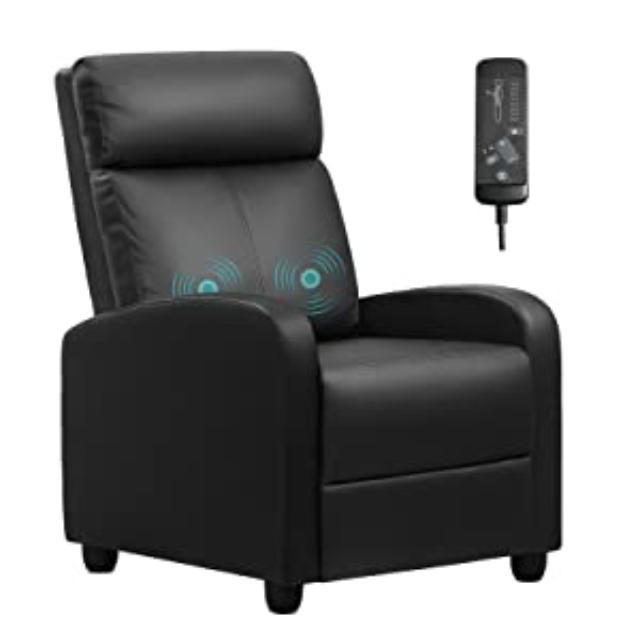
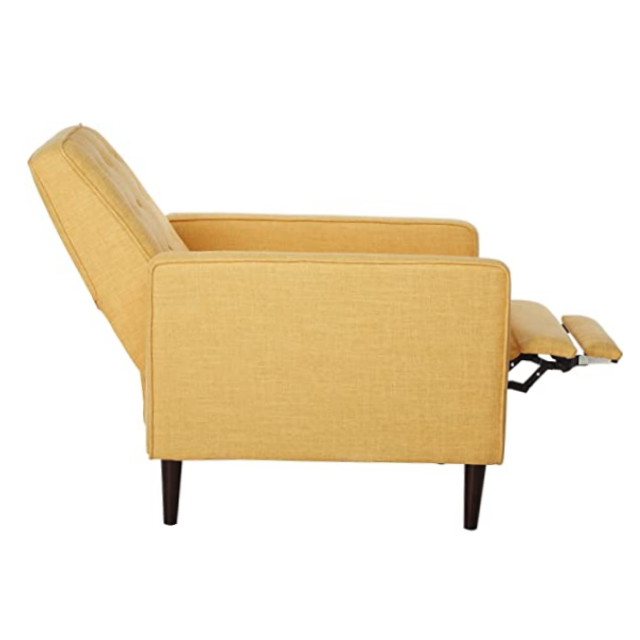
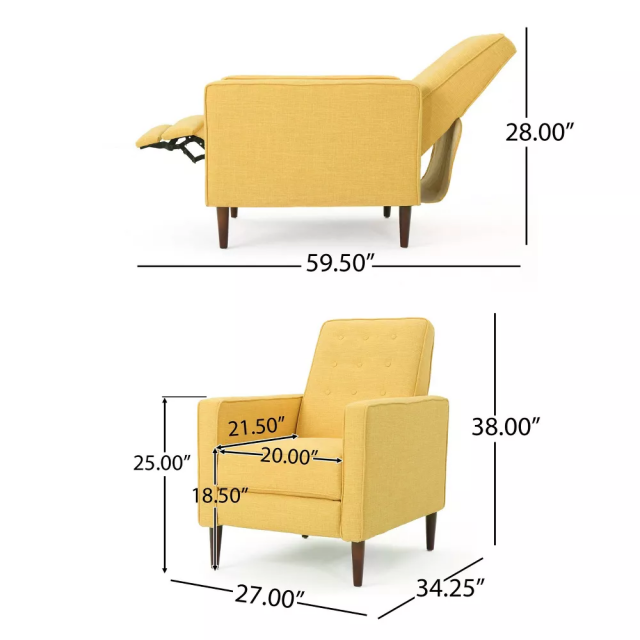
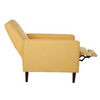
The footrest allows you to elevate your legs and feet, promoting better blood circulation and reducing pressure on the lower body.
The combination of a reclining backrest and an accompanying footrest ensures a more complete and comfortable reclining experience.
It allows you to fully stretch out and unwind, providing optimal relaxation for your entire body.

The low back design is ideal for smaller spaces or rooms with low ceilings.
It allows the recliner to fit well in compact areas without overpowering the space or feeling visually heavy.
Due to its lower height, the recliner can be placed under windows or in front of shelving units without obstructing the view or interfering with the placement of decorative items.

The low back recliner chair showcases a high leg design, where the legs are positioned higher above the ground.
This design not only enhances the recliner's visual appeal but also facilitates convenient cleaning and can harmonize with other furniture items.

The yellow recliner chair stands on graceful tapered legs crafted from beech wood.
These legs add an elegant aesthetic with their warm and vibrant color, as well as their straight, finely grained appearance.
Made from durable beech wood, they can be polished to maintain their pristine look and withstand everyday use.

Button-tufted stitching helps to secure the upholstery to the underlying padding or frame of the recliner.
The buttons or tufts are typically attached to the fabric, which is pulled tightly over the padding or frame, ensuring that it remains in place and maintains its shape over time.
The stitching can also help distribute the padding or foam evenly across the backrest, providing optimal comfort and support.
It helps to prevent the upholstery from sagging or shifting, ensuring a consistent and comfortable seating experience.

The footrest allows you to elevate your legs and feet, promoting better blood circulation and reducing pressure on the lower body.
The combination of a reclining backrest and an accompanying footrest ensures a more complete and comfortable reclining experience.
It allows you to fully stretch out and unwind, providing optimal relaxation for your entire body.

The low back design is ideal for smaller spaces or rooms with low ceilings.
It allows the recliner to fit well in compact areas without overpowering the space or feeling visually heavy.
Due to its lower height, the recliner can be placed under windows or in front of shelving units without obstructing the view or interfering with the placement of decorative items.
The Problems with Traditional Healthcare Furniture: A Comprehensive Industry AnalysisIntroductionThe healthcare furniture industry has operated under the same fundamental design principles for decades, prioritizing institutional efficiency and cost control over patient dignity, worker ergonomics, an
Creating a truly wheelchair-accessible hospital environment requires far more than simply checking boxes on an accessibility compliance checklist. Healthcare facilities across the country claim to meet accessibility standards while simultaneously failing patients who depend on wheelchairs for mobili
The choice between patient ward accommodations and private room setups represents one of the most significant decisions in healthcare facility design and patient experience management. This distinction goes far beyond simple aesthetic preferences—it fundamentally impacts recovery outcomes, infection
Family members staying overnight in hospital rooms face a critical furniture crisis that directly impacts patient recovery and caregiver well-being. When patients require hospitalization—whether in maternity wards, pediatric ICUs, psychiatric units, or long-term care facilities—their loved ones ofte
When planning a new facility or renovating an existing community, finding specialized healthcare furniture manufacturers for senior living is the most critical step for interior designers, facility developers, and project managers. Your furniture selections directly impact resident safety, comfort,
Healthcare workers operate in one of the most physically demanding environments imaginable. Yet, paradoxically, one of the simplest tools supporting their work—a proper chair—is often deprioritized, neglected, and chronically absent from clinical units. This isn't merely a comfort issue; it's a work