| Product in inches: | |
|---|---|
| Color: | |
| Material: | |
| Weight Capacity: | |
| Availability: | |
| Quantity: | |

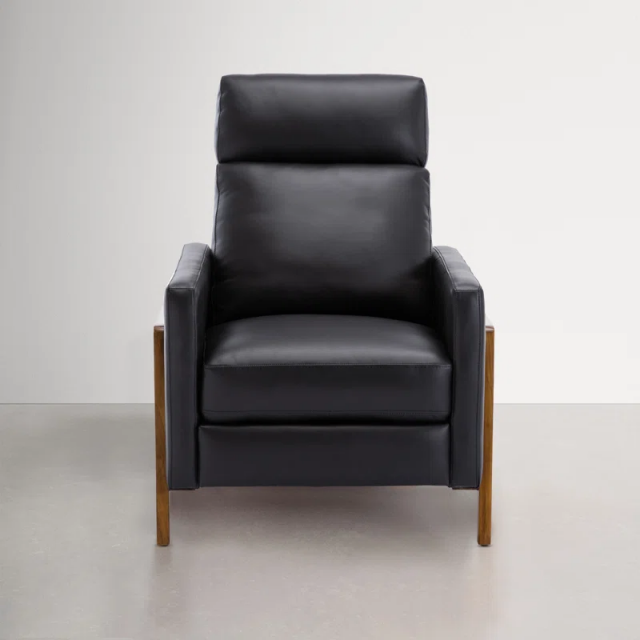
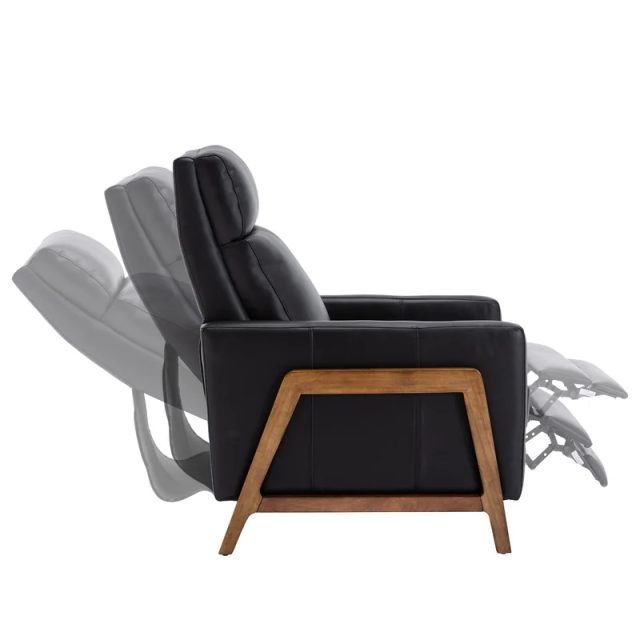
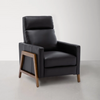
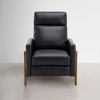
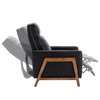
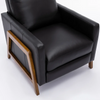
The leather and wood recliner chair is built with a sturdy hardwood and plywood frame, ensuring durability and stability.
The robust wood structure provides a heavy-duty function and a weight capacity of 330 lbs.
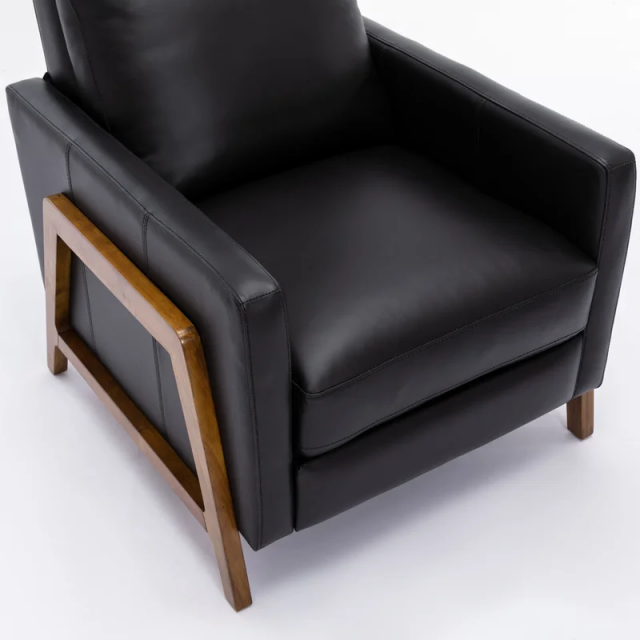
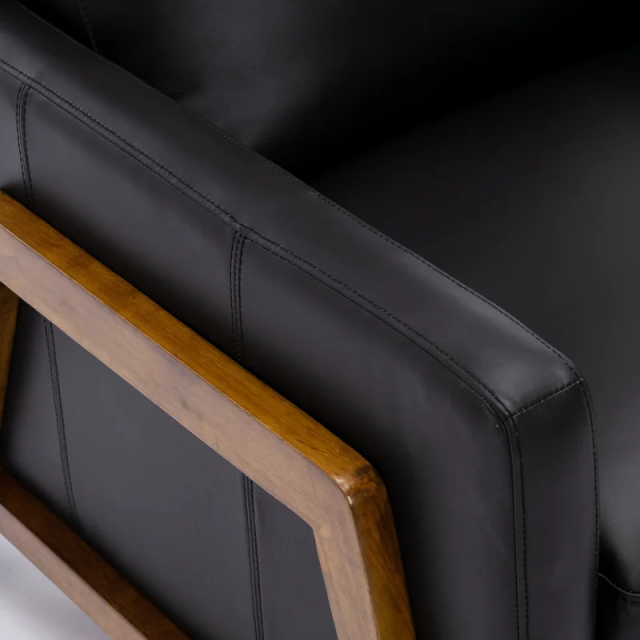
Upholstered with 100% top grain leather, it offers a luxurious and high-quality seating experience.
The top-grain aniline-dyed leather used in the recliner will develop a natural patina over time, enhancing its visual appeal and softening with use.

This recliner chair with wooden legs features a solid wood exposed frame in a chestnut finish, embodying mid-century modern style.
Its clean lines and minimalist design create a sleek silhouette.
It is a versatile seating option for living rooms, offices, or bedrooms with limited space.

The recliner chair for heavy person offers drop-in coil seating for responsive support and even weight distribution.
The heavy duty reclining chair is crafted with easy maintenance in mind.
It features a fabric cleaning code that recommends wiping gently with a damp cloth for cleaning.
It is important to avoid using cleaners, soaps, or waxes on the leather upholstery, ensuring its longevity and preserving its quality.

The leather and wood recliner chair is built with a sturdy hardwood and plywood frame, ensuring durability and stability.
The robust wood structure provides a heavy-duty function and a weight capacity of 330 lbs.
Upholstered with 100% top grain leather, it offers a luxurious and high-quality seating experience.
The top-grain aniline-dyed leather used in the recliner will develop a natural patina over time, enhancing its visual appeal and softening with use.
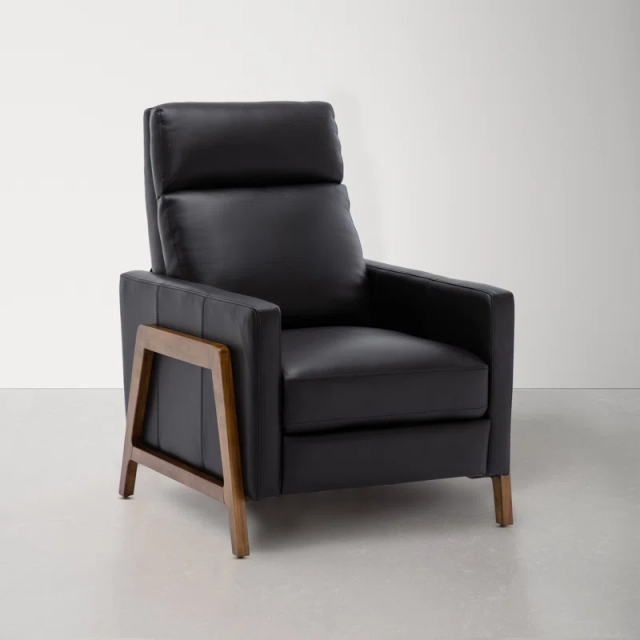
This recliner chair with wooden legs features a solid wood exposed frame in a chestnut finish, embodying mid-century modern style.
Its clean lines and minimalist design create a sleek silhouette.
It is a versatile seating option for living rooms, offices, or bedrooms with limited space.

The recliner chair for heavy person offers drop-in coil seating for responsive support and even weight distribution.
The heavy duty reclining chair is crafted with easy maintenance in mind.
It features a fabric cleaning code that recommends wiping gently with a damp cloth for cleaning.
It is important to avoid using cleaners, soaps, or waxes on the leather upholstery, ensuring its longevity and preserving its quality.
The Problems with Traditional Healthcare Furniture: A Comprehensive Industry AnalysisIntroductionThe healthcare furniture industry has operated under the same fundamental design principles for decades, prioritizing institutional efficiency and cost control over patient dignity, worker ergonomics, an
Creating a truly wheelchair-accessible hospital environment requires far more than simply checking boxes on an accessibility compliance checklist. Healthcare facilities across the country claim to meet accessibility standards while simultaneously failing patients who depend on wheelchairs for mobili
The choice between patient ward accommodations and private room setups represents one of the most significant decisions in healthcare facility design and patient experience management. This distinction goes far beyond simple aesthetic preferences—it fundamentally impacts recovery outcomes, infection
Family members staying overnight in hospital rooms face a critical furniture crisis that directly impacts patient recovery and caregiver well-being. When patients require hospitalization—whether in maternity wards, pediatric ICUs, psychiatric units, or long-term care facilities—their loved ones ofte
When planning a new facility or renovating an existing community, finding specialized healthcare furniture manufacturers for senior living is the most critical step for interior designers, facility developers, and project managers. Your furniture selections directly impact resident safety, comfort,
Healthcare workers operate in one of the most physically demanding environments imaginable. Yet, paradoxically, one of the simplest tools supporting their work—a proper chair—is often deprioritized, neglected, and chronically absent from clinical units. This isn't merely a comfort issue; it's a work