
Views: 0 Author: Site Editor Publish Time: 2026-01-07 Origin: Site


Let's be honest. You've seen the invoices. You've sat in the waiting rooms. You've probably looked at a basic-looking, clinical-blue plastic stool in an exam room and thought: “This is a scam.”

How can a piece of furniture that looks like it belongs in a 1990s high school cafeteria cost $2,000, while something from a local big-box office store costs $49? Is there a "medical tax" we aren't talking about?
At Hongye Healthcare Furniture, we've spent decades in the factory trenches. We've seen hospital directors lose sleep over "cheap" furniture that fell apart in six months and cost them a fortune in lawsuits and infection outbreaks.
The truth is that "ugly" chair isn't furniture. It's a piece of medical equipment engineered to survive a war zone of pathogens, corrosive chemicals, and 24/7 physical abuse. If you've ever wondered what you're actually paying for, let's peel back the medical-grade vinyl.
In your home, a dining chair is used for maybe 2 hours a day. In a busy facility like a hospital, a waiting room chair is occupied 24 hours a day, 365 days a year.

In engineering, we talk about "fatigue life." Most residential furniture is designed for intermittent use. When you put a standard office chair in a 24-hour nurses' station, it undergoes a year's worth of "home use" every three weeks.
The Failure Point: Screws loosen, gas lifts fail, and foam loses its "memory" (compressing into a hard brick).
The HY Solution: We design for Infinite Fatigue Life. Our frames are reinforced at stress points with heavy-gauge steel and robotic welds that don't "tired out."
A standard home chair is rated for about 250 lbs ($113$ kg). But a hospital must be ready for everyone. Medical-grade furniture is often tested to support static loads of 1,000 lbs to 2,000 lbs ($450$ kg to $900$ kg).
Static Load vs. Impact Load: It's not just about sitting still. It's about a 300-lb patient "dropping" into the chair. If the frame snaps, the hospital is liable for the injury. That $2,000 price tag is your insurance policy against a $50,000 injury claim.
This is where the "ugly" design becomes a superpower. The primary goal of a hospital chair is to be non-porous.
In your home sofa, seams and tufted buttons are "style."

In a clinic, those seams are bacterial hotels. According to the CDC, Healthcare-Associated Infections (HAIs) kill nearly 100,000 people annually in the U.S. alone.
Waterfall Edges: Look closely at HY Healthcare chairs. You'll notice we eliminate seams at the front of the seat. Why? Because that’s where biological fluids collect.
Seamless Welding: We don't use staples. We use robotic heat-sealing and seamless welding so there is literally nowhere for MRSA or C. diff to hide.
Our fabrics aren't just "wipable." Most of our medical upholstery is infused with Silver Ion technology.
The Science: Silver ions (2$Ag^+$) penetrate the cell walls of bacteria and disrupt their DNA. This creates a self-sanitizing surface that kills pathogens between manual cleanings. You're not just buying a seat; you're buying an active disinfection tool.
If you wiped your favorite designer leather chair with 10% bleach or hydrogen peroxide every two hours, the material would crack and peel within days. In a hospital, aggressive disinfection is the law.

To help you understand why we choose specific materials, here is a technical breakdown of how different "medical" surfaces handle the stress:
Feature | Medical-Grade PVC (Vinyl) | Medical-Grade PU (Polyurethane) | High-Performance Silicone |
Chemical Resistance | High (Excellent for Bleach) | Moderate (Vulnerable to Alcohol) | Supreme (Impervious to most) |
Breathability | Low (Can feel "sweaty") | High (Comfortable for long sits) | Moderate |
Durability (Rubs) | 100,000+ | 50,000 - 100,000 | 200,000+ |
Environmental Impact | Contains Phthalates | Eco-Friendly | Best (PVC-Free) |
Best Use Case | ER / High-Fluid Areas | Patient Rooms / Long-Term Care | VIP Suites / High-End Clinics |
The "Pinking" Effect: Cheap vinyl turns pink or orange when exposed to certain disinfectants. This is a sign of chemical breakdown. HY Healthcare materials are tested to survive 100,000+ "double rubs" after being soaked in bleach.
When the Saudi German Hospital in Makkah approached us, they had a problem. They wanted VIP suites that looked like a 5-star hotel in Dubai, but the infection control team demanded furniture that could be blasted with chemicals.
The Solution:
We utilized Heat-Transfer Wood Grain on aluminum frames. It looks like warm, organic oak, but it sanitizes like stainless steel. We used a hybrid Silicone-PU upholstery that feels as soft as Italian leather but meets the world's strictest CAL 133 fire safety standards.
The Result: A "Healing Environment" that reduces patient stress while maintaining 100% sterile compliance.
Explore the Project: Saudi German Hospital Makkah Case Study
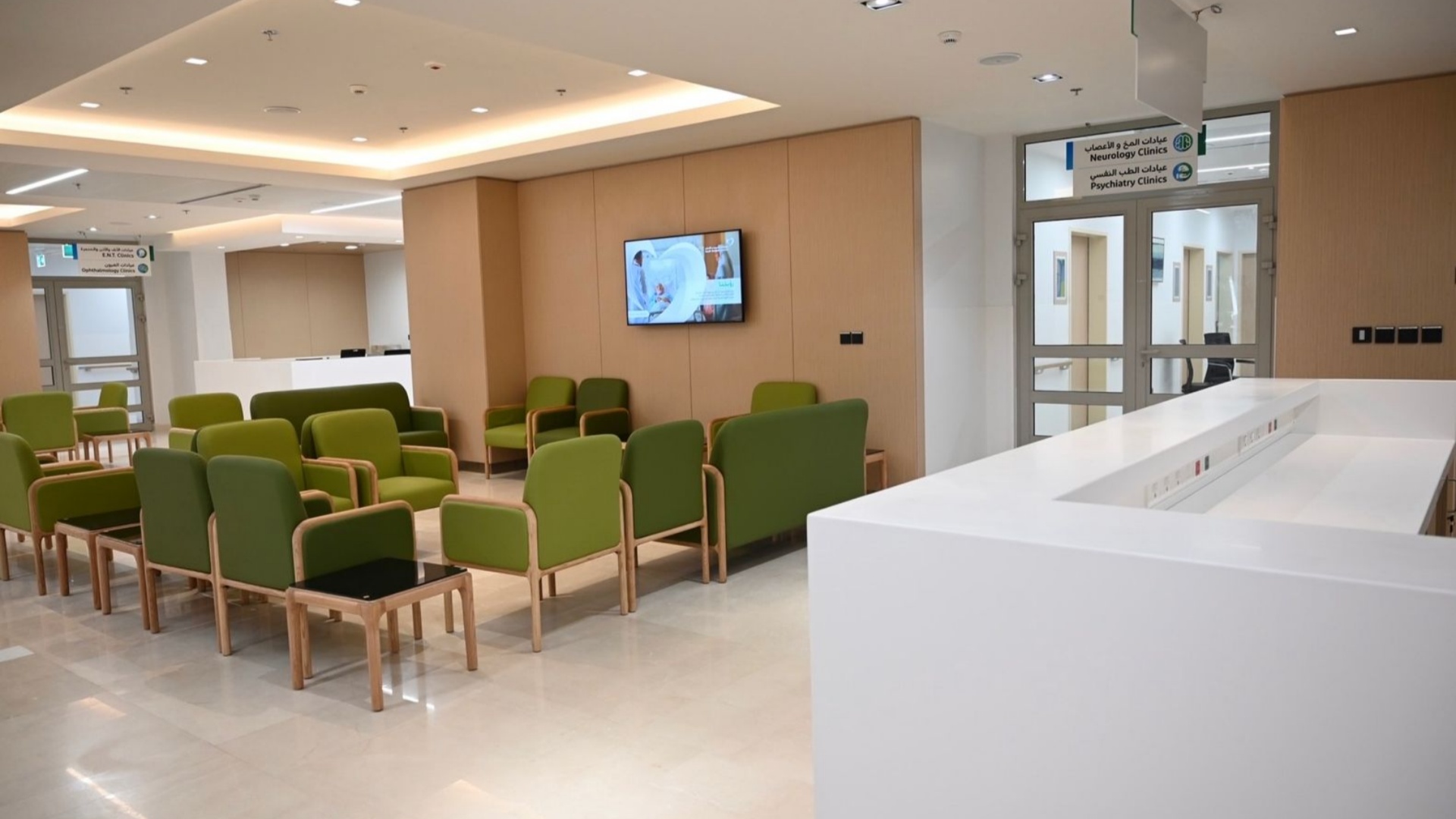
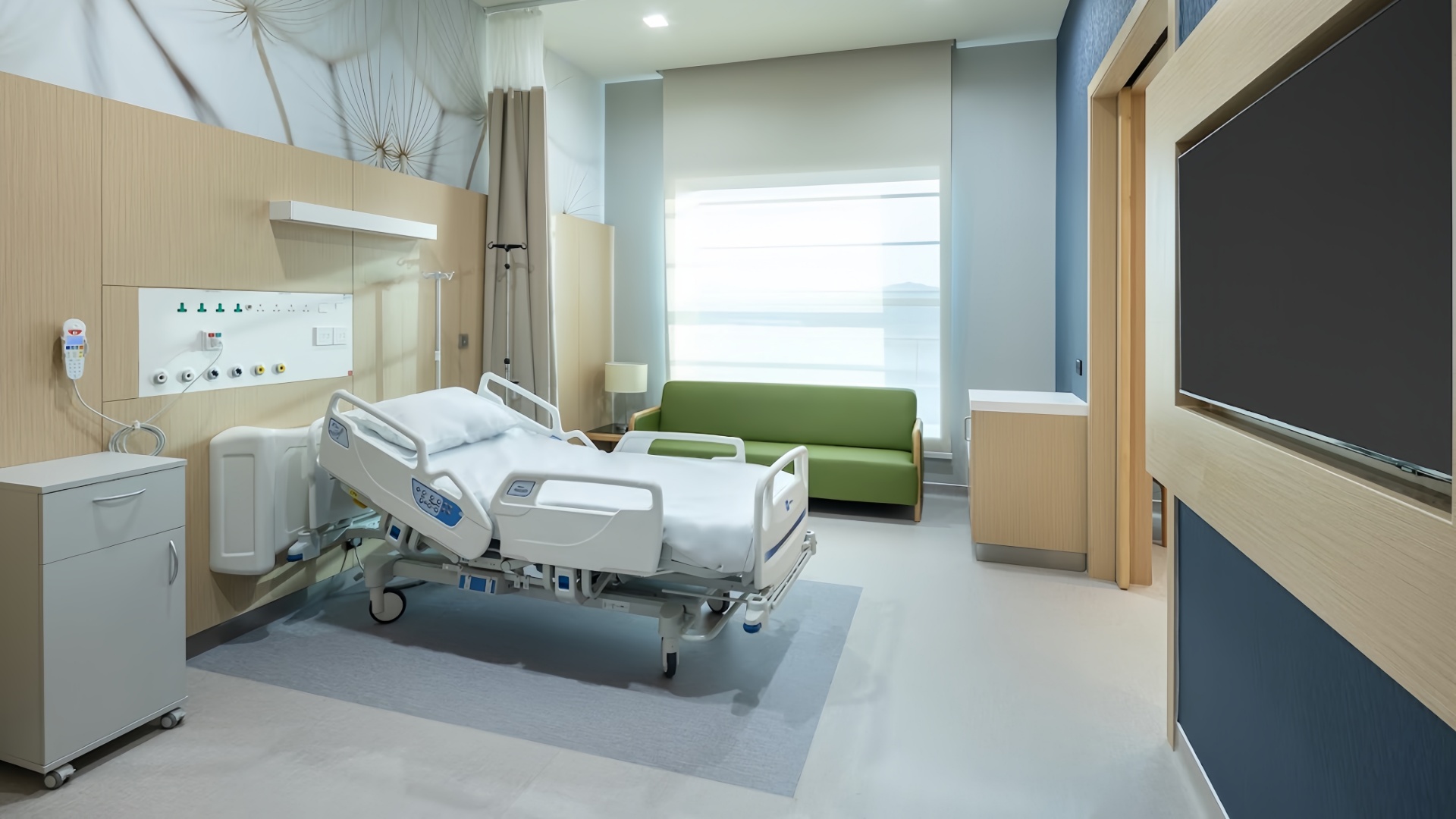
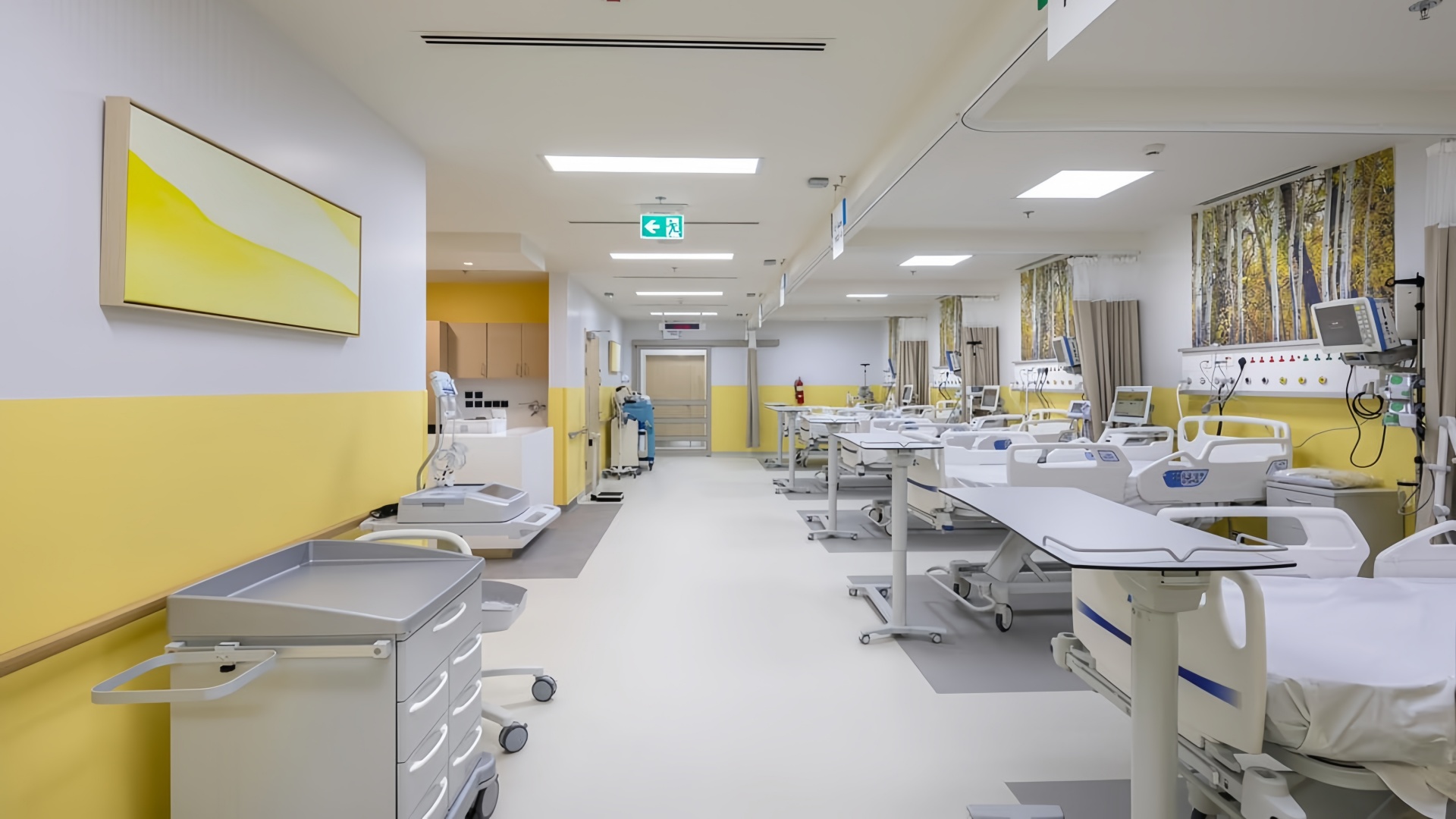
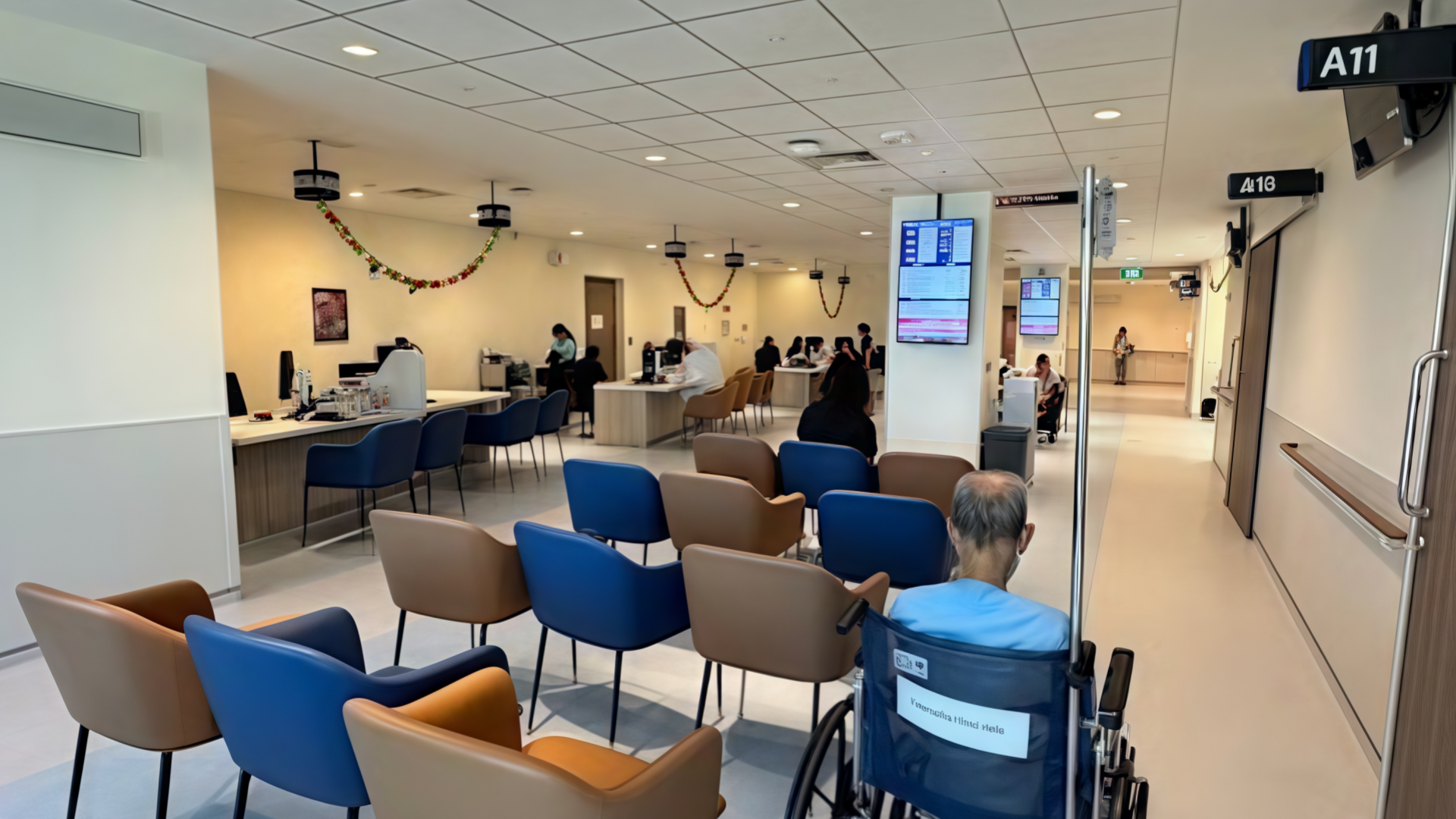
In Singapore, the focus is on Life Cycle Cost (LCC). They don't want the cheapest chair; they want the one that lasts 15 years without a single maintenance call. For the Woodlands Health Campus, we focused on Geriatric Ergonomics.
Key Engineering Features:
Pressure Mapping: We used sensors to ensure the foam density doesn't cut off blood flow to the legs, preventing bedsores (Decubitus Ulcers).
The "Get-Up" Physics: We engineered the armrests to be $1.5$ inches longer than standard chairs. This provides a stable lever for elderly patients to push off, reducing the risk of falls and saving nurses from back injuries.
Explore the Project: Woodlands Health Campus Singapore Case Study
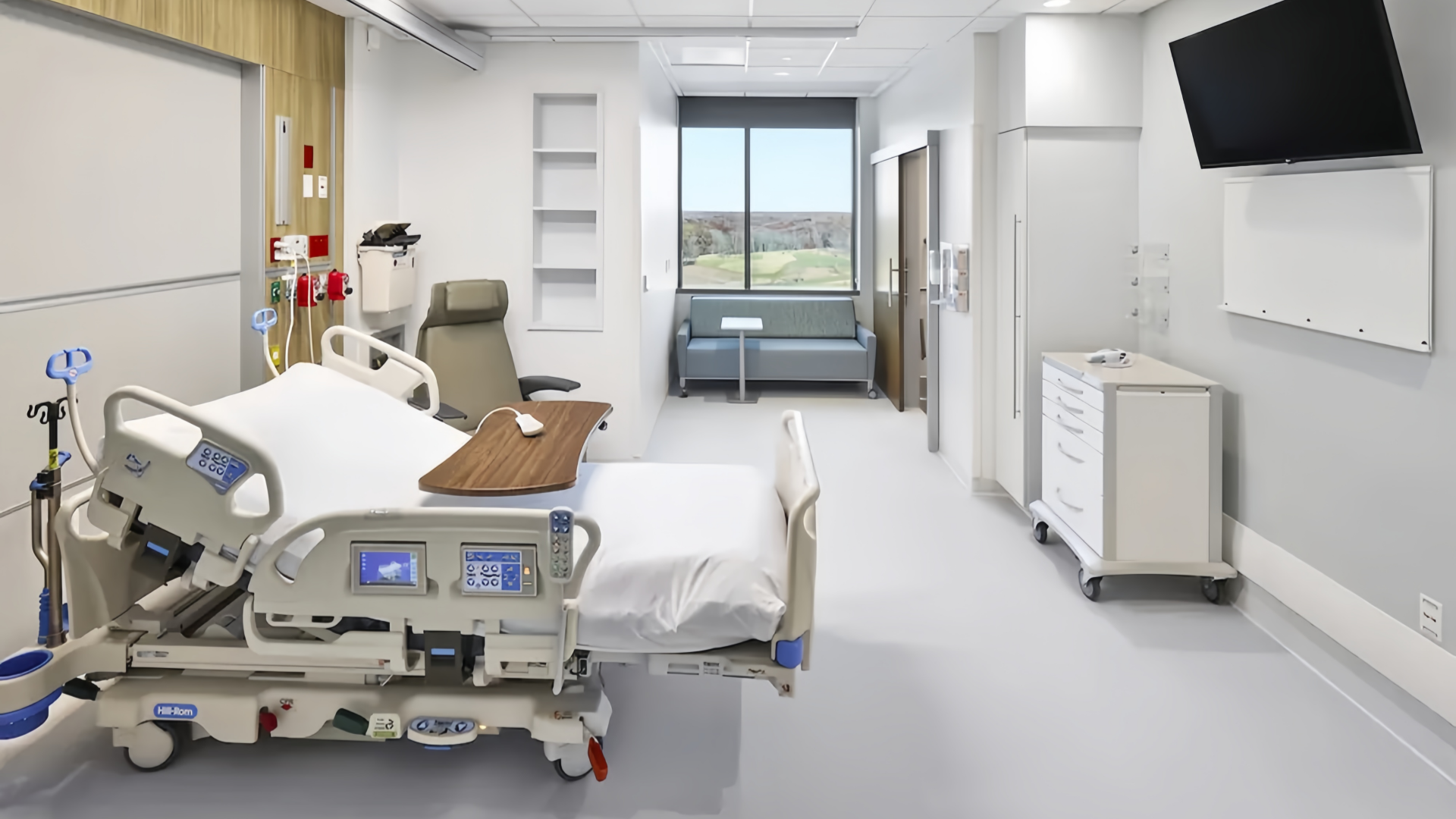
Why does a patient recliner cost $3,000? Because it's a tool for physical therapy.
Anti-Tip Stability: Standard recliners can tip if a patient leans too far. Our medical recliners have a low center of gravity and weighted bases.
Friction Casters: Our wheels roll easily when the chair is empty, but they "lock" slightly when a patient sits down. This prevents the chair from flying backward when a patient tries to sit.
Wall-Saver Design: In tight hospital rooms, space is gold. Our recliners can go into a full sleep position while sitting only $4$ inches from the wall.
When you buy a "cheap" chair, you aren't paying for the testing. When you buy HY Healthcare, you are buying a library of safety certifications:
CAL 133 (The Burn Test): Hospitals are high-oxygen environments. A fire here is a catastrophe. CAL 133 isn't just about "not catching fire"—it means the chair won't release toxic cyanide gas if it does burn.
ANSI/BIFMA X5.1 & X5.4: This involves a robot "dropping" a 250lb weight onto the seat 100,000 times. If a single weld cracks, it fails.
GREENGUARD Gold: This ensures the furniture isn't "off-gassing" volatile organic compounds (VOCs). For a patient with respiratory issues, the "new car smell" of cheap furniture can be a health trigger.
Let's do some "napkin math" on the Return on Investment (ROI).
Scenario A (The Cheap Route): You buy a $200 "contract" chair. It breaks in 8 months. You replace it. In 2 years, the vinyl cracks and hides bacteria, causing a minor infection outbreak. Total cost over 10 years: $2,500 + Legal Risk.
Scenario B (The HY Route): You buy an $1,800 medical-grade chair. It lasts 12 years with zero maintenance. It is wiped with bleach 5,000 times and looks brand new. Total cost over 10 years: $1,800 + Peace of Mind.
The Conclusion is Clear: The "High Price" of medical-grade furniture is actually a discount on future headaches.

As a leading global medical furniture manufacturer, Hongye Furniture operates a $500,000$ square-meter production base. We don't just sell chairs; we solve the "Aesthetics vs. Sterility" puzzle for the world's most demanding hospitals.
From the Middle East to Southeast Asia, we provide end-to-end project solutions that pass every audit—clinical, financial, and aesthetic.
Don't settle for "ugly" and "cheap." Get the engineering your patients deserve.
[Would you like to speak with our Medical Project Specialists for a customized furniture spec sheet and bulk pricing?]


