
Views: 0 Author: Site Editor Publish Time: 2026-02-25 Origin: Site


When families walk into a senior living room or a hospital suite, they usually notice the main bed, the armchairs, and maybe a small sofa.
What they almost never see at first glance is the most critical piece of furniture for family comfort and safety: the hidden caregiver bed.
In many nursing homes, assisted living facilities, and home‑care settings, caregivers end up sleeping on chairs, window benches, or improvised cots simply because there is “no room” for a second bed.
This article shows how foldable beds, wall beds, and sofa beds can act as invisible extra beds in senior rooms—adding real sleeping capacity without sacrificing space, safety, or dignity.

Most senior living rooms and nursing home bedrooms are planned around one main patient or resident bed, a wardrobe, and minimal seating.
On floor plans, everything looks neat and efficient, but the drawing almost never shows where a daughter staying overnight with her mother is supposed to sleep.
When space is tight, operators remove any extra bed and leave only a regular chair or a compact sofa, hoping it will “do” if someone has to stay.
 The result is familiar: caregivers sleeping half‑sitting on a small sofa, using a chair as a footrest, or lying on a thin makeshift cot squeezed between the bed and the wall.
This situation is not only uncomfortable; it can be unsafe.
Blocking doors and circulation paths with temporary sleep solutions makes it harder for staff to move equipment, increases fall risks at night, and complicates cleaning.
In reality, every senior room needs two sleep positions—one for the resident, one for the caregiver—but only one is formally planned.
The core problem is that most room layouts are drawn for “one bed and one resident”, not for real life with family and professional caregivers rotating in and out.
Designers mark clearances for wheelchairs and medical equipment, but rarely allocate permanent space for a second bed that might be used several nights a week.
Hidden caregiver beds are a direct response to this gap: they provide a real, adult‑sized sleeping surface integrated into another piece of furniture or the wall, and they remain invisible when not in use.
Instead of adding more furniture, the idea is to make the existing footprint work harder.
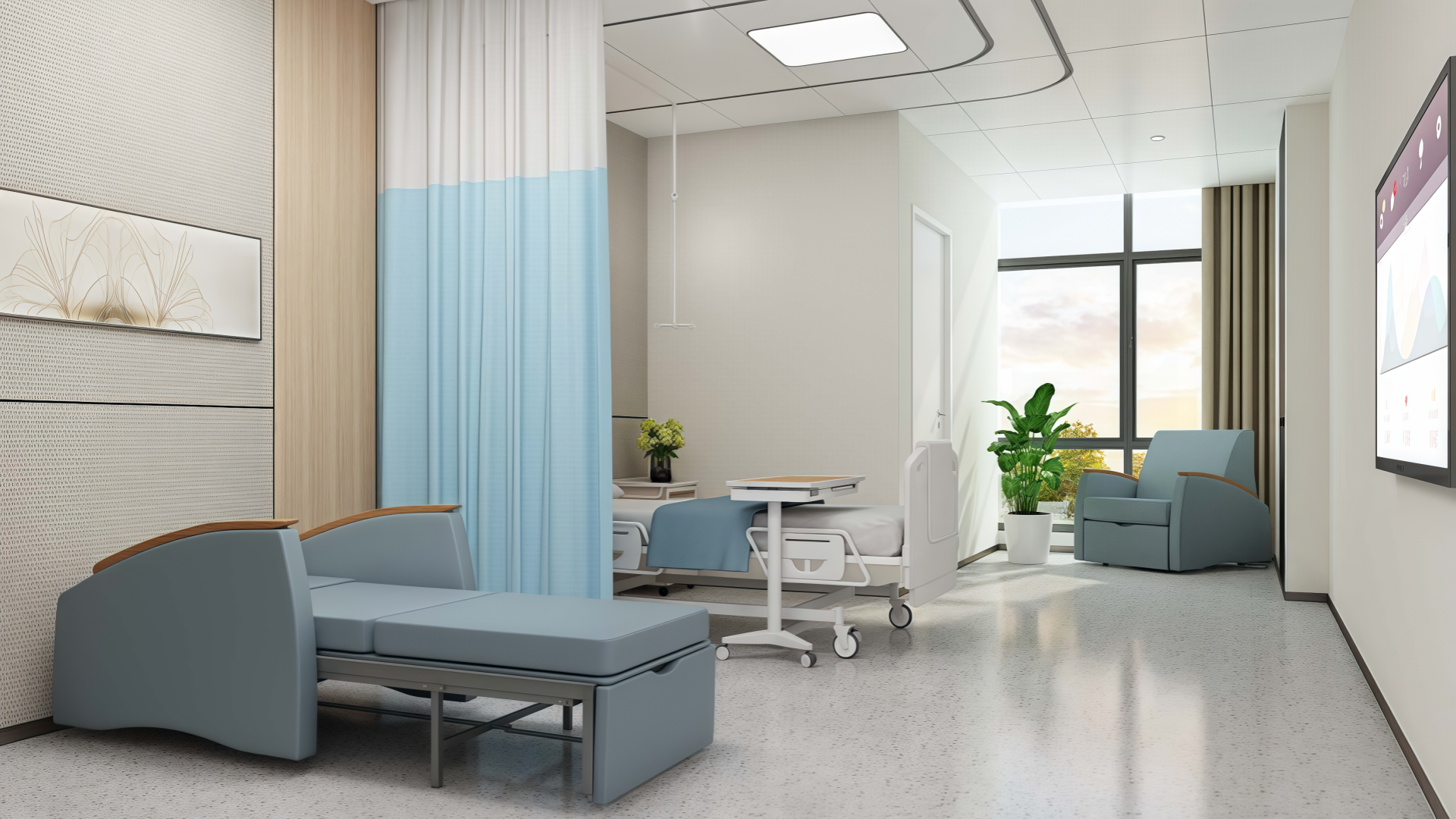
A hidden caregiver bed is a sleeping solution designed to disappear into another furniture element or architectural feature when it is not needed.
During the day it looks like a sofa, a bench, a low cabinet, or a flat wall panel; at night it unfolds into a full‑length bed where an adult can sleep safely and comfortably.
The most common types include:
Foldable caregiver bed
A bed hidden inside a compact cabinet or sofa base, pulled out and unfolded only when needed.
Wall bed for nursing home (Murphy‑style)
A bed that folds vertically into the wall or a tall cabinet, leaving free floor space during the day.
Sofa bed for assisted living
A sofa with a built‑in mechanism that converts the seat into a flat sleeping surface for caregivers.
Under‑bed pull‑out bed
A low bed or platform stored under the main bed or a bench, which slides out like a drawer.
Many people think of sofa beds as purely residential products.
However, senior living and healthcare environments place much higher demands on durability, safety, and cleaning than a typical guest room at home.
Mechanisms in professional caregiver beds have to handle daily opening and closing, heavier loads, and strict fall‑prevention requirements.
Upholstery and surfaces must tolerate repeated disinfection, body fluids, and long‑term use without sagging or staining.
In other words, a random home sofa bed is usually not enough for a nursing home or hospital.
A true hidden caregiver bed for senior environments combines residential comfort with healthcare‑grade hardware and materials.
Every square meter in a senior room has to do more than one job.
The same area that hosts visitors during the day often needs to become a quiet sleeping zone at night and still allow staff to move safely around the main bed.
Multi‑functional furniture solves this by combining seating, sleeping, and storage in a single footprint.
A hidden caregiver bed can:
Work as a sofa or bench during visiting hours.
Transform into a full‑length bed for a caregiver at night.
Provide built‑in drawers or compartments for linens, pillows, or medical supplies.
For operators, this approach reduces clutter from loose cots and extra mattresses lying around the corridor.
It also simplifies housekeeping, because staff clean around one integrated unit instead of several small pieces.
The concept of “bed + sofa + storage in one” can be implemented in several ways.
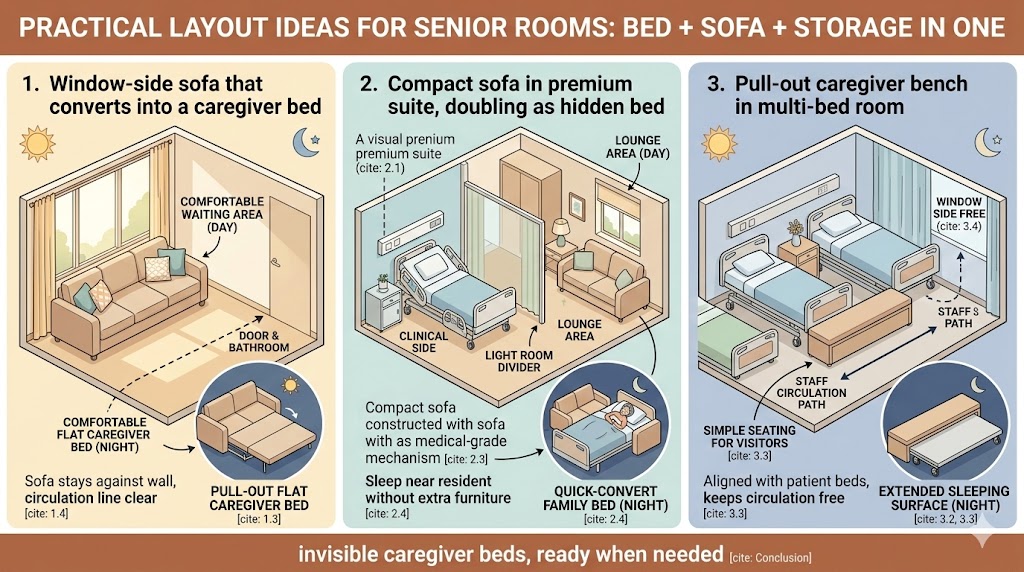
1. Window‑side sofa that converts into a caregiver bed
A three‑seat sofa under the window looks like a comfortable waiting area during the day.
At night, the seat base pulls out and unfolds into a flat caregiver bed, while the back cushions become a head support.
Because the sofa stays against the wall, the circulation line to the door and bathroom remains clear.
2. Compact sofa in a suite, doubling as a hidden bed
In some premium suites, the space is visually divided into a clinical side and a lounge side.
The sofa placed between the resident bed and the window, or in the lounge corner, is constructed with a healthcare‑grade folding mechanism.
Once converted into a bed, it allows a family member to sleep near the resident without bringing in extra furniture or blocking access to the main bed.
3. Pull‑out caregiver bench in a multi‑bed room
In multi‑bed rooms, a long upholstered bench at the foot of the beds can hide a pull‑out platform on wheels.
During the day, it is simple seating for visitors; at night, it extends to form a sleeping surface aligned with the patients’ beds.
This design respects staff circulation and keeps the window side free while still providing a genuine caregiver bed.
In all these examples, the caregiver bed is “invisible” in photos at first glance—but it is there, ready to be used when needed.
At the heart of many foldable caregiver beds is a multi‑link mechanism, often called a five‑link system.
This mechanism uses several interconnected metal arms and pivots to guide the bed frame smoothly from a compact, folded position to a flat, fully open position.
The geometry is carefully engineered so that the bed can be operated with relatively low effort, without sudden drops or jerky movements.
Good mechanisms keep the center of gravity controlled throughout the movement, which is crucial when the bed is built into a sofa or cabinet.
Because caregiver beds may be opened and closed daily, hardware quality is critical.
Key performance aspects include:
Load‑bearing capacity
The structure should safely support an adult’s weight for overnight use, not just occasional sitting.
Cycle testing
Mechanisms should withstand thousands of open‑close cycles without loosening, squeaking, or bending.
Smooth assisted opening
Gas springs, counterbalance systems, or soft‑assist features help caregivers—who may be tired or older themselves—operate the bed without strain.
Secure locking
Once open, the bed frame should lock firmly into place, preventing accidental folding or rolling.
When evaluating products, it is worth asking suppliers about their testing procedures and the type of hardware they use, not just the appearance of the sofa or cabinet.
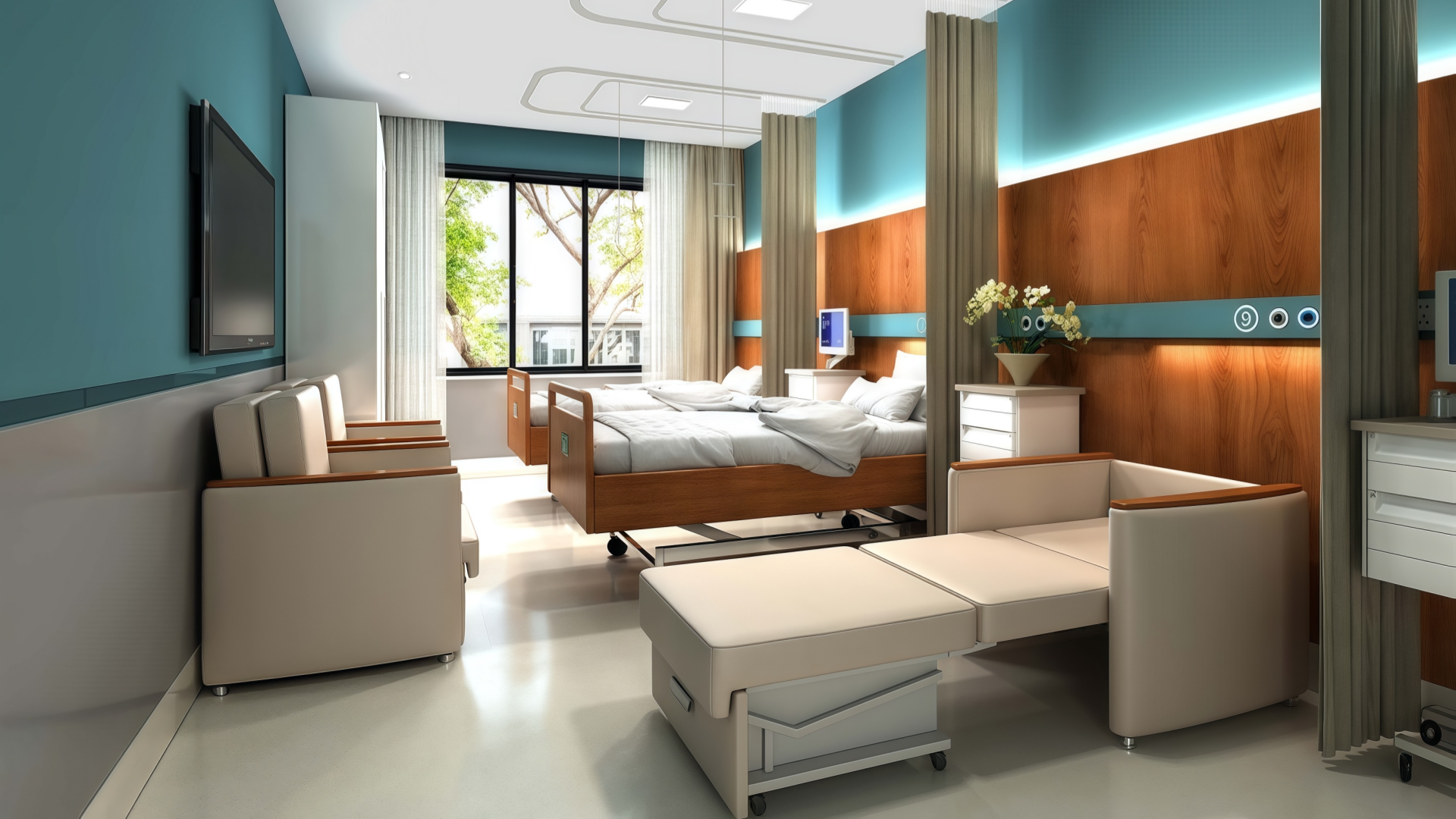
Hidden mechanisms create new safety questions, especially in rooms used by older adults, children, and busy staff.
A well‑designed caregiver bed addresses this with:
Anti‑pinch design
Gaps around moving parts are minimized or shielded to prevent fingers from being caught during opening and closing.
Anti‑tip protection
Wall beds and tall cabinets must be securely anchored to the wall or floor so the unit cannot tip forward when the bed is pulled out.
Rounded corners and protected edges
Metal frames and corners should be rounded or cushioned to reduce impact injury if someone bumps into the bed at night.
Stable, lockable casters (if on wheels)
If the pull‑out platform uses wheels, these should lock solidly to prevent the bed from shifting while someone is getting in or out.
These details may seem minor, but they greatly influence real‑world safety in senior rooms where balance, vision, and reaction time can be reduced.
In senior living and healthcare environments, caregiver beds live in the same infection‑control ecosystem as hospital beds and clinical seating.
That means all visible surfaces must withstand frequent cleaning with disinfectants and detergents.
Ideal upholstery materials are waterproof or at least highly water‑resistant, with a protective layer that resists staining from coffee, medicine, and body fluids.
Designers should also pay attention to seam placement and construction.
Deep, horizontal seams or complex tufting may look residential, but they create pockets where crumbs, dust, and fluids can accumulate.
Smooth panels, sealed seams, and “clean‑out” gaps between seat and backrest make it easier for staff to wipe down surfaces quickly and thoroughly.
Senior living facilities often follow fire safety regulations similar to hotels and hospitals.
This usually means using fire‑retardant foams, fabrics, and underlays in sofas and beds, including hidden caregiver beds.
Frames may be made of steel, aluminum, or engineered wood; each option has different strengths in terms of weight, durability, and resistance to moisture.
Steel frames are strong and stable, which is useful for foldable mechanisms and wall beds.
Engineered wood can add warmth and acoustic comfort, especially in visible cabinet fronts.
In all cases, edges should be sealed and protected to avoid splintering or sharp corners.
The same challenges that appear in nursing homes also exist in private homes where older adults are aging in place.
A small apartment might have just one bedroom and a living room, yet family members occasionally need to sleep in the same room as the older person—for monitoring, recovery after surgery, or end‑of‑life care.
Bringing in a second full‑size bed is often impossible without turning the room into a maze of frames and mattresses.
Hidden caregiver beds solve this by integrating the extra bed into existing living room furniture.
During ordinary days, the furniture behaves like any other sofa or bench; when care is needed, it becomes a proper bed with familiar operation for family members.

When applying healthcare‑inspired solutions to home interiors, the goal is to keep the safety and ergonomics while softening the visual language.
This can be done by:
Keeping seat height and firmness at levels that make it easy for older adults to sit down and stand up.
Using residential color palettes and fabrics that still meet basic cleanability and fire‑safety needs.
Simplifying mechanisms so they can be opened and closed with minimal strength and few steps.
The result is furniture that looks like it belongs in a living room but performs like a piece of professional caregiver equipment when needed.
When specifying hidden caregiver beds for a new unit or renovation, use this quick checklist:
Space and circulation
Measure clearances with the bed both open and closed; ensure there is enough room for a wheelchair or walker to pass and for staff to move equipment.
Safety and stability
Confirm wall or floor fixing methods, anti‑tip features, edge protection, and anti‑pinch details around moving parts.
Comfort and mattress quality
Check mattress thickness, support, and size; a caregiver bed should be suitable for full‑night use, not just a short nap.
Durability and testing
Ask about load ratings, cycle tests, and warranty coverage for mechanisms and upholstery.
Cleaning and infection control
Verify that surfaces are resistant to common disinfectants and that design details make it easy to clean under and around the bed.
Integration with other furniture
Ensure the hidden bed works visually and functionally with the main bed, seating, storage, and lighting scheme of the room.
For home environments, priorities are slightly different:
Choose mechanisms that are easy to operate and do not require much strength.
Make sure the sleeping surface is at a comfortable height for getting in and out of bed.
Check that there is enough space to walk around the bed at night without bumping into furniture.
Consider where plugs, lamps, and switches are located so the caregiver has light and power within reach.
Hidden caregiver beds allow senior living operators and families to add a truly usable sleeping position without increasing room size or filling the space with loose furniture.
By integrating foldable, wall‑mounted, or pull‑out beds into sofas, benches, and cabinets, every square meter of a senior room can support both daytime comfort and nighttime care.
When designed with robust mechanisms, safe details, and healthcare‑grade materials, these invisible beds protect not only space and budgets but also the comfort and dignity of caregivers and residents alike.


