
Views: 0 Author: Site Editor Publish Time: 2026-02-10 Origin: Site


As global healthcare systems pivot toward specialized care, the behavioral health sector is projected to be one of the fastest-growing markets through 2026. However, outfitting these facilities presents a complex challenge: furniture must bridge the gap between rigorous clinical safety and a warm, therapeutic "hospitality-inspired" aesthetic. In high-risk environments, a single misplaced design detail—such as a standard door handle or a lightweight chair—can escalate from a comfort issue to a life-safety risk.

This guide analyzes the critical safety standards distinguishing behavioral health furniture from general medical equipment, providing a decision framework for 2026 procurement.
In general medical wards, furniture focus is on mobility and adjustability (e.g., casters and powered actuators). In behavioral health, the priority shifts to preventing self-harm and the weaponization of objects.
A "ligature point" is any hardware or gap that can support a cord or shroud. To mitigate these risks, behavioral furniture utilizes:
Continuous "Piano Style" Hinges: Eliminates gaps found in standard cabinet hinges.
Sloped or Recessed Handles: Prevents the attachment of ligatures to doors or drawers.
Open Wardrobes: Replacing traditional doors entirely to remove concealment points and hanging risks.
Patients may attempt to conceal medication or sharp objects within furniture. Specialized seating for 2026 incorporates zero-depth seams to minimize gaps around cushions and enclosed bases to prevent items from being stashed underneath.
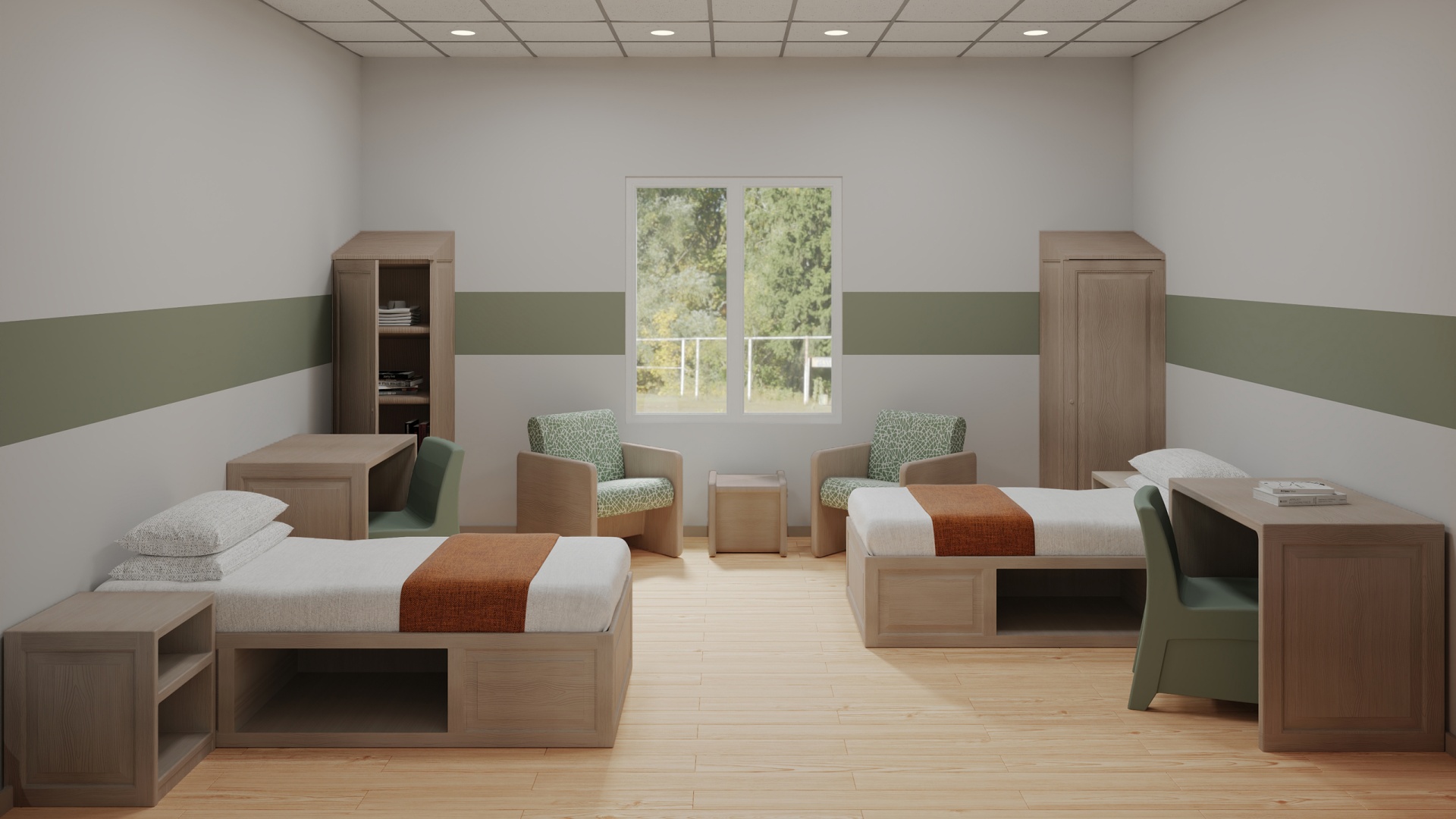
While general hospital furniture often requires wheels for rapid transport, behavioral health environments demand "Smart Stability".
Heavily Weighted Pieces: Lounge chairs and side tables are frequently weighted with sand or metal plates (often exceeding 100 lbs) to ensure they cannot be picked up or thrown.
Fixed-to-Floor Mounting: For high-acuity zones (Level 4 risk), platform beds and seating are bolted directly to the floor using tamper-resistant hardware.
One-Piece Construction: Rotationally molded plastic furniture eliminates joints and internal frames, making the pieces virtually indestructible under high-impact stress.
The 2026 design standard moves beyond "sterile security" toward Trauma-Informed Healing Architecture (TIHA). This approach uses environmental factors to reduce patient hypervigilance and cortisol levels.
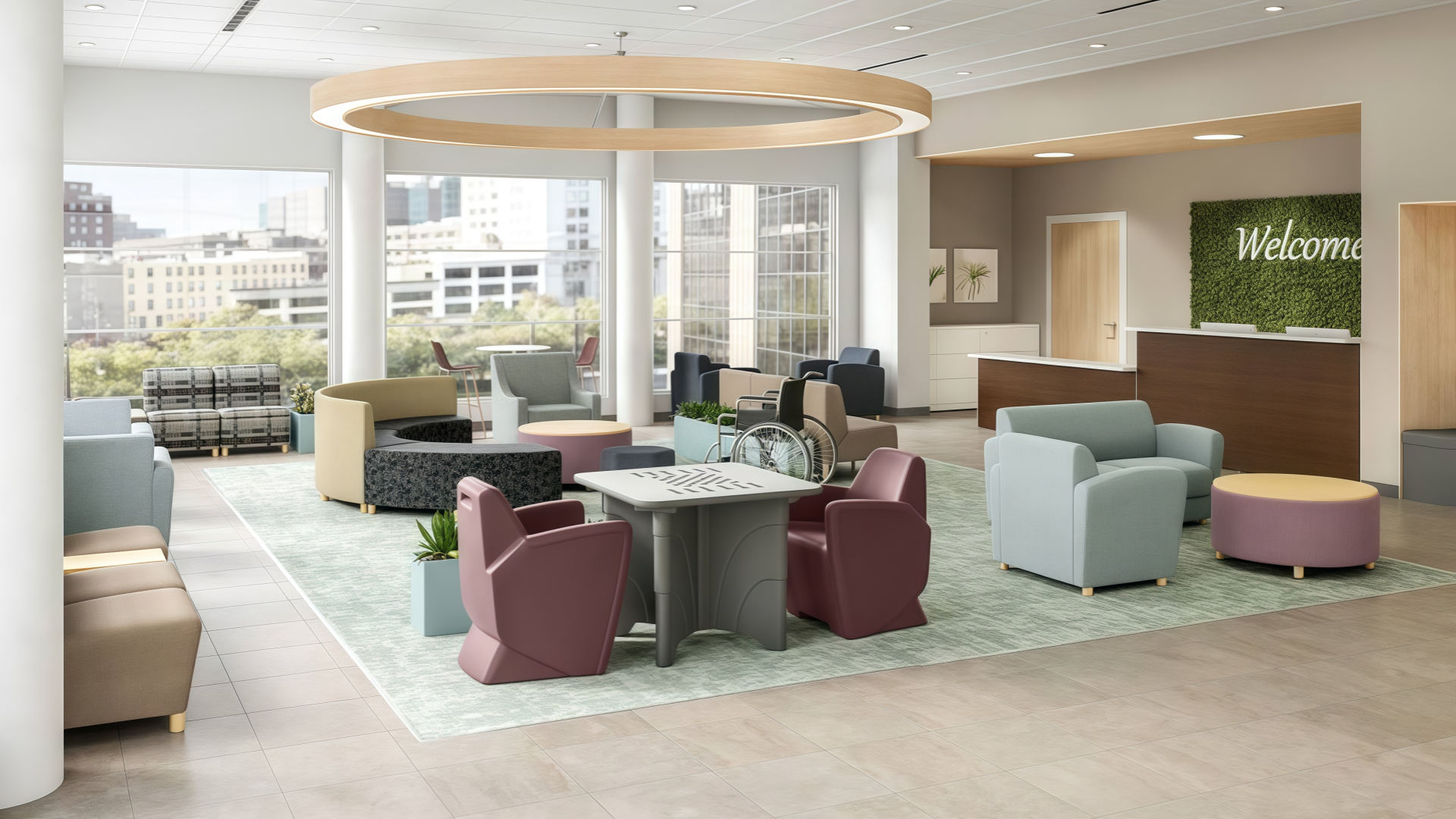
Invisible Infrastructure: Safety features like ligature resistance are now integrated into residential-style wood-look laminates to reduce the "institutional" feel.
Biophilic Integration: Using earth-toned colors (like BEHR’s "Hidden Gem" smoky green) and nature-inspired textures helps ground patients and improve emotional regulation.
Acoustic Freshness: Strategic placement of sound-absorbing textiles reduces ambient noise, which is a major trigger for agitation in sensory-sensitive residents.
| Feature | General Medical Furniture | Behavioral Health Furniture |
| Primary Goal | Mobility & Clinical Access | Safety, Security & Therapy |
| Hardware | Exposed hinges/handles | Ligature-resistant (sloped/recessed) |
| Seating | Lightweight/Casters | Weighted or Fixed-to-Floor |
| Seams | Standard for comfort | Zero-depth (anti-concealment) |
| Materials | Antimicrobial metals/fabrics | Antimicrobial metals/fabrics |
| Aesthetics | Clinical/Technical | Residential/Hospitality-inspired |
B2B procurement teams must verify that products meet audited benchmarks rather than relying on manufacturer claims.
ISO 13485 & 9001: Ensures consistent quality management specifically for medical-grade manufacturing.
ANSI/BIFMA X5.41: Validates the load-bearing capacity for large-occupant seating (up to 600 lbs), which is essential for inclusive bariatric care.
NFPA 101 (Life Safety Code): Establishes stringent fire-retardancy and smoke-toxicity norms for upholstery used in patient care areas.
In behavioral health, furniture is not a "sunk cost" but a strategic tool for risk mitigation. High-quality, certified pieces reduce the frequency of repairs and replacements, while supporting better patient outcomes and staff retention. As we move into 2026, the competitive advantage lies with facilities that can deliver a safe, dignified, and "neuro-responsive" environment that fosters true healing.


