
Views: 0 Author: Site Editor Publish Time: 2026-04-07 Origin: Site


Although the sleeping surface typically resembles a Twin XL, the overall physical footprint presents a significantly different picture. Picture moving a new piece of furniture into a spare room, only to realize it cannot squeeze through a standard 30-inch bedroom door. According to medical equipment installers, this frustrating "doorway surprise" is the most common hurdle families face during setup. Preparing a room for a loved one's recovery requires exact hospital bed measurements before delivery day arrives.

Most people assume a home hospital bed roughly matches a regular household mattress. While the sleeping surface usually mirrors a Twin XL, the total physical footprint tells a much different story. External metal frames, safety rails, and thick headboards add several inches of bulk in every direction. Furthermore, because these beds bend and elevate, they require specific mechanical clearance so moving parts operate without scraping walls.
Determining the right size means planning for the empty floor space surrounding the frame. Caregivers should follow the "3-foot rule," ensuring enough room alongside the mattress for wheelchairs and safe transfer assistance. Mastering these measurements transforms a cramped residential bedroom into a secure, functional healing space.
If you've ever tried to stretch a fitted sheet over a new mattress, you know that an inch or two makes a massive difference. When setting up a home recovery room, many families assume residential beds match medical equipment. However, standard hospital bed mattress dimensions are unique.
Comparing medical beds against familiar household sizes clarifies the exact dimensions required:
Standard Twin: 38 inches wide x 75 inches long
Twin XL (Dorm Bed): 38 inches wide x 80 inches long
Standard Hospital Mattress: 36 inches wide x 80 inches long
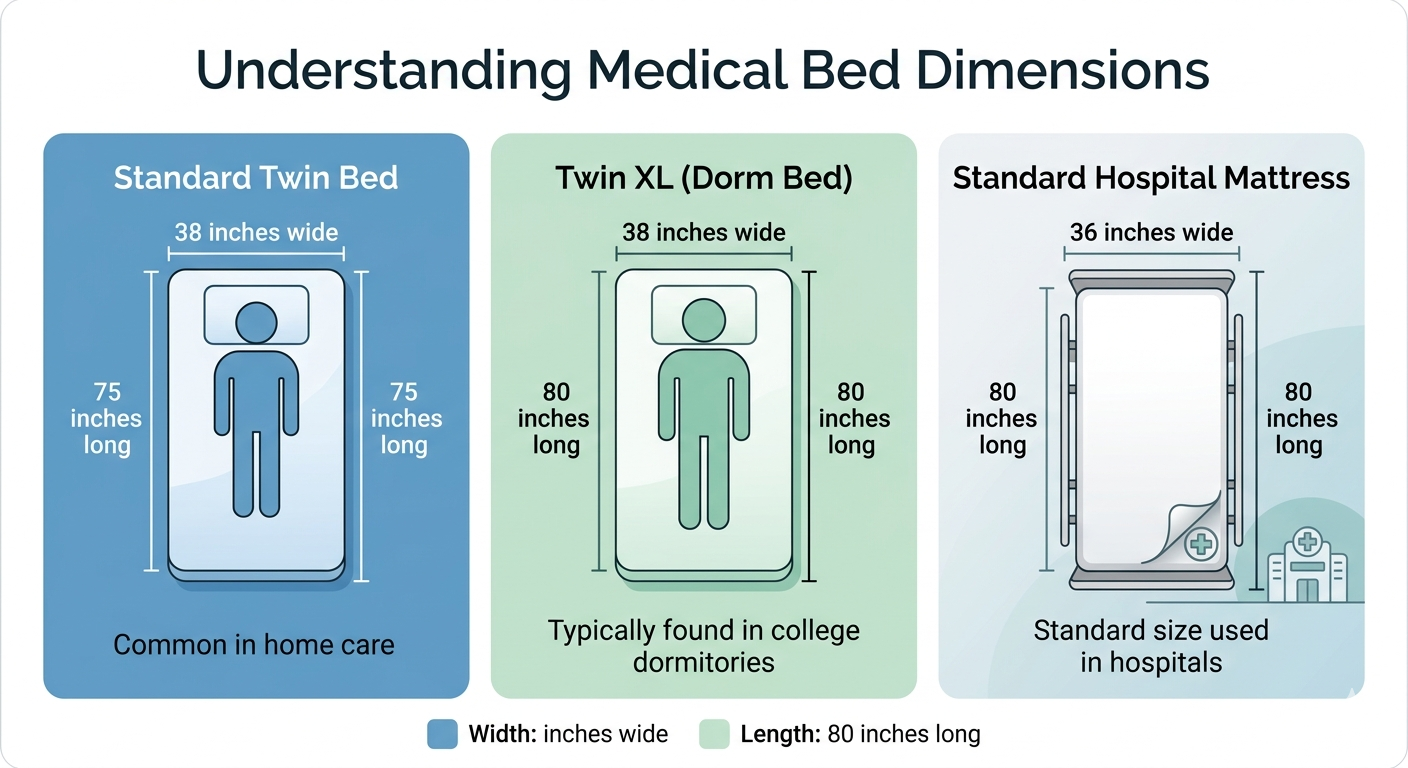
Notice the narrow 36-inch measurement. This specific size is slightly thinner than a regular Twin, leaving vital clearance for side rails to rise safely without catching on the fabric. Because of this medical-grade width, standard household sheets will bunch up, creating uncomfortable pressure points. You need linens designed specifically for these dimensions.
While the standard 80-inch length works well for most adults, taller patients may find their feet dangling. If your loved one is over six feet tall, request a length extension—a frame bracket that expands the bed to 84 inches. Once the proper length is established, priority shifts to ensuring the equipment safely supports them, especially when navigating bariatric and heavy-duty frames.
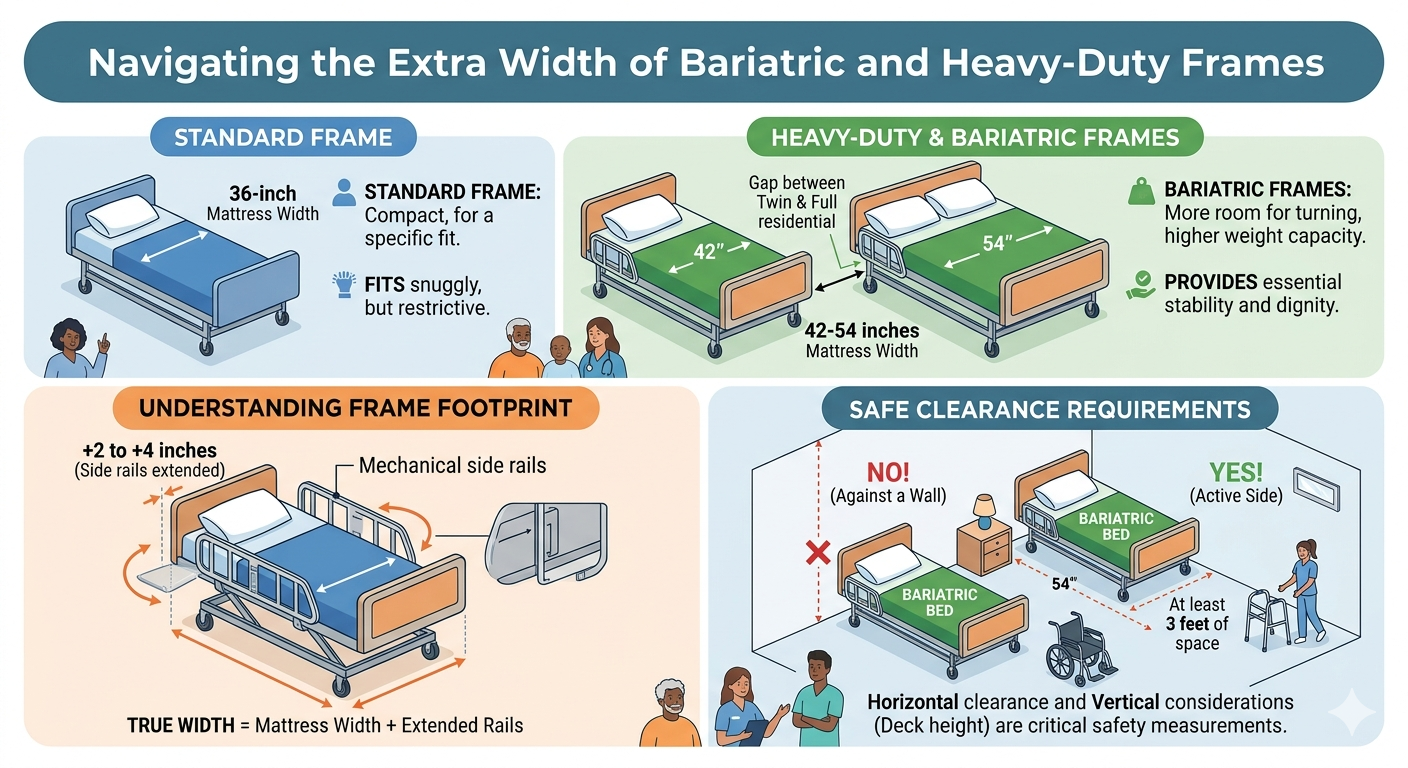
Standard frames comfortably hold a 36-inch mattress, but this snug fit isn't suitable for everyone. Patients needing extra room to turn or a higher weight capacity will quickly feel restricted.
Upgrading to a heavy-duty model changes the floor plan. Specialized bariatric frames range from 42 to 54 inches across, bridging the gap between a Twin and a Full-size residential bed to provide essential stability and dignity for larger individuals.
The mattress size only tells part of the story. The frame's true footprint includes mechanical side rails. When these protective barriers swing outward or fold down, they typically add another two to four inches to the total width.
Squeezing these larger beds against a wall prevents safe patient access. At least three feet of empty floor space on the active side is required to maneuver wheelchairs or walkers without tripping. Horizontal clearance works hand-in-hand with vertical considerations, making 'deck height' a critical safety measurement.
Lifting a loved one daily quickly leads to caregiver back strain. To prevent injury, measure the "deck height"—the distance from the floor to the flat metal surface beneath the mattress. The frame's ability to raise and lower this platform (Hi-Lo functionality) is essential.
Balancing this vertical space serves two distinct needs. For the patient, getting out safely (egress) requires lowering the mattress until their feet rest flatly on the ground, just like sitting in a sturdy dining chair. Conversely, the ideal height for caregiver safety involves raising the bed to waist level, allowing for daily care assistance without bending over.
Clinical grade adjustable bed frames provide three distinct safety zones:
Low Beds (7" to 20"): Establishes a crucial low profile for fall prevention if a patient might roll out.
Standard Beds (15" to 30"): Built for general home recovery and typical wheelchair transfers.
Caregiver Height (30"+): Reaches standard waist-level for ergonomic daily assistance.
Mastering this vertical setup protects everyone during daily routines. Yet, maneuvering the heavy frame inside the house requires careful pathway planning.


Medical Hospital Bed Patient Room Furniture
Delivery day easily turns stressful if the bed cannot fit through a standard doorway. To avoid expensive return fees, verify entry clearances beforehand. Standard residential doors provide approximately 32 inches of width, making it difficult to fit large medical furniture. Frame disassembly makes the task manageable. Semi-electric models separate into lighter pieces, whereas full-electric beds feature heavier, bulkier frames requiring more effort to bring inside.
Navigating straight lines represents only half the battle. Since typical hospital beds measure over seven feet long, turning corners requires accommodating the pivot radius. This sweeping room allows the rigid frame to make a 90-degree turn. In narrow hallways, metal cannot bend. Map out this pivot point to ensure the longest 88-inch section can swing into the bedroom without hitting drywall.
Actively measuring the floor space along the entire delivery route guarantees a successful setup. Once placed safely inside, focus shifts from moving the frame to daily use and creating the necessary workspace.
After establishing the bed's physical footprint, people often instinctively shove it tightly into a corner. Pushing furniture against the wall saves floor space, but fitting medical beds in small bedrooms requires a different strategy. Avoid the common "wall-hugging" mistake, which blocks caregivers from reaching the far side of the mattress during an emergency or daily hygiene routines.

Visualize the layout as a "Working Circle" that provides 360-degree access around the patient. This empty space protects the caregiver's back and provides the necessary room for safe patient transfers from wheelchair to bed. When calculating the minimum room size for bariatric care, this working circle must expand further to accommodate heavy-duty mechanical lifts.
To guarantee safe maneuverability and comprehensive care, map out these essential clearance zones:
3 feet: Minimum width for standard walkers
5 feet: Required radius for wheelchair turns
2 feet: Dedicated space for IV poles or oxygen tanks
Planning these empty boundaries in advance prevents entrapment between heavy medical equipment and a tight wall.
With typical hospital bed dimensions mapped out, the guesswork of fitting new equipment is eliminated. While a mattress mimics a standard Twin XL, the mechanical frame needs extra room to safely move and articulate. Grasping these medical equipment standards turns an overwhelming medical transition into a manageable home project.
Before the delivery truck arrives, execute a final measurement sweep to guarantee the dimensions work in reality without relying on dangerous extension cords:
1. Entryway Width: Ensure standard and tight doorways offer at least 32 inches of clearance.
2. Power Outlet Proximity: Confirm grounded outlets are reachable without stretching cables.
3. The 3-Foot Perimeter: Maintain an active caregiving side for safe lifts and transfers.
4. Flooring Type Check: Ensure casters can lock securely on hardwood or roll safely over carpet.
5. Ceiling Fan Clearance: Verify raised deck heights will not bring the patient too close to overhead fixtures.
Finalizing a room layout balances necessary medical functionality with warm home comfort. Proper doorway and perimeter measurements ensure a safe, efficient setup that protects both the patient and the caregiver during the recovery process.


