
Views: 0 Author: Site Editor Publish Time: 2026-06-10 Origin: Site


Healthcare furniture procurement is not like ordering task chairs for a corporate office.
If an office chair fails, someone opens a ticket with facilities; if a recliner fails in a patient room, or the upholstery harbors bacteria that contributes to a hospital-acquired infection, the consequences are measured in clinical risk, not just replacement cost.
Since 2008, we have supplied healthcare furniture to more than 200 hospitals and clinics across the Middle East, Southeast Asia, and Africa.
Across these projects, we repeatedly see two patterns:
Projects that specify healthcare furniture correctly and run smoothly for 8–10 years
Projects where “cheap” furniture becomes a liability within 18 months because the hospital furniture supplier was chosen on unit price alone
If you only compare prices when choosing healthcare furniture, you almost guarantee higher total cost of ownership (TCO) through maintenance, infection control issues, and early replacement.
This guide gives you a practical, 12‑point healthcare furniture checklist you can plug directly into your RFQs, supplier scoring sheets, and hospital furniture procurement interviews.
Before you shortlist any hospital furniture manufacturer from China or other regions, it helps to clarify how healthcare furniture differs from standard office furniture.
| Factor | Office Furniture | Office Furniture |
Usage intensity | 8 hr/day, 5 days/week | 24/7, often supports patient transfer and bariatric loads |
Cleaning protocol | Occasional wipe-down | Daily harsh disinfectants (bleach, quaternary ammonium, chlorine-based cleaners) |
Infection control | Typically not required | Antimicrobial, non-porous surfaces; cleanability is a clinical requirement |
Safety standards | ANSI/BIFMA | EN 60601-1, BIFMA HC 5.0, local fire and healthcare seating guidelines |
Warranty expectation | 3–5 years | 10+ years; furniture treated as capital equipment |
Replacement cost | Moderate, minimal disruption | High; delivery often requires ward closures and strict hospital logistics |
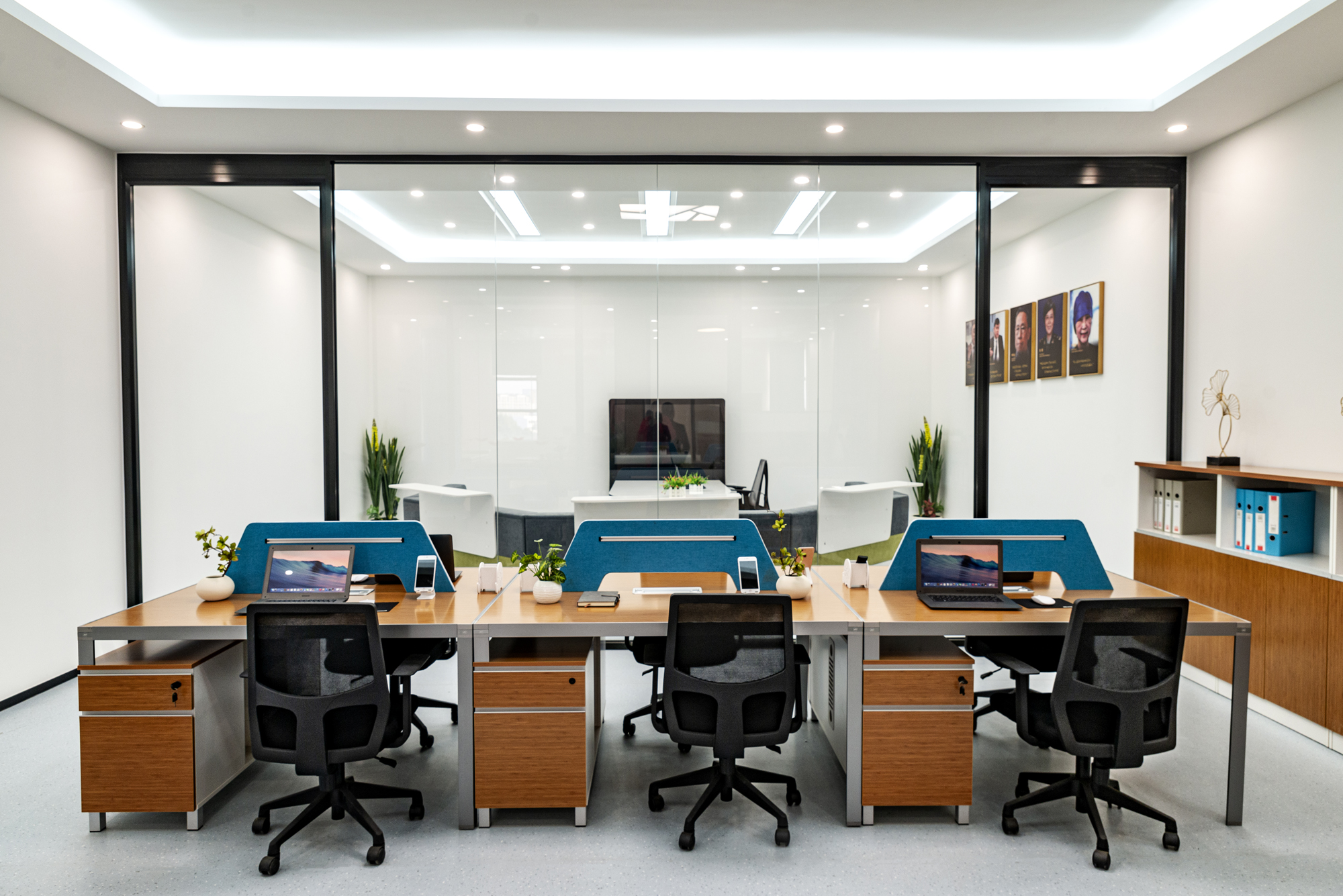
This is why a standard office furniture manufacturer is rarely ready for long-term healthcare performance without significant process and material upgrades.
A BIFMA-certified office chair maker is not automatically qualified to produce infection‑control recliners or waiting room seating for hospitals.
You can use this healthcare furniture procurement checklist in three ways:
As a screening tool when you first talk to a potential hospital furniture supplier
As a structured questionnaire for RFQs, video calls, and factory audits
As a scoring sheet to compare a trading company, an office furniture manufacturer, and a specialist healthcare furniture manufacturer from China or other regions
For each point, ask the questions, request evidence, and note “green flags” and “red flags.”
If a supplier fails on several of these points, no discount can compensate for the risk you are taking over a 10‑year lifecycle.
If a supplier cannot pass a basic certification check, there is no need to discuss price.
Ask which of the following certifications and test standards they hold for their healthcare furniture lines:
Certification | What It Covers | Verification Method |
ISO 13485 | Quality system for medical devices | Check number in IAOG/UKAS or local accreditation db |
FDA Registration (US) | Facility registration for US medical markets | Verify via FDA database (firms.fda.gov) |
CE Marking (EU) | Medical device conformity in EU | Request Declaration of Conformity + test reports |
BIFMA HC 5.0 | Healthcare seating performance and safety | Request SGS/Intertek/TÜV test reports by model |
Practical tip: Do not accept generic certificates as proof.
Always ask for the test report that shows the exact model name, test items, and laboratory.

-Hongye Certification-
In serious healthcare projects, antimicrobial materials should be standard, not a marketing upgrade.
Ask your hospital furniture supplier:
Is antimicrobial PVC or fabric standard across all healthcare seating lines?
Which antimicrobial standards do the fabrics comply with (for example ISO 22196, ASTM E2149, JIS Z 2801)?
Do you have lab reports showing log reduction against bacteria after 24 hours?
Does the treatment survive 50+ cycles of hospital-grade disinfection?
If a manufacturer treats “antimicrobial” as an optional upgrade, they are probably adapting office furniture for hospitals, not running a true healthcare furniture production line.
For hospitals targeting LEED Healthcare, WELL Building Standard, or internal infection control protocols, documentation is as important as the furniture itself.

Ask the supplier to provide:
| Document | Purpose |
Material Safety Data Sheet (MSDS) | Confirms no restricted or hazardous substances |
Antimicrobial test reports | Proves claimed protection level and standards |
VOC emissions reports | Supports indoor air quality and green building credits |
Cleanability and disinfectant guide | Shows which disinfectants are safe for each surface |
If the supplier cannot provide these documents within 72 hours, they are not set up for healthcare projects, and your infection-control team will struggle to approve them.
A generic “5‑year commercial warranty” is usually not designed for 24/7 clinical use.
For healthcare furniture procurement, ask how warranties are broken down by component:
| Component | Typical Healthcare Warranty Expectation |
Frame (steel/wood) | 10 years |
Foam | 5 years (foam breakdown impacts hygiene) |
Upholstery (PVC/fabric) | 3–5 years depending on cleaning protocols |
Mechanisms (recline/tilt) | 5 years under 24/7 usage |
Be careful with “lifetime warranty on everything.”
In healthcare furniture, foam and upholstery have predictable lifespans; an undefined “lifetime” often means the supplier has not measured failure rates under hospital conditions.
Healthcare furniture requires different construction than office chairs:
Seam welding instead of standard stitching around critical zones to remove dirt traps
RF‑welded PVC seams to withstand daily disinfectants without cracking
Flame-retardant foams and fabrics that meet CAL 117, CAL 133, or BS 5852
Heavy-duty casters rated for 24/7 rolling loads and patient transfer
Ask for:
Photos and videos of the healthcare production line
Specific machines for seam welding, RF welding, and fire testing
Separate material storage for healthcare-grade foams and fabrics
If the factory floor looks like a typical office chair assembly line, you are probably not dealing with a specialist healthcare furniture manufacturer.
A legitimate hospital furniture supplier should be able to show you real projects, not just showroom photos.
Request:
At least 3 healthcare projects in your region or a similar clinical setting
Contact details for facility managers or project engineers
On-site photos of installed healthcare recliners, overbed tables, bedside cabinets, and waiting room seating
When you speak with these references, ask:
How has the furniture performed after 2+ years of 24/7 use?
Have there been any issues with mechanisms, foam, or upholstery cracking?
How quickly did the supplier provide replacement parts when something failed?
Would you specify this healthcare furniture supplier again?
One honest 10‑minute call with a facility manager tells you more than a 20‑page brochure.
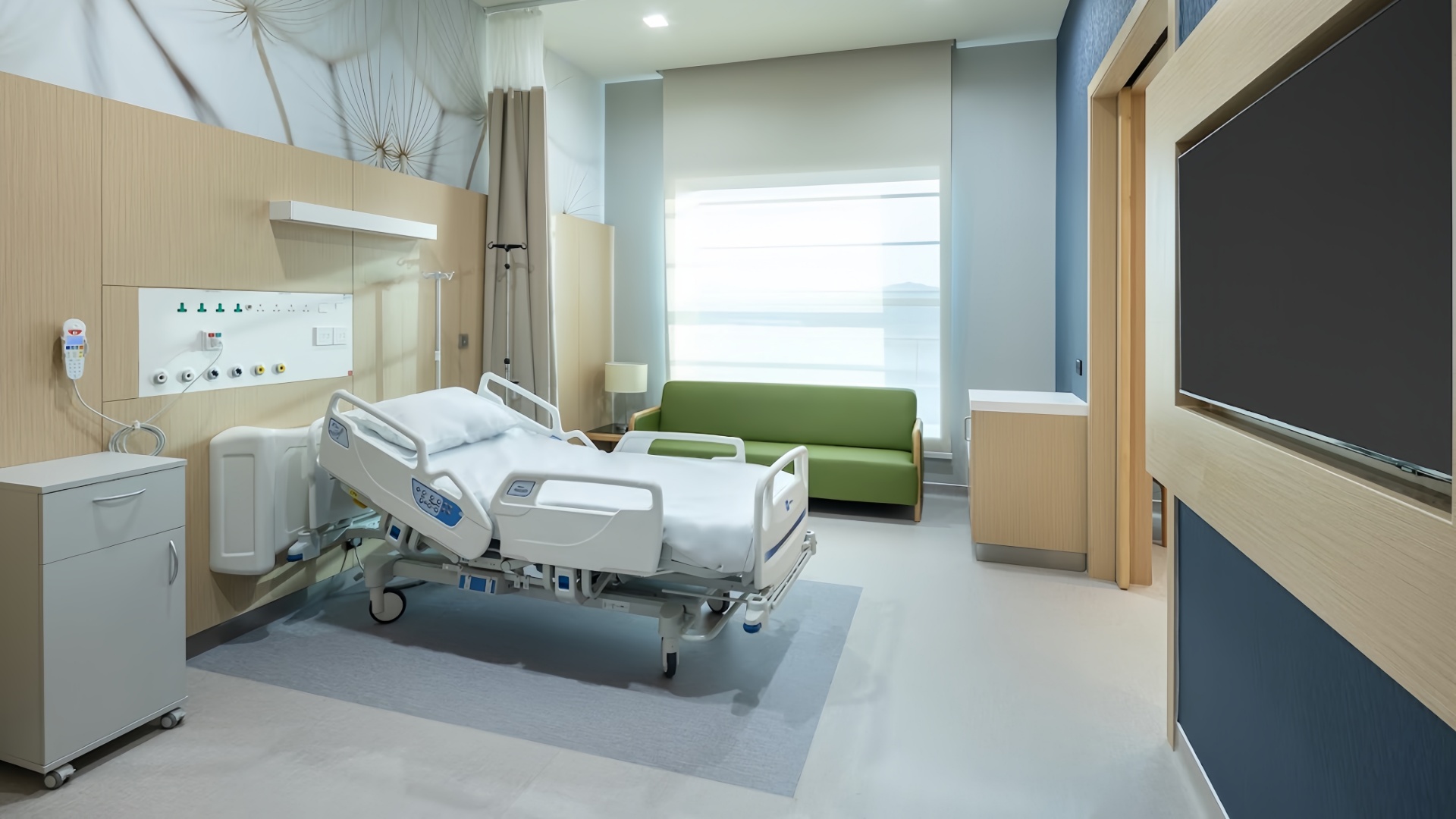
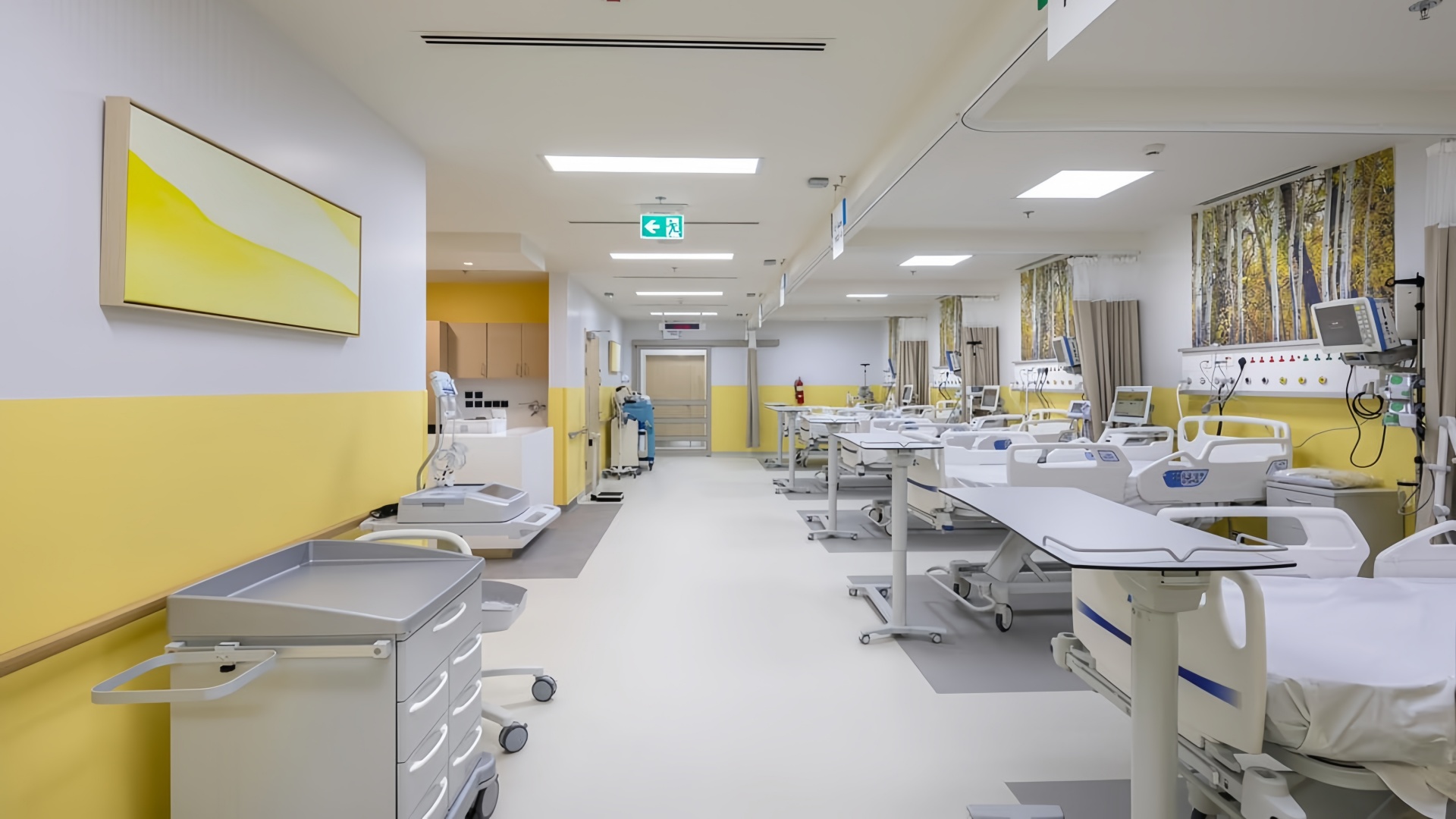
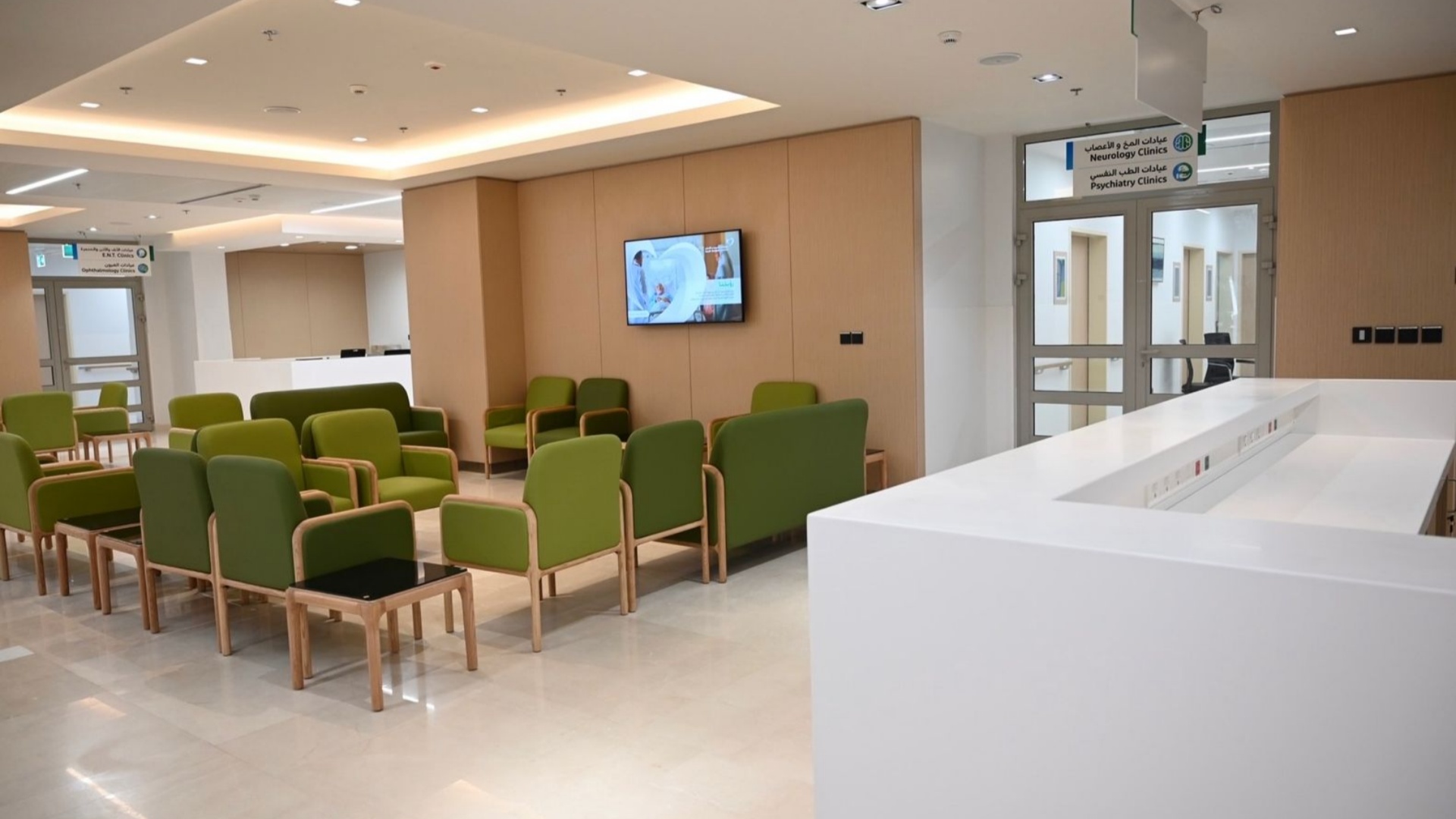
Saudi German Hospital Makkah | Medical Project Solution By Hongye Furniture
In the US and many other markets, accessibility is non‑negotiable for healthcare furniture procurement.
Ask your supplier:
Which accessibility standards do your healthcare seating lines comply with (for example ADAAG in the US, local bariatric guidelines, EN 1729 for pediatric care)?
Do you have accessible seating with defined seat heights, arm support, and weight ratings for bariatric patients?
Can you provide formal compliance declarations or test reports where applicable?
If accessibility is treated as an afterthought, your risk is not just comfort—but non‑compliance.
Most patient rooms do not follow catalog dimensions.
Headwall configurations, door swings, and clearance requirements shape what furniture actually works.
Ask:
Question | Strong Answer Example |
Can you customize seat height for bariatric patients? | “Yes, up to 1000 lbs capacity with a reinforced steel frame.” |
Can you match RAL colors for infection control zones? | “Yes, in‑house powder coating with RAL color matching.” |
Can you provide BIM/Revit models for coordination with MEP? | “Yes, Revit families for all standard healthcare furniture lines.” |
Suppliers who do serious healthcare furniture projects usually have a library of Revit families and experience working directly with architects and MEP teams.


Hospital Ward & Clinic Furniture Set | Custom Medical Space Solutions
Healthcare furniture lead times are longer than office furniture because of specialized materials, testing, and dedicated production slots.
Use this as a rough reference when planning your medical furniture procurement schedule:
| Project Size | Standard Lead Time | With Customization |
< 50 units | 30–40 days | 45–60 days |
50–200 units | 40–50 days | 60–75 days |
200+ units | 50–65 days | 75–90 days |
Be cautious of any supplier promising full healthcare furniture delivery in under 25 days.
They are either skipping critical steps or planning costly air freight that will destroy your budget.
Hospitals have stricter delivery protocols than hotels or offices.
Ignoring this can delay handover by weeks.
Confirm whether your hospital furniture supplier:
Has delivered to hospitals or clinics with restricted delivery windows (for example 10 PM–6 AM)
Can arrange installation teams with required background checks for pediatric or psychiatric facilities
Delivers furniture fully assembled, avoiding noisy on‑site assembly in patient areas
If they have never delivered into a healthcare facility, you should build additional time and contingency into your plan—or choose a supplier with proven experience.


- Installation Team From Hongye -
Healthcare furniture experiences more wear than any other contract furniture category.
Ask:
How many years will you guarantee availability of replacement casters, mechanisms, and upholstery covers?
What is the typical lead time for parts shipments?
Do you keep standard spare parts in stock, or only produce them on demand?
For serious healthcare furniture procurement, a 10‑year replacement part policy is ideal.
If a supplier cannot commit to at least 5 years, your maintenance team will be forced into full replacement much earlier than planned.
Unit price is easy to compare; TCO is where you actually save or lose money.
A simple TCO breakdown over 10 years might look like this:
| Cost Component | Typical Share Over 10 Years |
Initial purchase | 30–40% |
Delivery and installation | 5–10% |
Maintenance (10 years) | 15–20% |
Replacement (10 years) | 30–40% |
Disposal and removal | 5% |
Ask the supplier to walk you through a sample TCO calculation for a standard patient room or waiting area.
Suppliers confident in their healthcare furniture quality welcome this conversation; suppliers focused on short‑term sales usually avoid it.
Use this overview to set realistic expectations when you compare a trading company, a general office furniture manufacturer, and a specialist healthcare furniture manufacturer from China or Europe.
| Supplier Type | Typical Score (/100) | Common Gaps |
Office furniture manufacturer diversifying into healthcare | 45–60 | No ISO 13485, limited antimicrobial options, office-grade warranty |
Healthcare specialist manufacturer (China) | 75–90 | Varies by certification completeness and documentation speed |
European healthcare brand | 85–95 | High price, longer lead times for Asia/Africa projects |
Trading company | 30–50 | Subcontracted production, limited control over materials and traceability |
This is why many hospitals now shortlist only direct manufacturers with proven healthcare furniture lines and traceable certifications.
Hongye operates three production facilities in Guangdong dedicated to office and healthcare furniture.
For healthcare furniture procurement projects, we use ISO 13485‑aligned processes and have BIFMA HC 5.0 tested seating lines with antimicrobial PVC and fabrics as standard.
Our typical commitments include:
10‑year frame warranty for healthcare seating and recliners
5‑year warranty on mechanisms under 24/7 use
10‑year replacement part availability for standard casters, mechanisms, and upholstery
Reference projects in more than 15 countries across the Middle East, Southeast Asia, and Africa
We are rarely the cheapest hospital furniture supplier on unit price.
But in healthcare environments, the cheapest furniture is usually the most expensive by year 3 when you add maintenance, infection risk, and unplanned replacement.
If you are planning a new hospital, clinic, or medical center, you can use this healthcare furniture checklist in three immediate ways:
Paste these 12 questions into your RFQ and ask every hospital furniture manufacturer to answer them in writing
Use the certification, antimicrobial, and TCO sections as a quick filter before factory visits
Share this checklist with your infection-control and facilities teams so they can align on evaluation criteria
If you would like a ready‑to‑use, editable version of this 12‑point healthcare furniture procurement checklist (including scoring columns and red‑flag notes), our team can provide an RFQ template in Excel or Word.
Send us your hospital layout or project brief, and we can walk through the checklist together and identify where a potential supplier may create risk over the next 10 years.


- Hongye Medical Furniture Showroom -
1. What certifications are required for healthcare furniture in the US?
For seating and clinical furniture exported to the US, you should look for FDA facility registration for relevant medical products, BIFMA HC 5.0 performance testing for healthcare seating, and CAL 133 flame retardancy for upholstered furniture in healthcare occupancies.
Some states and large hospital groups may impose additional standards or internal testing requirements.
2. How do I verify antimicrobial claims from a hospital furniture supplier?
Request ISO 22196 or ASTM E2149 test reports from an ISO 17025-accredited laboratory (such as SGS, Intertek, TÜV).
The report should clearly state the tested material, the bacteria strains (often Staphylococcus aureus and Escherichia coli), contact time (usually 24 hours), and the log reduction.
3. What budget range should I plan for healthcare furniture?
For a typical 100‑bed hospital, furniture budgets often range from 800–1,500 USD per patient room for a recliner, overbed table, bedside cabinet, and one visitor chair.
Budget-tier furniture in the 500–800 USD range per room may only last 3–5 years, while premium healthcare furniture in the 1,500–2,500 USD range is usually designed for 10+ years of service.
4. Should I buy healthcare furniture from a trading company or a direct manufacturer?
For healthcare projects, direct manufacturers are strongly recommended.
Trading companies typically cannot control production processes, antimicrobial treatments, or long‑term parts availability, which increases your risk across infection control, compliance, and TCO.
5. How does customs clearance differ between healthcare and office furniture?
Depending on your country, healthcare furniture may fall under different HS/HTS codes than office furniture and qualify for different duty rates.
For example, in the US, some medical recliners may fall under HTSUS 9402.90, while in the EU many medical furniture items fall under CN codes 9402/9403 with 0–2.7% duty.
Always confirm classification with a customs broker before finalizing specifications.


