
 |


| Quantity: | |
|---|---|
Built for the dining rooms, activity rooms and dayrooms of nursing homes, residential care homes and rehabilitation centres, this set pairs a 360° swivel chair with shaped solid wood tables. Nursing home dining chairs are asked to do more than seat a resident: they have to let a carer move a chair with one hand, let a resident sit down without having to lift the chair, and stay presentable through years of daily cleaning. Every decision in this range answers one of those three jobs.
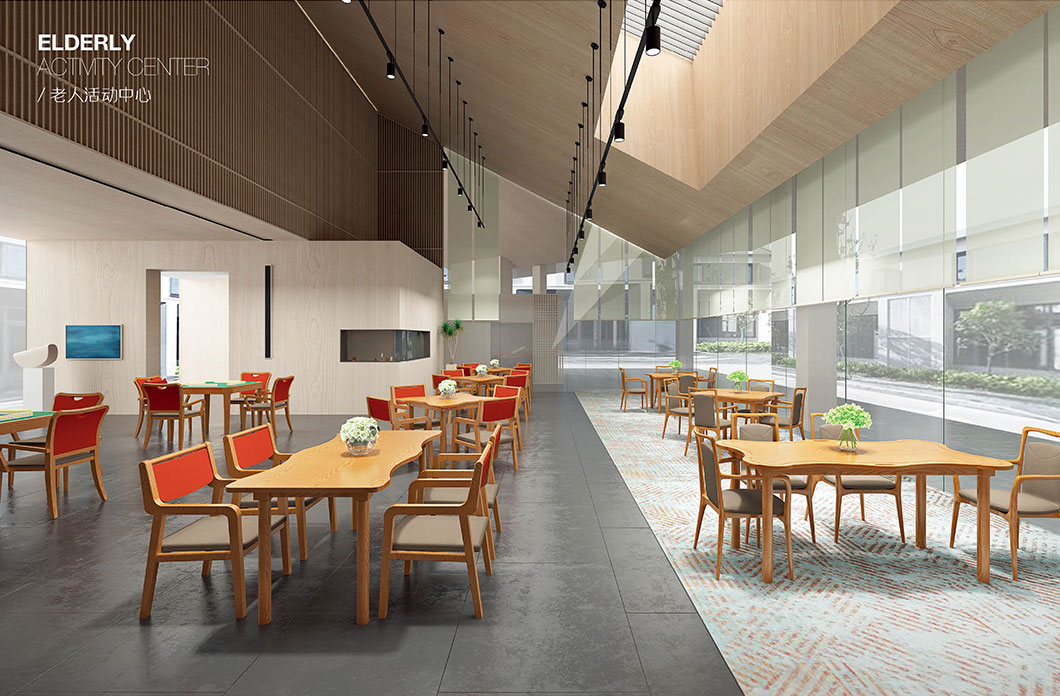
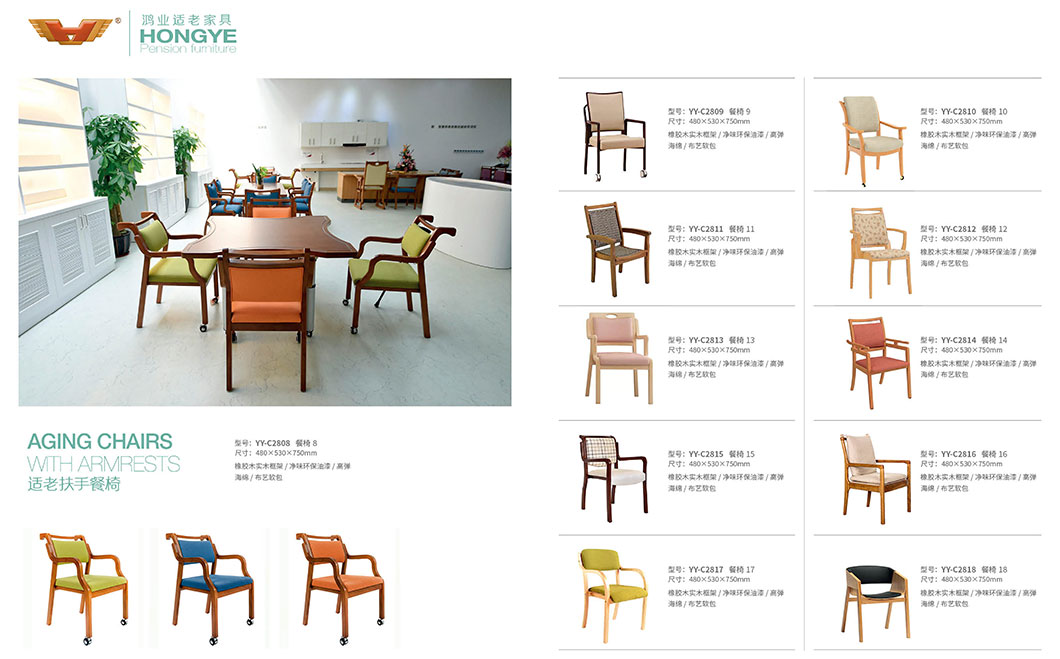
Two chair frames are offered so that a compact chair can be specified where circulation space is tight and the larger chair used where a resident needs more room to settle. Two table forms are offered in the same way - a long petal table and a square butterfly table - and both can be combined into larger groups for activities, family visits and staff meetings. Chairs and tables are ordered together as one project package, with finishes specified room by room.
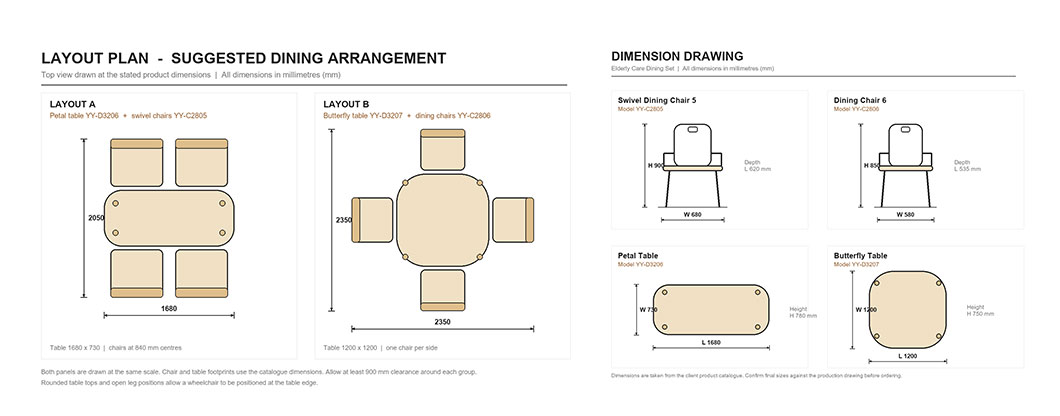 Dimensions
| Product | Length | Width | Height |
| Swivel Dining Chair 5 | 620 mm | 680 mm | 900 mm |
| Dining Chair 6 | 535 mm | 580 mm | 850 mm |
| Petal Table | 1680 mm | 730 mm | 780 mm |
| Butterfly Table | 1200 mm | 1200 mm | 750 mm |
Care home dining table and chairs are usually specified to a room drawing rather than to a single size, because clearance for a walking frame, a wheelchair or a hoist decides which combination will work. Seat height, seat depth and backrest angle are shown on the production drawing issued with the quotation, and a suggested arrangement drawing is supplied with every project so the layout can be checked against the room before production starts.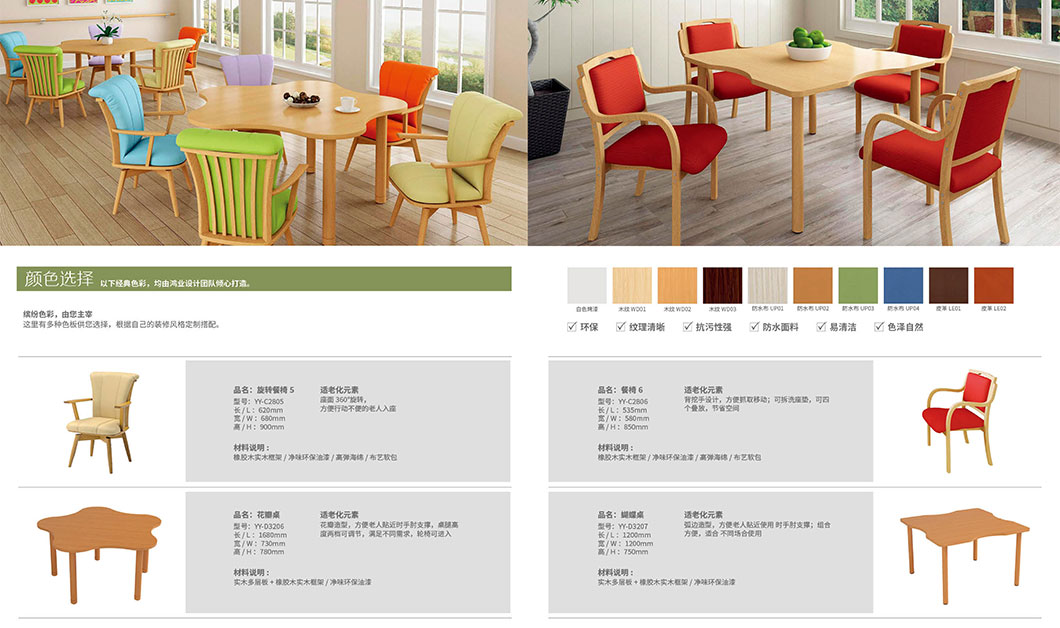
Chairs -
Solid rubberwood frame, a plantation-grown hardwood chosen for stability under daily use
Low-odour eco-friendly paint finish, so the room does not carry a solvent smell after delivery
High-resilience foam seat and back cushions that return to shape after a resident settles
Fabric upholstery, soft to the touch and available in the water-repellent finishes in the swatch range
Tables -
Solid-wood multi-layer board top, which resists the swelling that a single-piece top can suffer near a spill
Solid rubberwood frame and legs in the same material and colour as the chair frames
Low-odour eco-friendly paint finish, matched to the chair finish so a room reads as one set
Finish range - 10 coordinated options white lacquer · wood grain WD01 / WD02 / WD03 · water-repellent fabric UP01 / UP02 / UP03 / UP04 · leather LE01 / LE02
The finish range is specified by the maker as eco-friendly, with clear grain, strong stain resistance, water-repellent fabric, easy cleaning and a natural colour. Any finish in the range can be applied to any piece, so the whole room can be matched to an existing interior rather than supplied in a single stock colour.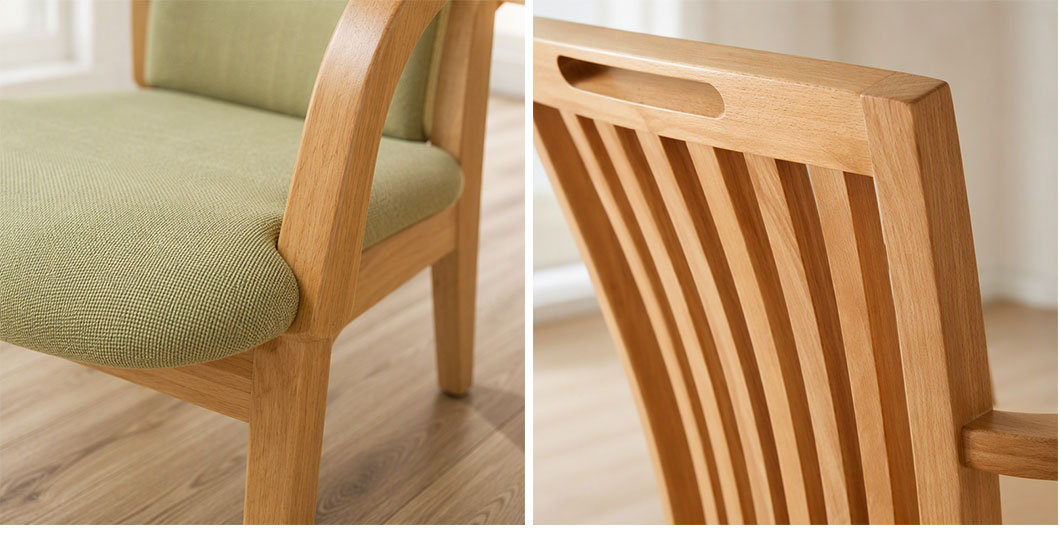
Fabric and Wood Frame Chair | Backrest and Hand Grip Chair |
Features
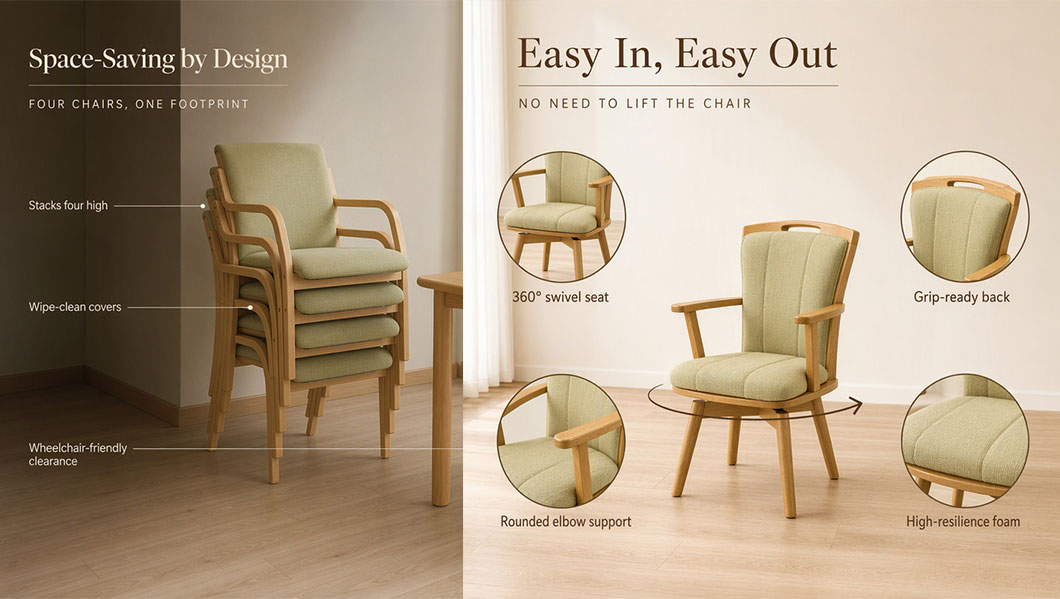
Seat rotates a full 360°, so a resident turns to face the table instead of the carer having to reposition the chair
Recessed hand-grip formed in the chair back, sized for a carer to grip and move the chair with one hand
Detachable seat cushion, so the cover can be lifted off and washed without dismantling the chair
Chairs stack four high on the floor, which frees the room between meals
Radiused table edges shaped so a resident can rest an elbow or a forearm while getting up
Two-position table-leg height, so the table can be set for a dining chair or raised for a wheelchair
Open leg positions leave a clear space at the table edge for a wheelchair
Ten coordinated finishes across lacquer, wood grain, water-repellent fabric and leather
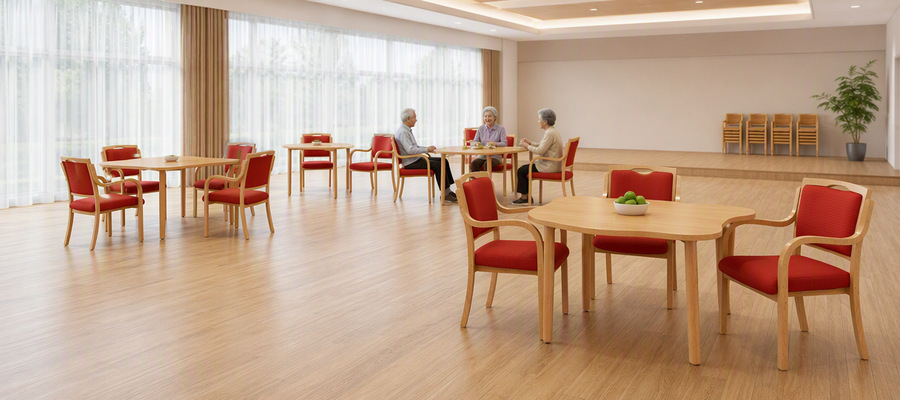
1. Sit and stand without shifting the chair. The seat turns a full 360°, so the chair does not have to be dragged backwards or lifted while a resident is already standing - the transfer happens in one movement.
2. A carer can move it with one hand. The grip is recessed into the top of the backrest, which is where a hand naturally lands. One staff member can clear a room, set a table or stack four chairs without bringing a second person.
3. Something to hold on to when standing up. The table edges are radiused rather than knife-sharp, so a resident can take weight on an elbow point while rising instead of pushing down on the seat.
4. Cleaning is a lift-and-wash job. The seat cover comes off the frame, so a spill is dealt with by removing one cushion rather than emptying a dining room. The water-repellent fabric range is specified by the maker for strong stain resistance.
5. The room changes between meals. Four chairs stack in the footprint of one, and the two table forms can be combined into a larger group, so the same room works as a dining hall at noon and an activity hall in the afternoon.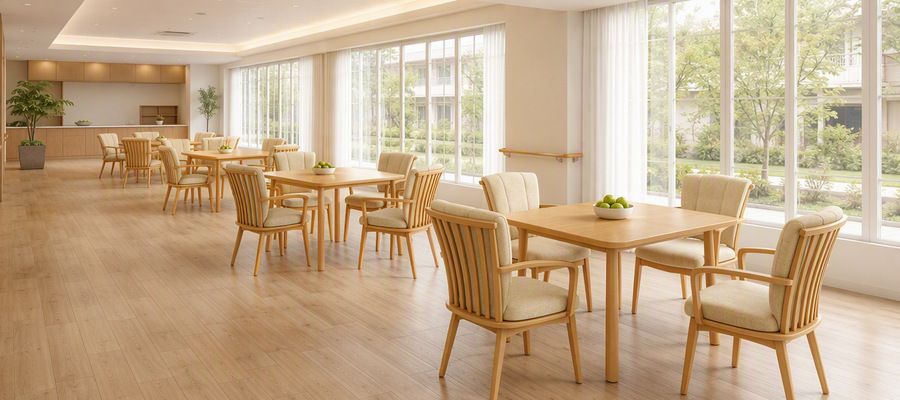
Transfers that put the resident and the carer at risk. Standing up from a fixed chair asks a resident to push, twist and step in one sequence, and asks the carer to hold both the resident and the chair. A seat that turns 360° removes the twist: the resident faces the direction they came from, stands in their own time, and the carer's hands stay on the resident instead of on the furniture.
Staff time spent moving furniture. Resetting a dining room between services is repeated work. A hand-grip in the back means a chair can be picked up one-handed, and a stack of four means a 40-seat room clears in a handful of trips rather than forty.
Hygiene in a shared dining room. Textile-covered fixed seating absorbs spills and smells. A detachable cushion cover can be removed and washed; the fabric range is specified for stain resistance and easy cleaning, so a single incident does not take a chair out of service for the day.
Rooms that only do one job. Care-home floor area is expensive. Because the chairs stack and the two table forms combine, an activity session can be set up on the same floorplate as lunch, without a second furniture order.
Residents who use a wheelchair. A wheelchair still has to reach a table. The tables are shaped with the legs set inboard, and the leg height has two positions, so the wheelchair can be brought to the table edge and the resident eats with everyone else.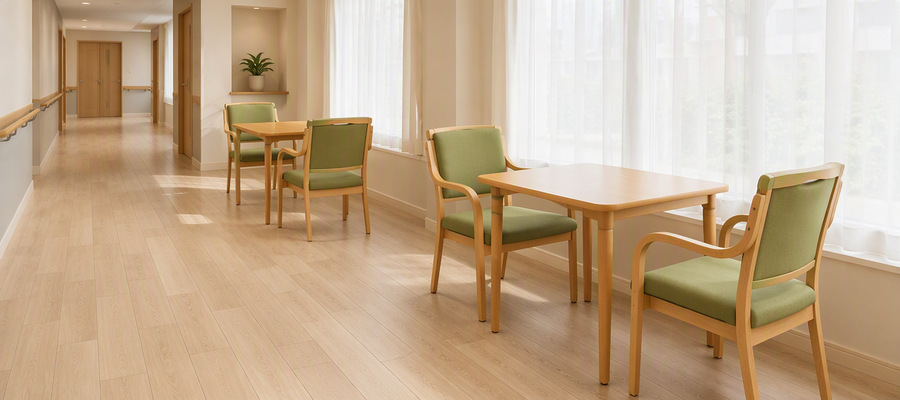
Age-friendly design fails when it announces itself. A dining room that looks like a hospital discourages residents from using it, and visitors notice. This range is designed the other way round: solid wood frames, comfortable upholstery and a calm colour range carry the room, while the assistance is built into places that read as ordinary detail - a slot in the backrest that looks like joinery, a shaped edge that looks like a table top, a seat that turns because it is expected to turn.
The intention is that a resident sits at a table that looks like furniture, and a carer uses equipment that has been designed for them both. Warm wood tones were chosen over clinical surfaces deliberately: a resident who finds the dining room familiar will use it more often.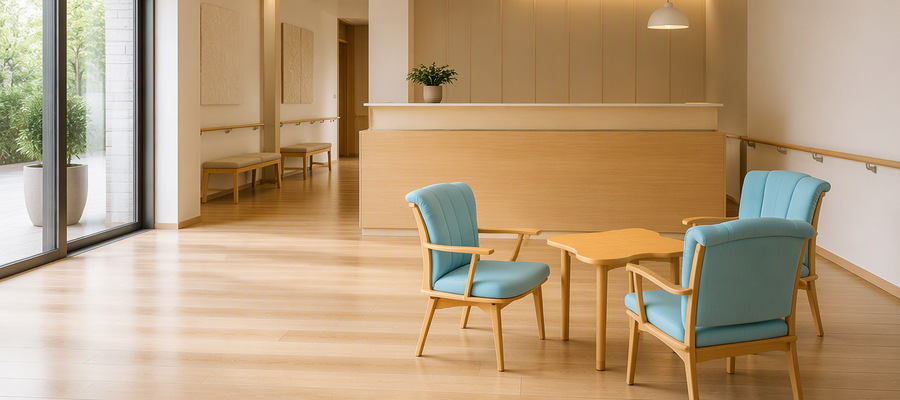
Backrest hand-grip: recessed opening in the top rail, wide enough for a hand with a grip, kept flush so the chair still reads as furniture
Radiused table edge: shaped top edge that accepts an elbow point while giving no sharp corner to catch a forearm
Low-odour finish: the eco-friendly paint system is specified to reduce smell at delivery, so a room can be returned to use sooner
High-resilience foam: holds its shape under repeated daily seating, keeping the seat cushion at a consistent height
Stacking geometry: the seat and frame nest so four chairs sit as one column on the floor, not on a trolley
Two-position table legs: the same table serves a dining chair or a wheelchair without a second table being purchased
Matched frames and finishes: chair frame and table frame are produced in the same material and colour, so the assembly is specified as one set rather than assembled from two suppliers
Ten-finish system: lacquer, wood grain, water-repellent fabric and leather options allow one room to be matched to the next
| Attribute | Value |
|---|---|
| Product type | Elderly care dining set (chairs and tables) |
| Chair models | YY-C2805 Swivel Dining Chair 5 · YY-C2806 Dining Chair 6 |
| Table models | YY-D3206 Petal Table · YY-D3207 Butterfly Table |
| Seat height | [confirm - shown on production drawing] |
| Chair frame material | Solid rubberwood |
| Table top material | Solid-wood multi-layer board |
| Table frame material | Solid rubberwood |
| Upholstery | Fabric (water-repellent options available) |
| Cushion filling | High-resilience foam |
| Finish | Low-odour eco-friendly paint |
| Finish options | White lacquer · wood grain WD01/WD02/WD03 · water-repellent fabric UP01-UP04 · leather LE01/LE02 |
| Age-friendly functions | 360° swivel seat · recessed hand-grip backrest · detachable washable cushion · radiused table edge · two-position table-leg height · wheelchair can be positioned at the table |
| Stacking | Up to 4 chairs per column |
| Assembly | [confirm - e.g. legs to be fitted on site / supplied assembled] |
| Intended use | Nursing homes, residential care homes, rehabilitation centres, assisted living dayrooms and activity rooms |


