Views: 0 Author: Site Editor Publish Time: 2026-04-15 Origin: Site


Medicine trolleys sit quietly in the background of hospitals and clinics, yet they shape how safely and efficiently care teams work every single shift. A thoughtfully designed trolley does far more than store medications; it helps control infection, reduces fatigue, lowers error risk, and supports faster response in emergencies. When facilities treat trolleys as strategic clinical tools rather than simple carts, both staff and patients benefit.
This guide takes a practical, experience‑driven look at medicine trolleys. It explains what they are, why they matter, how design details affect daily work, and what to consider when choosing trolleys for different departments. It also shows how well‑designed products like HY Healthcare's medication delivery carts and emergency crash carts help clinicians avoid common pitfalls and support better care.
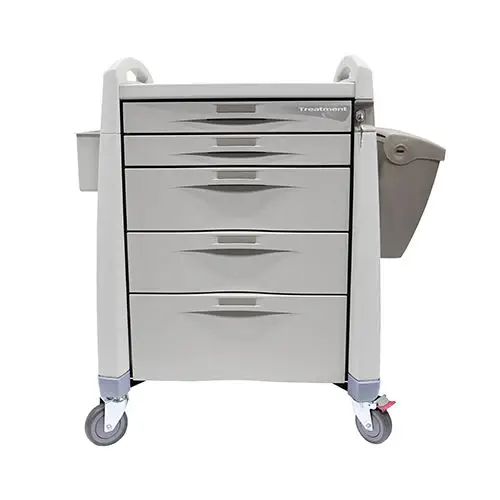
A medicine trolley is a mobile cart used to store, organize, and transport medicines and related medical supplies within a healthcare facility. It acts as a moving workstation that brings the right drugs, tools, and documentation directly to the point of care.
You will find medicine trolleys in:
Inpatient wards
Outpatient clinics
Long‑term care and nursing homes
Emergency departments
Operating theatres and recovery areas
Rather than requiring staff to walk back and forth to central storage rooms, a medicine trolley allows them to carry what they need for a full round or procedure. This saves time, cuts unnecessary steps, and keeps teams focused on patients.
Typical core components include:
Drawers or shelves for medications and disposables
Lockable compartments for controlled drugs and sensitive items
A flat top surface that can serve as a temporary work area
Handles and casters for easy movement
Surfaces that tolerate regular cleaning and disinfection
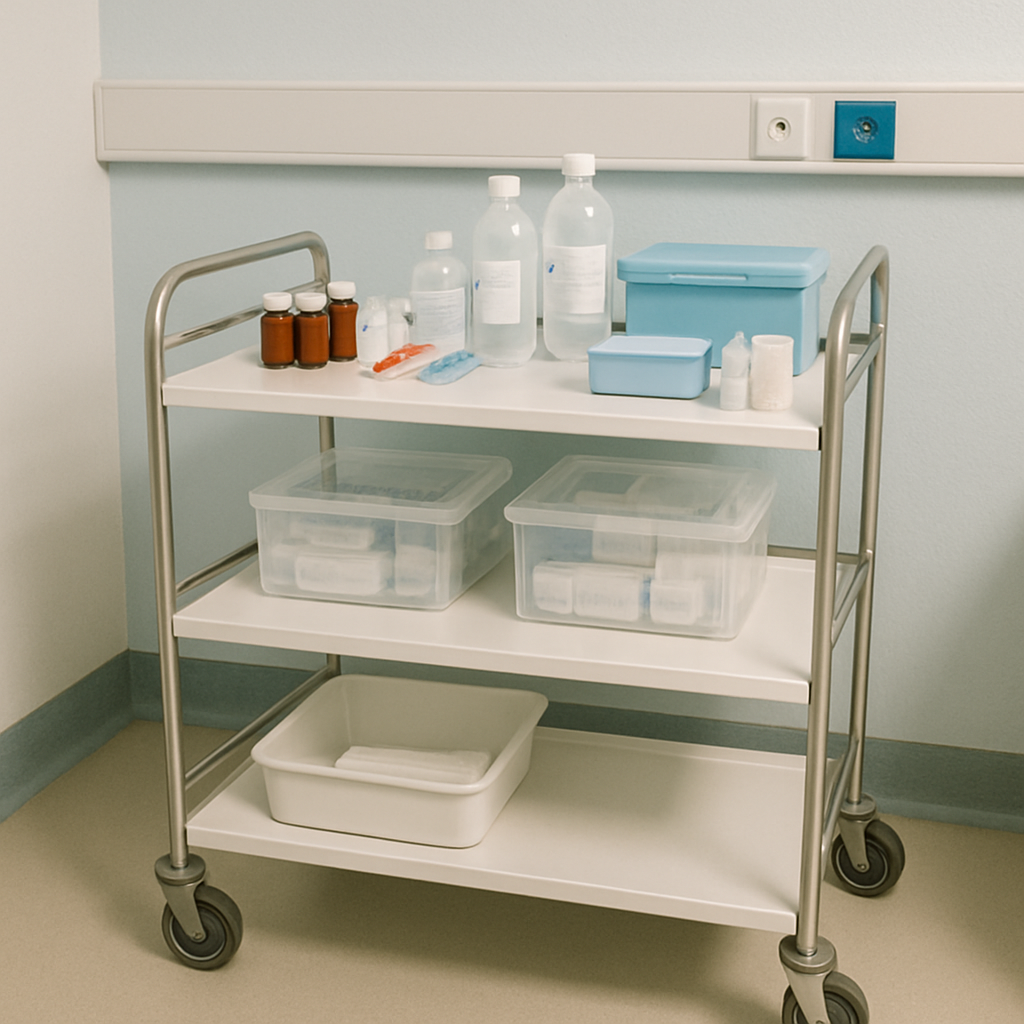
Over the last decade, medicine trolleys have evolved from basic metal carts into highly configurable platforms with integrated security, IT mounts, and modular interiors. That evolution reflects the growing complexity of medication management and the higher expectations placed on healthcare logistics.
A trolley seems simple, but its impact touches key priorities: patient safety, staff efficiency, comfort, and cost control. When you look at everyday ward life, the importance becomes clear.
Medication errors often arise from mix‑ups, distractions, or poor organization. A well‑designed medicine trolley helps by:
Separating look‑alike or sound‑alike medications into different drawers
Providing clearly labeled compartments for different routes (oral, IV, injection)
Keeping high‑alert drugs in lockable or visually distinct areas
Holding documentation or digital devices at the point of administration
By giving nurses a structured, predictable layout, a trolley reduces the mental load required to find each item. Staff can focus more attention on verifying the right patient, drug, dose, route, and time.
Walking back and forth to a central medication room consumes time and energy, especially on larger wards. A medicine trolley allows staff to:
Load medications and supplies for an entire round in one visit
Move efficiently from room to room in a set sequence
Keep frequently used consumables (syringes, flushes, dressings) close at hand
This reduces interruptions and delays. Over a full day, the difference adds up: fewer steps, fewer detours, and more time available for patient‑facing tasks.

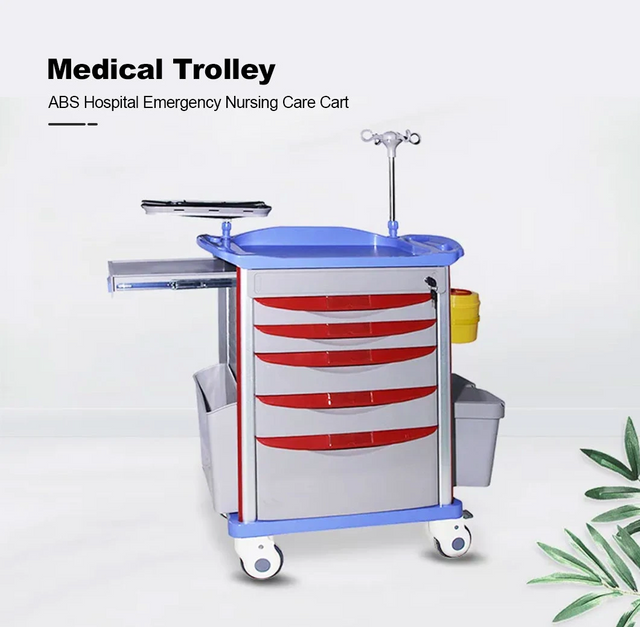
In urgent situations, quick access to the correct drug or device can be life‑saving. Emergency crash carts (a specialized form of medical trolley) provide:
Standardized locations for airway equipment, defibrillation pads, and emergency drugs
Clearly labeled drawers and color‑coded sections
Ready‑to‑go mobility to move the cart rapidly to the bedside
When every second counts, staff cannot afford to search cabinets or remember where someone last left a piece of equipment. A properly set up crash trolley gives them instant access.
Consistent use of trolleys also improves inventory visibility. When medications and consumables live in defined drawers and bins, staff can see stock levels at a glance. This makes it easier to:
Spot low stock before it becomes a stockout
Track usage patterns by area or shift
Reduce over‑ordering and waste
With the right process, a trolley becomes not only a clinical tool but also a small, moving inventory station that feeds better data into pharmacy and procurement decisions.
Not all trolleys deliver the same performance. Small design decisions can have large consequences over thousands of uses. When evaluating options, focus on features that directly support safety, usability, and long‑term value.
Key features to prioritize:
Lockable storage and controlled access
Durable, hygienic materials
Smooth, stable mobility
Ergonomic, staff‑friendly design
Adjustable and modular storage
Compatibility with your infection control and IT policies
The following sections look at each of these areas in more depth.
Medication security is essential, not optional. Lockable compartments protect patients, staff, and the organization itself by reducing theft, diversion, and unauthorized access.
A security‑aware trolley should:
Restrict access to controlled drugs and high‑risk medicines
Allow only authorized staff to open certain drawers
Show clear evidence if someone has tampered with sealed sections
Support your facility's documentation and audit processes
Lock type | Typical use case | Security level |
Electronic lock | Controlled drugs, high‑value items, audit trails | High |
Mechanical key | General medications, routine ward trolleys | Medium |
Combination lock | Shared access areas, backup or secondary storage | Medium |
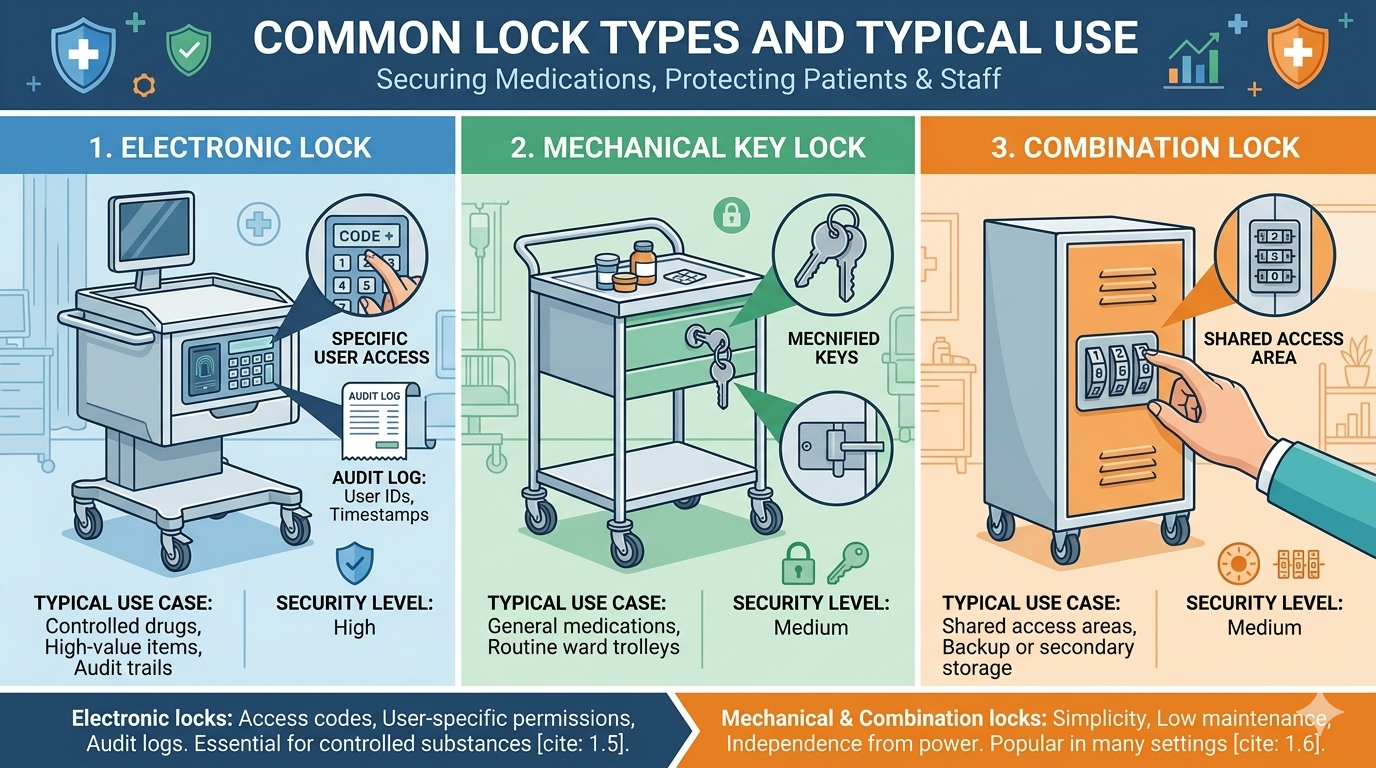
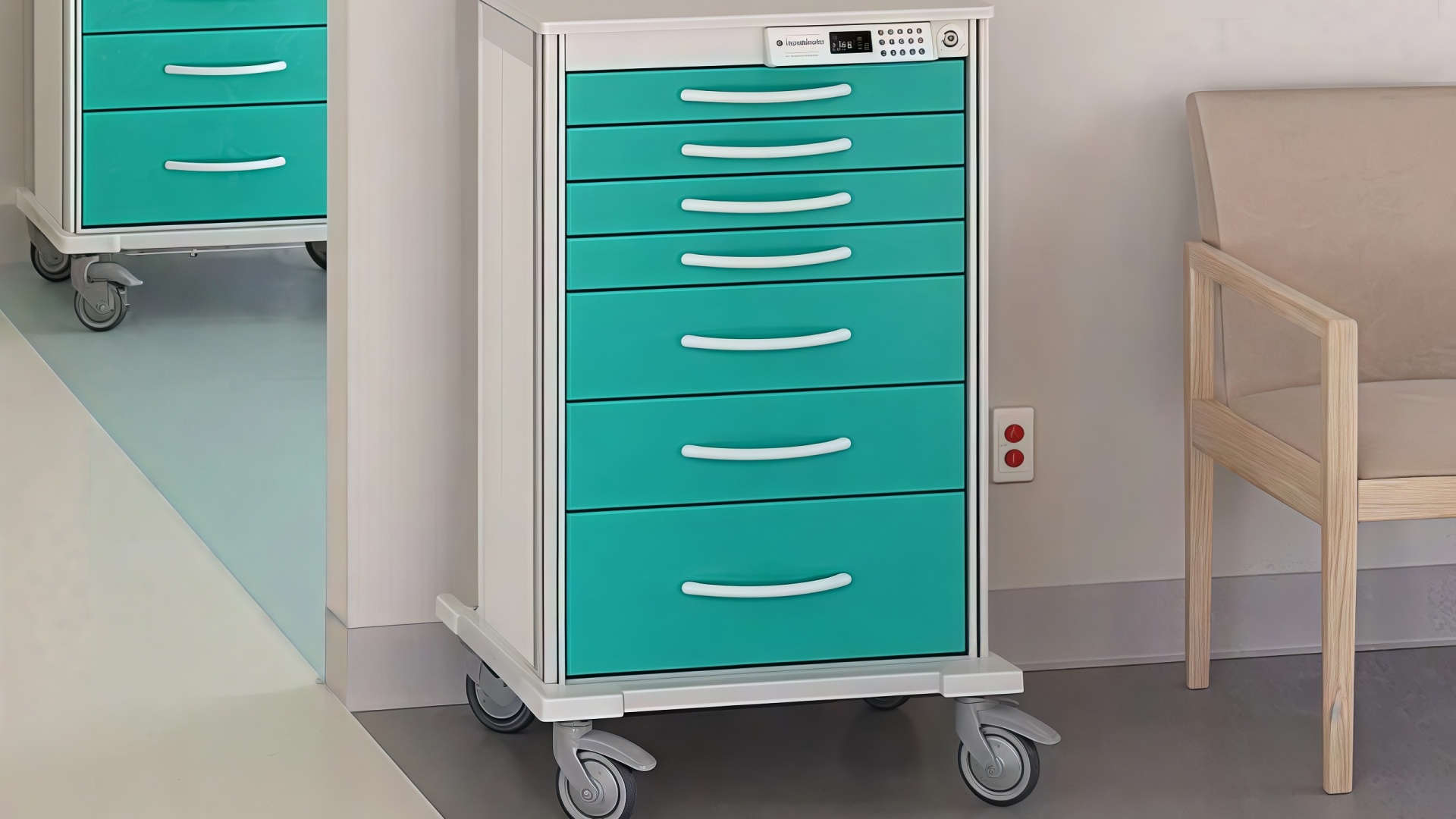
Electronic locks can store access codes, create user‑specific permissions, and integrate with audit logs. They are particularly useful where controlled substances or expensive devices are stored. Mechanical and combination locks remain popular in many settings for their simplicity, low maintenance, and independence from power.
When selecting a trolley, align the lock type with your security policy, the level of risk in that area, and your ability to manage keys or codes consistently across shifts.
Medicine trolleys encounter repeated use, accidental bumps, heavy loads, and frequent cleaning. An apparently small compromise in build quality can become a daily irritation or a safety issue later.
Common materials and their characteristics:
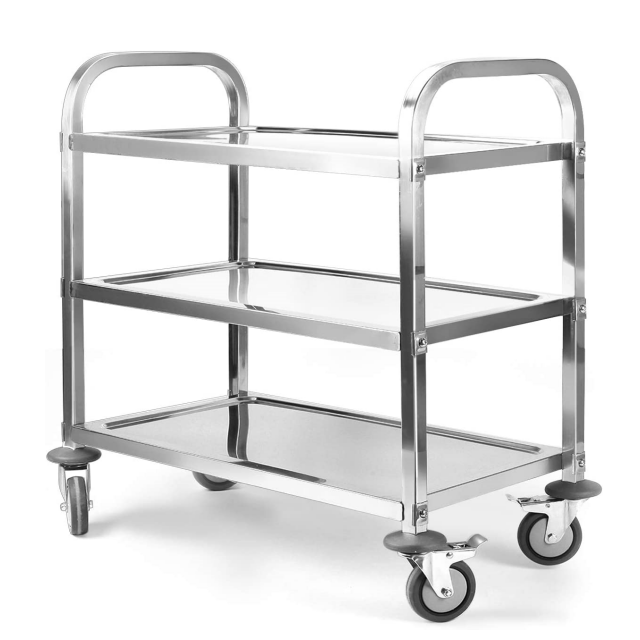
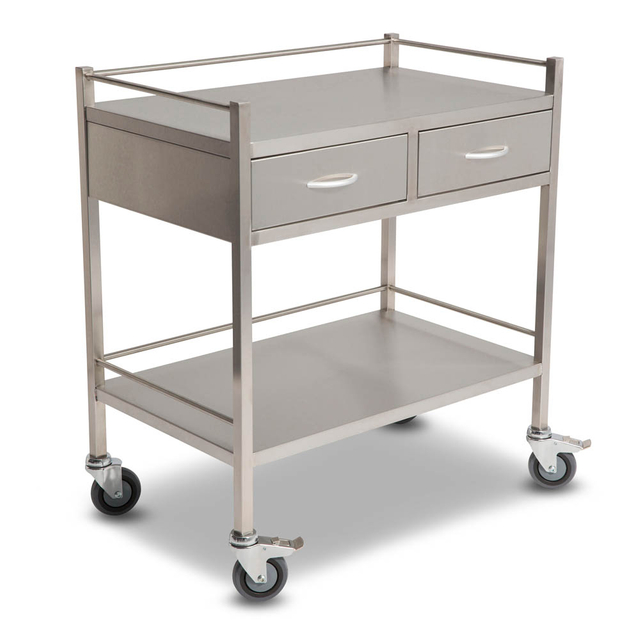
Stainless steel: Very durable, corrosion‑resistant, and tolerant of aggressive cleaning agents. It suits high‑traffic areas and environments with strict infection control.
High‑grade plastic: Lighter and quieter than metal, with good resistance to many disinfectants. It often works well in wards and clinics where overall load is moderate and noise reduction is a bonus.
Aluminum: Combines strength with low weight. It is useful when trolleys must travel long distances or be moved frequently between levels.
Beyond the main material, inspect:
Frame design: Reinforced corners and joints extend lifespan and support heavier loads.
Drawer runners: Smooth, robust runners prevent jamming and tolerate repeated opening and closing.
Fixings and hinges: Stainless or coated components resist rust and maintain alignment over time.
A durable trolley may cost more upfront but usually delivers a better total cost of ownership. It lasts longer, needs fewer repairs, and remains safe and pleasant to use.
Mobility and ergonomics determine whether staff perceive a trolley as a helpful tool or a daily burden. This matters because frontline teams push, pull, and park these carts multiple times per shift.

Quality casters: Larger, swivel casters roll more easily over joints, thresholds, and uneven surfaces.
Reliable brakes: Foot‑operated brakes on at least two wheels keep the trolley stable during medication preparation or procedures.
Balanced weight distribution: A well‑balanced trolley does not feel top‑heavy or prone to tipping, even when drawers are open.
Handle height: Handles should sit at a comfortable height for most staff, reducing the need to stoop or overreach.
Handle design: Comfortable grips with rounded edges help prevent hand and wrist strain.
Maneuverability: The trolley should turn smoothly inside patient rooms and tight corridors without excessive force.
Ergonomic design pays off in lower fatigue, fewer aches at the end of a shift, and better control when moving the trolley around patients and obstacles.
No two departments store exactly the same mix of items. Even within one ward, needs shift between day and night, weekdays and weekends, or different patient populations. Flexibility inside the trolley is therefore crucial.
Useful customization options include:
Adjustable shelves and removable dividers
Different drawer heights for small vials versus bulkier packages
Color‑coded bins or drawer fronts to separate medication classes or urgency levels
Clip‑on or rail‑mounted accessories like glove boxes, sharps containers, and waste bins
IV poles and infusion pump holders for areas where IV therapy is frequent
A general ward might dedicate upper drawers to oral tablets, middle drawers to injectables and IV sets, and lower drawers to dressings and PPE.
An oncology unit might add more fine dividers to manage multiple patient‑specific chemotherapy regimens safely and clearly.
A day‑surgery area might use shallow top drawers for pre‑procedure medications and deeper lower drawers for recovery supplies.
When interiors are modular, facilities can gradually adapt trolleys as clinical practice changes rather than replacing the entire cart.
Trolleys move between rooms and come into frequent contact with staff hands, medication packaging, and sometimes bodily fluids. Their design should support strict hygiene routines, not complicate them.
Key points for infection control:
Smooth, non‑porous surfaces: These allow complete wiping and reduce places where microbes can hide.
Minimal seams and crevices: Fewer joints, exposed screws, or recesses means less risk of dirt and contamination build‑up.
Material compatibility: Surfaces should tolerate the disinfectants used in your facility without discoloration, cracking, or becoming sticky.
Detachable components: Removable trays and bins make deep cleaning more effective and efficient.
Cleaning protocols may specify wiping down trolleys after each round or list, plus deeper cleaning on a fixed schedule. When a trolley is easy to clean thoroughly, compliance rises and infection risks fall.
“Medical trolley” is a broad term that covers several specialized cart types. Understanding these categories helps you match the right trolley to each clinical situation.
| Trolley type | Main purpose | Typical contents |
Medication trolley | Daily medication rounds | Oral drugs, injectables, documentation, PPE |
Emergency (crash) trolley | Rapid response to critical events | Emergency drugs, defibrillator, airway equipment |
Anesthesia trolley | Support anesthesia during procedures | Anesthetic drugs, airway devices, syringes |
IV trolley | IV therapy and fluid administration | IV sets, fluids, pumps, dressings |
Records/IT trolley | Move patient records and mobile devices | Files, tablets, laptops, chargers |
Each type emphasizes a slightly different balance of security, accessibility, storage configuration, and top‑surface design.

Some clinical areas require even more tailored trolley designs.
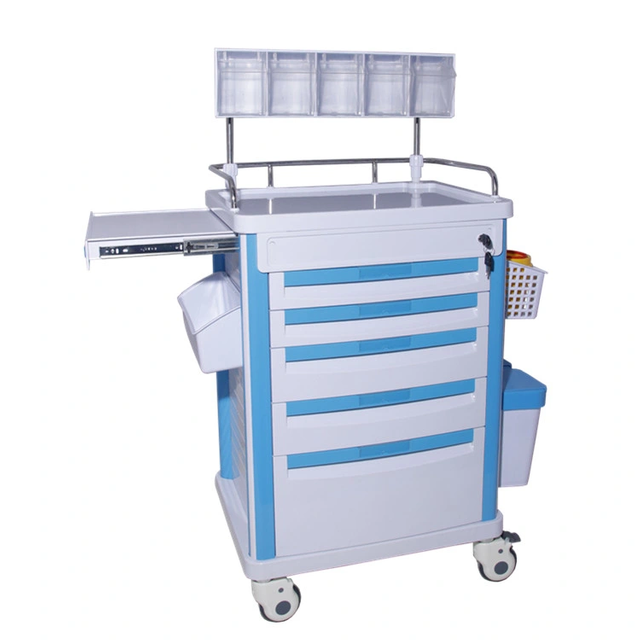
Anesthesia trolleys support anesthetists before, during, and after procedures. They typically provide:
Organized drawers for induction and maintenance drugs
Dedicated spaces for airway equipment such as laryngoscopes and supraglottic devices
Sections for syringes, needles, and IV equipment
Space on top for monitoring accessories or documentation
A clear, logical layout helps the anesthesia team work quickly and safely in theatre, where time and attention are limited.
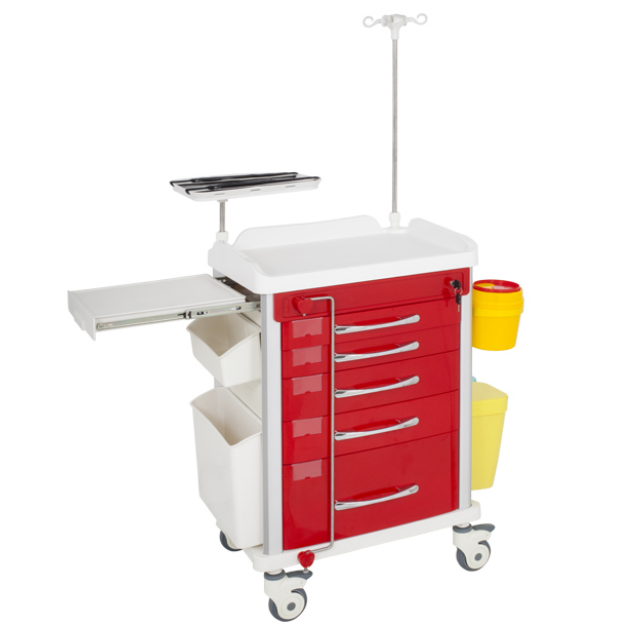
Emergency crash carts stand ready for cardiac arrests and other life‑threatening events. They often feature:
High‑visibility color and labeling
Standardized drawer layouts across the facility
Mounting space for a defibrillator and oxygen cylinder
Seals or lock systems that indicate whether the cart has been opened
When a code is called, staff from different areas may gather around one cart. Standardization means anyone can find what they need without delay.
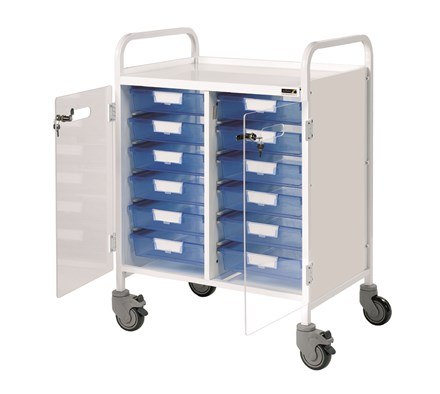
Procedure trolleys support wound care, minor procedures, or dressing changes. They emphasize:
Clean, easy‑to‑wipe surfaces
Several shallow drawers for dressings, bandages, and sterile packs
Dedicated spaces for waste and sharps disposal
By bringing a complete, organized set of supplies to the bedside, these trolleys reduce the risk of contamination and make each procedure smoother.
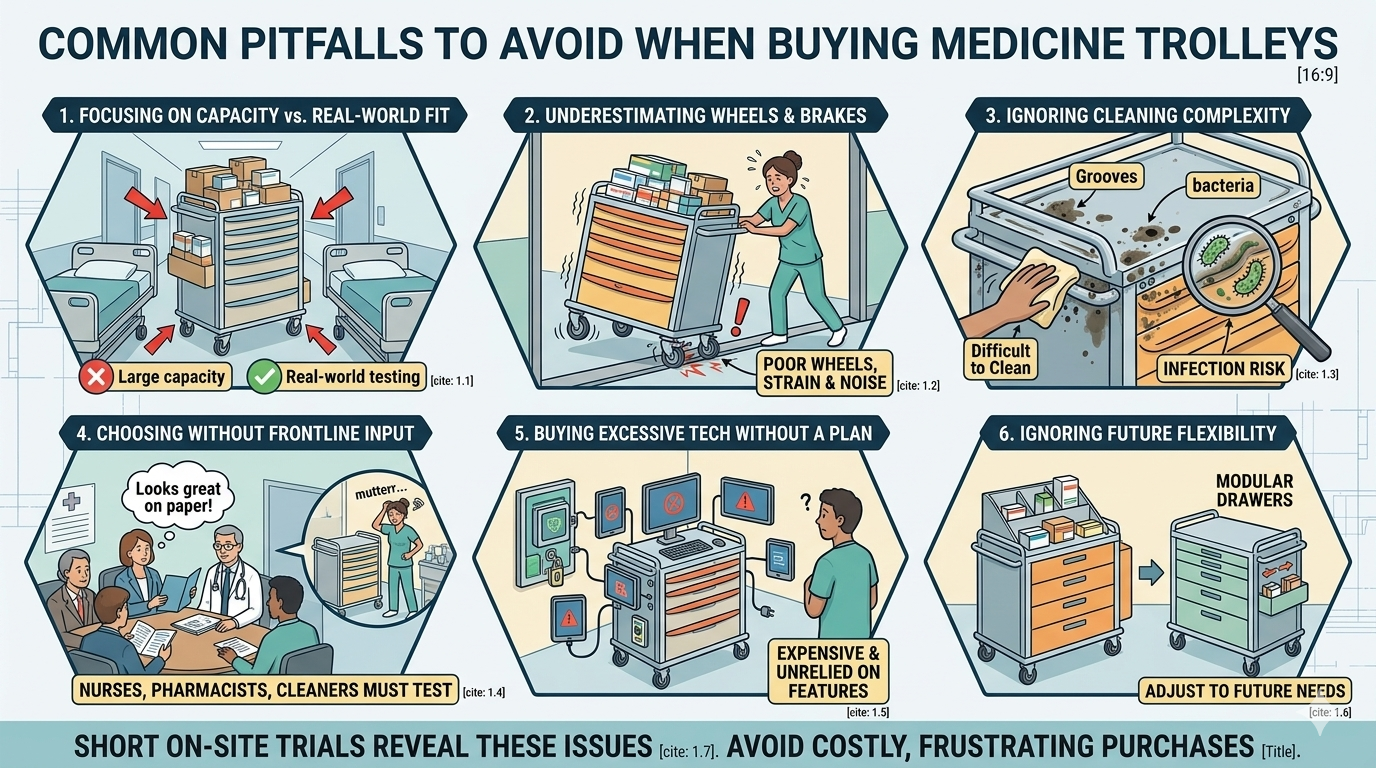
Even experienced teams can fall into traps when selecting new trolleys. Being aware of these pitfalls helps you avoid costly or frustrating purchases.
1. Focusing on capacity instead of real‑world fit
A large trolley that holds everything may not fit between beds, around corners, or inside lifts. Always test maneuverability in the actual spaces where staff will use it.
2. Underestimating the importance of wheels and brakes
In a showroom, almost any trolley pushes well when empty. The true test is how it behaves fully loaded, on your floors, with your thresholds and ramps. Poor wheels lead to noise, strain, and accidents.
3. Ignoring cleaning complexity
Attractive designs with many grooves, handle recesses, or exposed bolts may prove difficult to clean thoroughly. Over time, those details can become infection risks.
4. Choosing without frontline input
If nurses, pharmacists, and cleaners do not see or test the trolley before purchase, you risk ending up with something that looks acceptable on paper but frustrates the people who use it most.
5. Buying excessive technology without a plan
Electronic locks, integrated computers, and tracking systems add value only when teams are ready to use and maintain them. Otherwise, they become expensive features that no one relies on.
6. Ignoring future flexibility
Fixed interiors lock you into one way of working. Modular drawers and dividers allow you to adjust as services expand, policies change, or patient needs shift.
Short on‑site trials, even for a few days, often reveal these issues more clearly than any specification sheet.
When you select medicine trolleys, treat the decision as part of your wider clinical strategy. A structured approach leads to better outcomes than simply comparing prices or catalog photos.
Start by listing how different departments will use their trolleys:
Routine medication rounds on general wards
High‑frequency IV therapy areas
Emergency response locations
Operating theatres and recovery
Long‑term care or rehabilitation units
For each area, note:
Volume and type of medications
Required security level
Frequency and distance of movement
Number of staff interacting with the trolley
Link your use cases to specific design requirements. For example:
High‑security areas need strong locks and access control.
Long corridors or multi‑floor movements favor lighter materials and large casters.
Busy wards need intuitive layouts and color‑coded sections.
Areas with strict infection control require very smooth, robust surfaces.
Invite nurses, pharmacists, and cleaning staff to evaluate sample trolleys. Ask them to:
Simulate a medication round
Load the trolley with typical supplies
Push it through real routes and into patient rooms
Clean it using your standard disinfectants
Their comments on comfort, noise, access, and cleaning effort are crucial.
Look beyond the purchase price. Factor in:
Expected lifespan
Repair and maintenance needs
Availability of spare parts and accessories
Training costs for staff
Sometimes a more robust trolley with strong support from the manufacturer delivers far better value over five to ten years than a cheaper alternative.
Generic trolleys can appear similar on the surface, but details like drawer structure, lock options, and build quality decide whether they truly support or hinder daily work. Hongye Healthcare designs its medication delivery carts and emergency crash carts around real workflows rather than just basic specifications.
Hongye medication delivery carts aim to make regular medication rounds safer and more efficient. Their typical features include:
Structured drawer layouts for different dosage forms, allowing staff to separate oral medications, injectables, and IV consumables clearly.
Configurable dividers and trays that can be adapted to your formulary and stocking patterns.
Secure locking options that protect controlled drugs while keeping routine items quickly accessible to authorized staff.
Smooth, quiet casters and balanced frames that reduce noise in corridors and make long rounds less tiring.
Easy‑to‑clean surfaces compatible with hospital disinfectants, supporting infection control routines without damaging the trolley.
For wards running multiple daily medication rounds, these design choices translate into fewer interruptions, fewer retrieval trips, and a more consistent experience from shift to shift.


Hongye emergency crash carts focus on being ready for the worst‑case scenarios. Their designs support rapid, coordinated action by:
Standardizing drawer configurations so staff from any shift know exactly where key drugs and equipment are located.
Providing clear labeling and color‑coding that distinguishes airway, breathing, circulation, and medication compartments.
Offering sturdy tops and brackets for defibrillators, oxygen cylinders, and suction devices, keeping them stable yet instantly accessible.
Using strong frames and reliable casters that let teams move the cart quickly while maintaining stability once parked.
Supporting visual seals or security features that confirm the cart remains fully stocked and unopened until needed, which simplifies daily checks.
In an emergency, this level of organization and reliability gives teams more bandwidth to focus on clinical decisions rather than searching for equipment.


Once you have chosen suitable trolleys, consistent maintenance keeps them safe and effective over the long term.
Good practices include:
Inspecting wheels, brakes, and handles regularly for wear or looseness.
Verifying that locks, codes, and seals work as intended.
Cleaning all surfaces according to your infection control protocols after rounds or lists.
Checking drawer runners and hinges for smooth operation and repairing any damage promptly.
Training new staff on loading, moving, and parking trolleys safely to avoid strain and collisions.
Simple checklists, built into existing ward routines, help ensure that small faults are noticed early and addressed before they disrupt care.
Do all medicine trolleys need locks?
Not every drawer requires a lock, but any compartment holding controlled substances or high‑risk drugs should have appropriate security. Many facilities use a mix of locked and unlocked sections on the same trolley.
How often should trolleys be cleaned?
Most facilities wipe trolleys after each medication round or procedure list and perform deeper cleaning on a weekly or monthly schedule, following infection control guidelines.
Can one trolley design work for all departments?
A single base platform can often serve multiple areas if it supports modular drawers and accessories. However, emergency, anesthesia, and high‑security areas usually benefit from more specialized configurations.
What is the ideal size for a medicine trolley?
The ideal size depends on corridor width, room layout, and storage needs. It should carry everything required for a typical round without becoming so large that it is hard to maneuver.
How long does a good trolley last?
With robust construction and proper maintenance, a quality trolley can serve for many years. Lifespan varies with usage intensity, cleaning agents, and handling, but durable designs usually pay off over time.
Choosing and configuring medicine trolleys with care can transform them from simple carts into powerful tools that support safer, more efficient, and more comfortable care. By focusing on security, durability, ergonomics, infection control, and real user feedback—and by partnering with manufacturers who understand clinical workflows—you give your teams equipment that truly works with them, not against them.