
Views: 0 Author: Site Editor Publish Time: 2026-01-20 Origin: Site


Selecting the right elderly care furniture manufacturer can significantly impact your senior living facility's operational efficiency, resident satisfaction, and long-term cost management. Unlike general commercial furniture, medical-grade elderly care furniture demands specialized engineering that meets strict accessibility standards, durability requirements, and infection control protocols.
American manufacturers excel in meeting these exacting standards for several compelling reasons:
Supply Chain Transparency & Faster Delivery: Domestic manufacturers typically deliver standard products within 6-8 weeks, compared to 12-16 weeks for international sourcing. This 50% reduction in lead time means your facility can respond quickly to expanding census or emergency replacement needs. For a 150-bed senior living community planning renovations, this can translate to completing projects 6-8 weeks earlier.
Regulatory Compliance Certainty: U.S. manufacturers design products to meet ADA (Americans with Disabilities Act), BIFMA (Business and Institutional Furniture Manufacturers Association), and state-specific fire codes from the ground up. When California updates its CAL 117 fire standards or New York modifies its Local Law requirements, domestic suppliers proactively update products rather than facing supply chain delays in adaptation.
Proximity to Support Services: Local manufacturing means faster technical support, on-site training, and maintenance visits. Warranty claims are resolved in days rather than weeks, minimizing operational disruption. Protea™, Kwalu's proprietary non-porous material, includes 10-year performance warranties with dedicated customer support—a significant advantage for risk management.
Cost Optimization: While initial purchase prices may appear comparable, 5-year total cost of ownership often favors American manufacturers. According to IMARC Group research, the healthcare furniture market (valued at $7.94B in 2024) shows that quality domestic furniture reduces maintenance costs by 25-30% through superior durability and easier cleaning protocols.
Economic Impact Considerations: Selecting American manufacturers supports local manufacturing jobs and can align with corporate ESG commitments. Many U.S. manufacturers now use sustainable materials: Crown Furniture employs FSC-certified European beech hardwood and solar-powered facilities, while Kwalu's Protea™ material eliminates chemical off-gassing—critical for memory care units treating dementia patients.

The American elderly care furniture market stands at a critical inflection point. The senior living furniture market, valued at approximately $5.0-5.5 billion in 2025, is projected to reach $9+ billion by 2033, representing a compound annual growth rate (CAGR) of 6-7% over eight years. This robust expansion reflects fundamental demographic and policy shifts reshaping the industry.
The primary catalyst is population aging. Americans aged 65 and older will reach 73 million by 2030—a 34% increase from 2015 levels. This demographic imperative directly drives:
Assisted Living Expansion: The number of assisted living facilities has grown 28% over the past three years, creating demand for approximately 150,000 new furniture units annually.
Memory Care Specialization: Facilities dedicated to dementia care have become the fastest-growing segment, expanding at 12-15% annually. These communities require furniture engineered for behavioral health—featuring non-toxic materials, impact-resistant frames, and antimicrobial surfaces.
Infrastructure Modernization: Medicare payment reforms now incentivize private rooms and modern common spaces, prompting facility upgrades. The American Seniors Housing Association reports that 40% of member facilities allocated capital budgets to environmental improvements in 2024-2025.
Regulatory changes drive continuous furniture replacement:
ADA Accessibility Standards: Federal requirements mandate minimum dimensions for wheelchair access—table heights between 28-34 inches, knee clearance of 27 inches minimum, and 30-inch-wide approach lanes. Facilities built before 2010 often require retrofitting, creating replacement cycles.
Fire Safety Upgrades: Materials like Trevira CS fabric (used by Charter Furniture and Kwalu) exceed California's CAL 117 standards, but compliance testing consumes 6-12 months. Facilities must plan replacements carefully to maintain operational continuity.
Antimicrobial Requirements: Post-pandemic awareness has elevated expectations for furniture that resists bacterial colonization. DuraCare Seating and Kwalu now offer EPA-registered antimicrobial treatments, with warranties extending to replacement if efficacy drops below stated standards.
| Specification | Standard Commercial | Medical-Grade Elderly Care | Regulatory Standard |
Seat Height | 18-20 inches | 19-22 inches | ADA/BIFMA |
Surface Durability | 1.5M cycle test | 3M+ cycle test | BIFMA X5.1 |
Fabric Cleanability | Standard cleaning | Medical-grade disinfectant compatible | ISO 6603 |
Fire Rating | Standard | Class A rating (Trevira CS) | NFPA 101 |
Antimicrobial Treatment | None | EPA-registered | Healthcare standards |
Warranty | 3-5 years | 7-10 years | Industry custom |
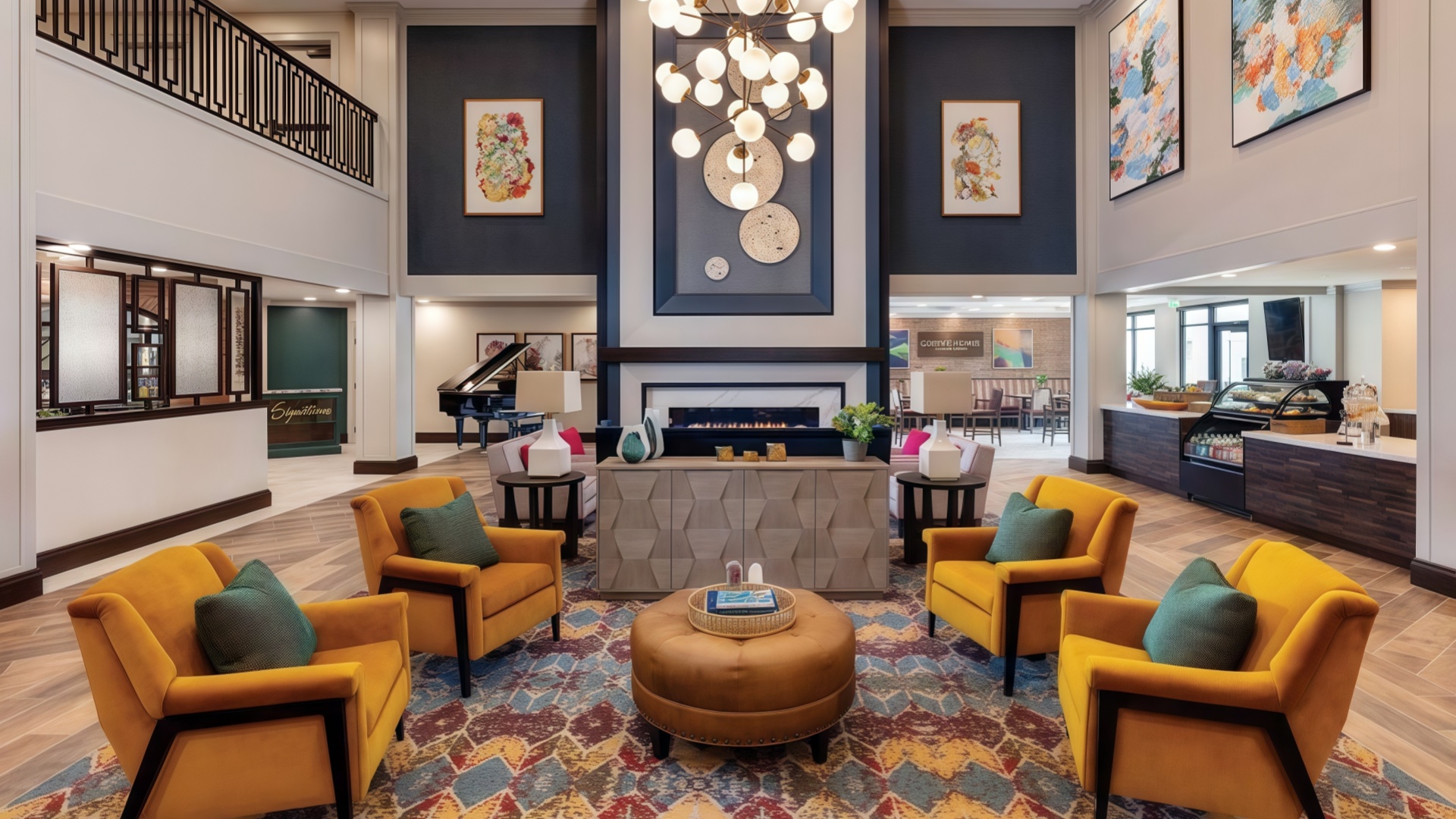
Company Overview: Swedish-founded but North America-headquartered, Kwalu dominates the premium segment with a 15%+ market share among high-end senior living communities. The company's "Designed to Last®" philosophy emphasizes engineering excellence over cosmetic trends.
Core Product Architecture: Kwalu's Protea™ material—a proprietary non-porous composite—revolutionized senior living furniture by combining wood aesthetics with antimicrobial durability. All seating utilizes 300-million-cycle rated frames (3x commercial durability standards), with seat height optimization for arthritic users: 19.5-21 inches, with 9.5-inch armrest heights facilitating transfers.
2025 innovations include the Nashville Collection—resident room furniture featuring 2-inch plinth bases and refined hardware that appears residential rather than institutional. Hospital-grade cleanability meets infection prevention requirements without sacrificing design sophistication.
Certifications & Compliance: Complete BIFMA compliance, GREENGUARD certification (zero formaldehyde off-gassing), FSC-certified wood components, and 10-year structural warranties. Protea™ surfaces withstand 500+ cleaning cycles with medical-grade disinfectants, critical for infection prevention in memory care units.
Representative Projects: UniversalCare selected Kwalu for 18 senior communities (400+ rooms) due to superior performance in high-moisture environments (spa/aquatic therapy areas). Valuing longevity over initial cost, they achieved 30% lower maintenance expenses over 7 years compared to standard hospitality seating.
Cost Profile & Market Position: Entry-level chairs $1,800-2,200; comprehensive bedroom suites $4,500-6,500. High initial investment recouped through minimal maintenance and 10-year warranty coverage. Premium positioning justified for facilities targeting 4-5 star ratings or marketing "luxury" senior living.
Competitive Differentiation: Unmatched durability testing and warranty coverage. While Charter Furniture emphasizes design elegance, Kwalu prioritizes engineering reliability. For 150-bed facilities expecting 10-year+ furniture lifecycles, Kwalu's 5-year total cost of ownership often matches or beats lower-cost competitors when maintenance is included.
Company Profile: Third-generation Australian manufacturer with American distribution, Crown Furniture operates a 14,000 m² solar-powered factory producing premium aged care furniture since 1974. The company's "Inspiring Living" philosophy combines Scandinavian design with British engineering precision.
Product Specialization: FSC-certified European beech hardwood combined with flame-retardant foams and moisture-barrier fabrics. Every piece includes anti-microbial coatings on exposed timber—critical for memory care environments where residents may have reduced hygiene abilities.
Recent projects in Perth (Roshana Care Carmel, MercyCare Maddington with 108 beds) demonstrate Crown's ability to deliver five-star aesthetic environments while maintaining institutional durability. Design flexibility enables color customization, modular configurations, and mix-and-match collections.
Technical Specifications: Dining chairs feature reinforced hardwood frames (tested to 300+ lbs.), upholstered with flow-through foams (moisture-resistant), and UV-resistant outdoor fabrics for any application. Every component meets BIFMA standards with explicit ADA clearance measurements provided.
Certifications: FSC forestry certification, ISO 9001 quality management, full BIFMA compliance, and custom fire testing per facility requirements. 10-year warranties on structural components; 3-year warranties on upholstery.
Market Positioning: Mid-to-premium pricing ($1,200-2,500 per chair depending on customization). Competitive advantage lies in design customization without production delays—a significant benefit for facilities with architectural themes or branding requirements.
Global Reach: While primarily Australia-based, Crown maintains American distribution through multiple channels, serving facilities wanting Australian craftsmanship with U.S. delivery reliability.
Company Background: For 30+ years, Charter Furniture has set standards for high-end hospitality seating, now extending expertise into senior living through dedicated product lines. This heritage ensures that beauty and functionality coexist—senior living doesn't require industrial aesthetics.
Design Philosophy: Charter recognizes that residents in independent living communities expect residential-quality furnishings. Lounge chairs ($2,200-3,500), sofas ($3,500-5,500), and dining furniture blend contemporary design with healthcare durability. The Nashville Collection parallel (with Kwalu) reflects industry consensus: residents deserve elegant, home-like environments.
Dining and activity chairs—the most-used furniture in senior communities—feature Charter's signature curved upholstered backs and padded arms at 9-10 inch heights. 28-inch seat heights optimize standing transitions for mobility-limited residents.
Material Innovation: Proprietary stain-resistant and antimicrobial fabrics specifically engineered for healthcare environments. Trevira CS fabric components exceed fire-resistance standards with Class A ratings, exceeding California CAL 117 and New York fire codes.
Warranty & Support: 5-year comprehensive coverage on structural components; 2-year coverage on upholstery with full replacement options for wear exceeding 50,000 Martindale cycles (industry durability measurement).
Typical Applications: Senior communities emphasizing aesthetic sophistication ($1,500-3,000 per room furniture budgets). Charter's 59-piece senior living collection accommodates design-forward facilities where furniture becomes environmental therapy—particularly important in memory care where familiar, residential aesthetics reduce behavioral disruption.
Company Focus: Japanese manufacturer specializing in electric beds and specialized seating for healthcare and senior living. U.S. headquarters provide local support while maintaining Asian manufacturing precision.
Core Competency: Paramount dominates the hospital/nursing bed segment with electric adjustment mechanisms featuring fall-detection sensors, bed-exit alerts, and integrated patient-lift systems. Advanced models include automatic weight-sensing capabilities identifying abnormal weight changes—critical for monitoring malnourished patients.
Nursing and memory care communities favor Paramount for integrated medical monitoring: beds track positioning data (therapeutic pressure reduction), sleep quality patterns, and fall risks, enabling proactive health interventions.
Compliance: All products meet FDA 510(k) requirements for medical devices, BIFMA structural standards, and facility-specific infection prevention protocols. Electric components withstand 500+ charge cycles, with hot-swappable battery systems enabling emergency replacements.
Market Position: Premium medical segment ($4,500-8,000 per electric bed). Justifiable ROI through reduced fall injuries (estimated $35,000-50,000 per fall in liability and treatment costs) and improved care quality metrics affecting reimbursement rates.
Company Model: Mid-sized manufacturer operating as a design partner for smaller and mid-sized senior living communities (30-200 beds). Archer emphasizes rapid prototyping, custom solutions, and hands-on client relationships.
Differentiation: While larger manufacturers offer standardized collections, Archer's strength lies in bespoke solutions: memory care communities needing dementia-specific features, religious or cultural design elements, or facilities with architectural constraints limiting standard furniture placement.
Design consultation is included at no additional cost. Communities typically receive 3-5 design iterations with physical samples before final ordering—eliminating costly mistakes inherent in large-batch procurement.
Pricing & Lead Times: Moderate pricing ($800-1,500 per chair) with 10-12 week lead times for custom orders. Small order minimums (25 units vs. 100+ for large manufacturers) suit expanding communities or partial renovations.
Success Metrics: Archer maintains 95%+ customer retention for repeat projects, indicating high satisfaction among mid-market facilities valuing personal attention and custom solutions.
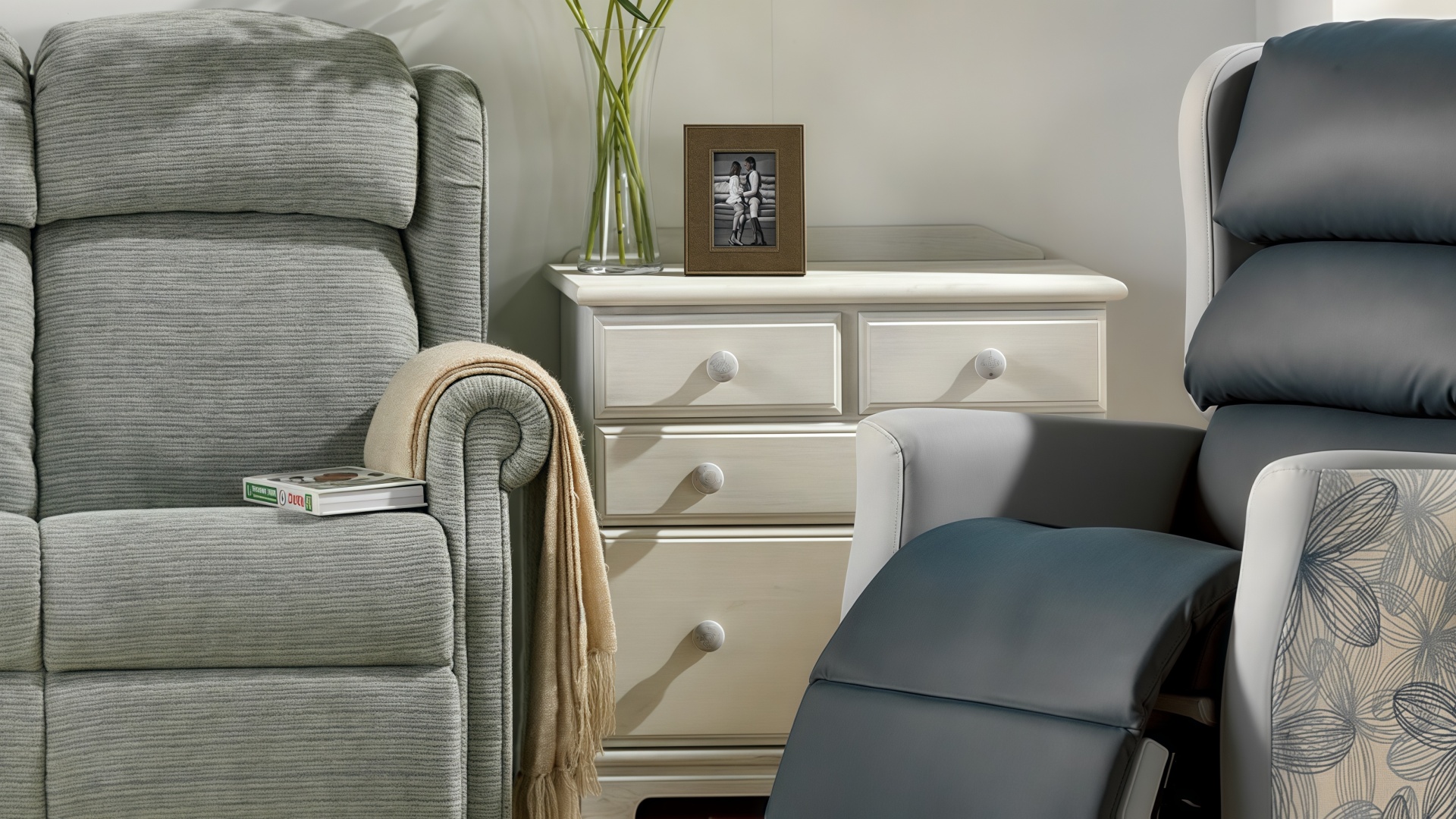
Company Mission: Environmental responsibility drives all manufacturing decisions. MityLite earned GREENGUARD Gold certification (low VOC emissions) and FSC forestry certification before most competitors recognized senior care market demand for sustainable products.
Product Innovation: 100% recyclable materials where possible; biodegradable foam replacements; water-based finishes eliminating toxic off-gassing—particularly valuable in memory care environments where dementia patients cannot communicate chemical sensitivity symptoms.
Market Position: Competitive pricing ($900-1,400 per chair) appeals to budget-conscious facilities adopting ESG procurement policies. Many senior living operators (including Brookdale, the largest U.S. operator) now require sustainability certifications, giving MityLite strategic advantage.
Certifications: GREENGUARD Gold, FSC, BIFMA, ADA compliance. Carbon-neutral shipping available, aligning with facility sustainability commitments.
Company Focus: Specializes in BIM (Building Information Modeling) support and CAD file libraries—critical for architects and designers specifying furniture during design phases. Provides Revit families, 3D models, and technical specifications in standard formats.
Technical Advantage: Design firms can embed furniture directly into architectural models, reducing coordination errors and enabling accurate space planning. This becomes essential for complex projects with specific ergonomic requirements.
Market Segment: Mid-range facilities ($800-1,200 per chair) where design precision matters—either architectural constraints or high-end branding requirements.
Company Positioning: High-end manufacturer known for design innovation and technological integration. Senior living offerings include USB-integrated seating (charging ports), smart furniture tracking (IoT-enabled), and collaborations with renowned designers.
Innovation Examples: Seating with wireless charging capabilities, pressure-relief materials reducing fall-related injuries, and adjustable components addressing individual resident mobility variations.
Market: Ultra-premium segment ($2,500-4,500 per piece) for facilities competing on luxury positioning. Effective in memory care environments where design sophistication reduces behavioral disruption and improves resident satisfaction.
Company Specialization: Medical-grade antimicrobial treatments applied to all seating. Aluminum frames (never wood) eliminate water absorption, critical in wet environments (aquatic therapy, assisted bathing areas).
Fabric surfaces register with EPA for antimicrobial efficacy, with testing verifying efficacy maintenance through facility-specified cleaning protocols. Particularly valued in infection prevention initiatives.
Technical Specification: Surfaces withstand 500+ cleaning cycles with 75% isopropyl alcohol and bleach-based disinfectants—the standard healthcare cleaning regimen.
Niche Application: Hospitals transitioning to senior care, memory care facilities with enhanced infection control requirements, or communities managing COVID-vulnerable populations.
Company Model: Full-service provider offering complete packages (bedroom, dining, common area furnishings) at competitive rates ($600-1,000 per chair). Strength lies in volume economics and supply chain efficiency.
Market Position: Value segment facilities or complete renovations benefiting from integrated procurement reducing coordination overhead.
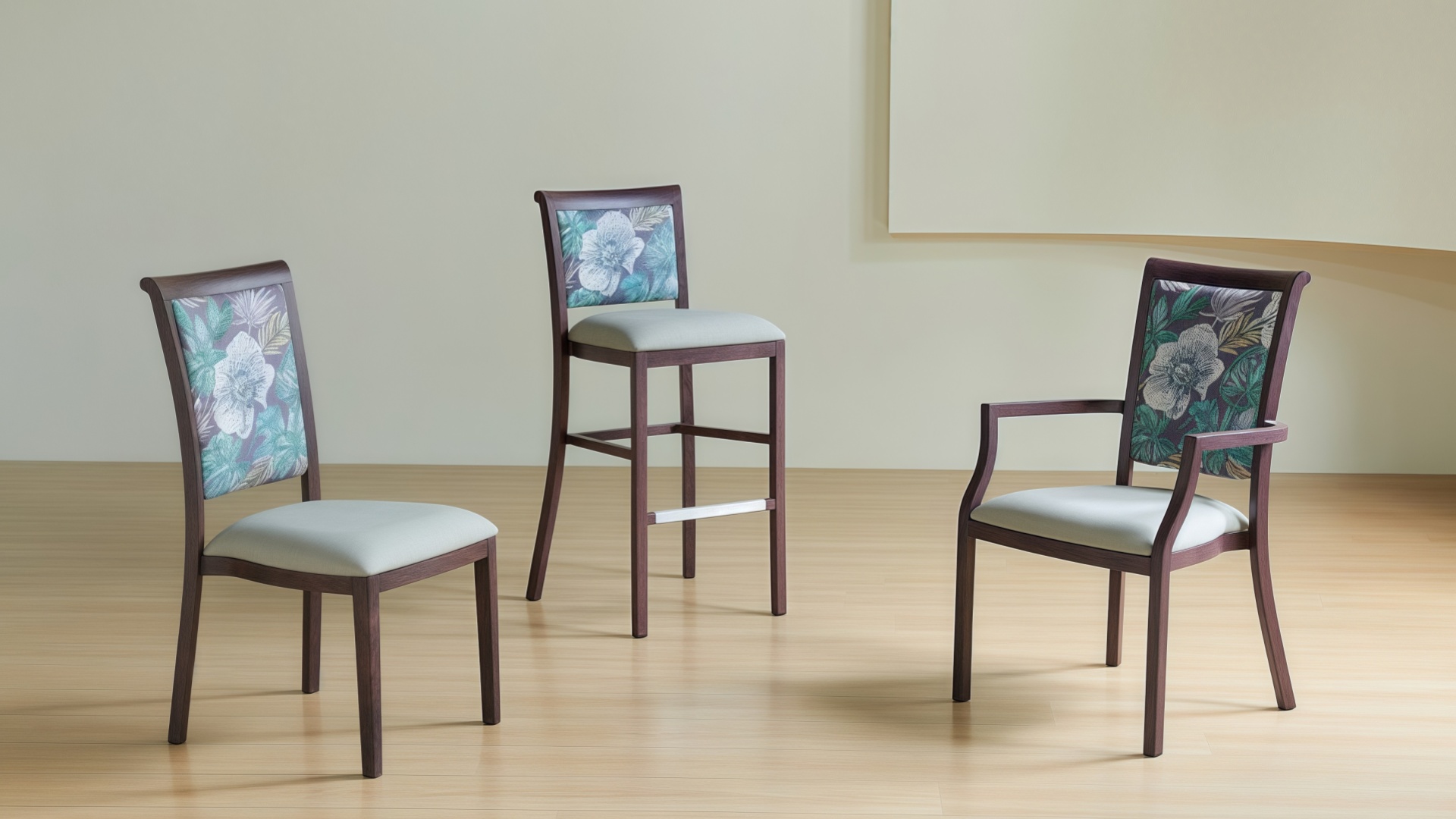
Specialization: Furniture engineered specifically for dementia care, incorporating behavioral science research. Features include textured surfaces stimulating tactile engagement, color palettes reducing agitation, and familiar design elements (reminiscent of mid-century residential styles) supporting memory engagement.
Innovation: Incorporates reminiscence therapy principles—soft furnishings with tactile variety, warm wood tones, and accessible storage enabling resident engagement in daily activities. Reduces behavioral disruption associated with institutional aesthetics.
Market: Memory care communities prioritizing non-pharmaceutical behavioral management, typically investing premium budgets ($1,200-1,800 per room) for specialized solutions.
Specialization: Heavy-duty seating for patients exceeding 300 lbs., up to 1,000 lb. weight capacity for specialized applications. Engineered with reinforced frames, medical-grade orthopedic cushioning, and wider seating surfaces (26-32 inches).
Healthcare Application: Obesity increasingly affects senior populations, creating demand for accessible furniture accommodating diverse body types. HUSKY's inclusion-focused design eliminates resident embarrassment associated with standard seating inadequacy.
Compliance: Meets CDC guidelines for accessible patient care environments, with warranty extending to weight capacities.
Company Origin: Scandinavian manufacturer emphasizing minimalist design, superior ergonomics, and sustainable materials. Imported through North American distributor.
Design Philosophy: Reflects Nordic design principles—beautiful simplicity, functional clarity, and human-centered engineering. Pricing reflects imported costs ($1,800-3,000+ per piece).
Market: High-end facilities emphasizing design excellence and international quality standards.
Service Model: Provides complete furniture packages (all room types) coordinated across facilities. Enables bulk negotiations, simplified procurement, and consistent environmental design across 50+ community chains.
Value Proposition: Reduces purchasing complexity for facility groups managing multiple communities, delivering consistent resident experience across locations.
Specialization: Modular seating systems with rapid reconfiguration capabilities. As community needs evolve (transitioning from independent to assisted care), furniture adapts without replacement.
Innovation: Seat covers, frames, and cushioning components swap easily, extending furniture lifecycles and reducing waste.

| Community Size | Budget Range | Recommended Manufacturers | Key Consideration |
Small (30-50 beds) | $800-1,200/unit | Archer Care, Kellex, Seniordecor | Custom designs, flexible minimums |
Medium (50-150 beds) | $900-1,500/unit | Crown, F-Three, Beaufurn | Customization without delays |
Large (150-300 beds) | $700-1,200/unit | Crown, Charter, MityLite | Volume pricing, standardization |
Premium (all sizes) | $1,500-3,000+/unit | Kwalu, Herman Miller, Charter | Design & durability investment |
Independent Living: Prioritize aesthetic appeal and ergonomic support—recommend Charter Furniture, Herman Miller for design-forward communities.
Assisted Living: Balance durability, cleanability, and accessibility—Kwalu, Crown Furniture excel in this segment.
Memory Care: Require dementia-specific engineering—Seniordecor, MityLite recommended alongside mainstream manufacturers offering specialized collections.
Nursing/Skilled Nursing: Require medical-grade durability and specialized seating—Paramount Bed, Kwalu, DuraCare lead.
ADA Accessibility certification (minimum 28-34" table height, 27" knee clearance)
BIFMA X5.1 structural durability (minimum 3M cycle testing for senior care)
Fire rating compliance (Trevira CS fabric or equivalent for your state)
Antimicrobial treatment verification (EPA registration with your cleaning protocols)
Warranty specifics (structural vs. upholstery coverage periods)Maintenance compatibility (fabric/frame materials compatible with your cleaning chemicals)Local code compliance (verify with your building inspector—ADA is federal baseline only)
Selecting elderly care furniture manufacturers requires balancing aesthetics, durability, compliance, and cost. American manufacturers excel across all dimensions:
Kwalu & Crown Furniture lead in durability and 10-year lifecycle value
Charter & Herman Miller prioritize design sophistication
MityLite & DuraCare specialize in health/environmental compliance
Archer, F-Three & Kellex serve customization-focused communities
Your selection should align with community positioning: luxury communities justify Kwalu's premium; budget-conscious operators find value in Beaufurn; memory care facilities benefit from Seniordecor's specialized expertise.
By leveraging this guide's comparative analysis and implementation timeline, your facility will secure furniture supporting resident dignity, operational efficiency, and long-term financial sustainability.


